 Follow Us on Google News



 Follow Us on Google Discover
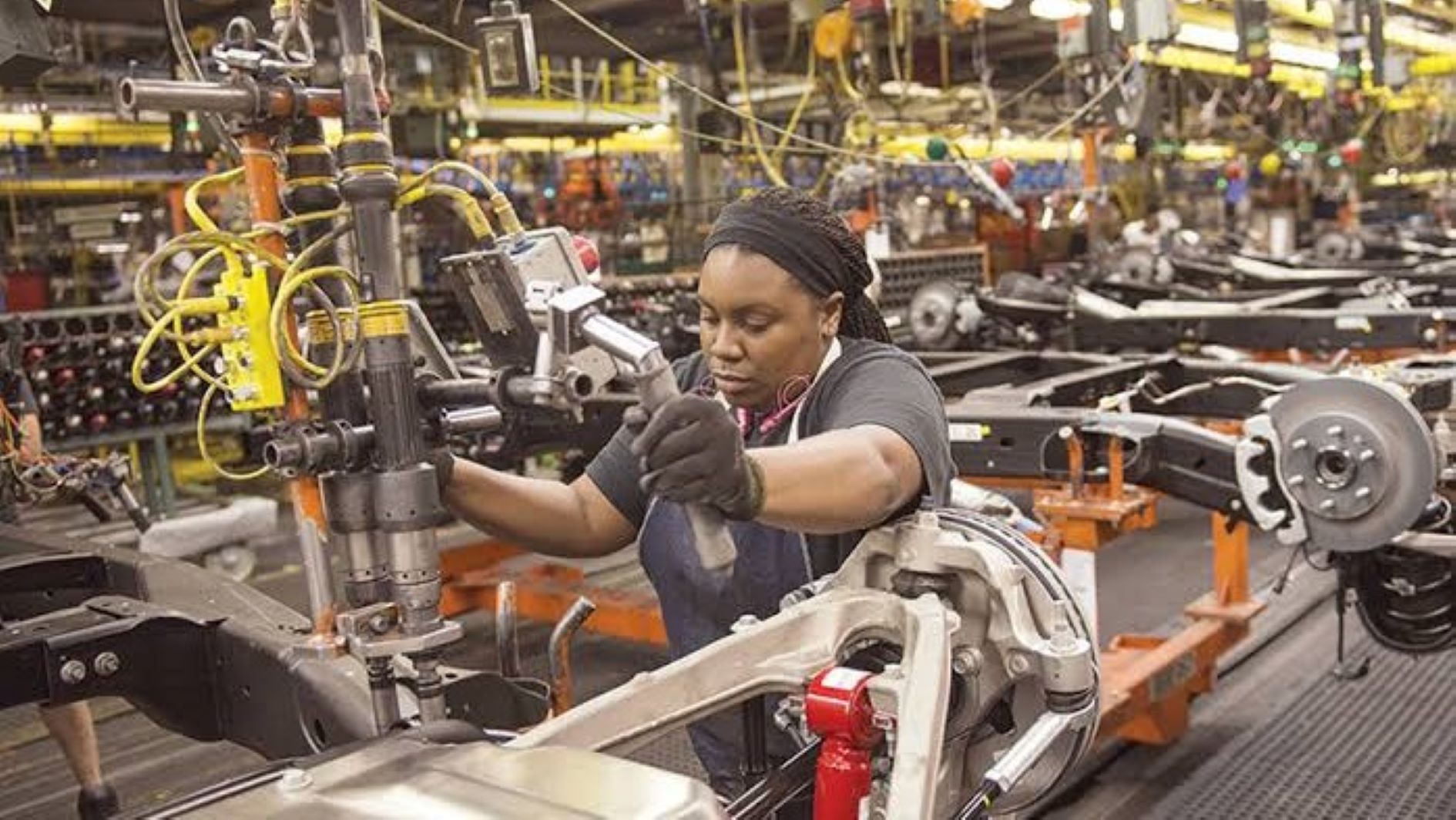
Bank credit to Nigeria’s manufacturing sector fell by 26.8 per cent year-on-year to N5.19 trillion in June 2026 from N7.09 trillion in the corresponding period of 2025, raising concerns over access to financing for industrial production and investment.
Data sourced from the Central Bank of Nigeria’s (CBN) Q2 2026 statistical bulletin showed that outstanding credit to manufacturers also declined by about 21 per cent between January and June, reflecting a sustained contraction in lending to the sector during the first half of the year.
The figures come amid persistent complaints by manufacturers over high borrowing costs, rising production expenses, electricity tariffs, logistics constraints and exchange-rate pressures, which continue to weigh on industrial operations.
Monthly data showed that credit to the sector declined from N6.57 trillion in January to N6.37 trillion in February, before falling further to N5.77 trillion in March and N5.32 trillion in April. It dropped to N5.02 trillion in May before recovering marginally to N5.19 trillion in June.
Despite the slight month-on-month increase in June, outstanding credit remained significantly below the level recorded a year earlier.
Trade and commerce credit surged roughly 62%–63.4% to N6.30 trillion, construction rose 53.7% to N2.88 trillion, and agriculture increased 30.4% to N4.16 trillion. Power, finance, and mining also posted notable credit expansions.

The figures reinforce concerns raised earlier by the Manufacturers Association of Nigeria (MAN) at their recent yearly general meeting, over the availability and cost of credit, with the association warning that expensive loans are limiting manufacturers’ ability to expand production, modernise equipment and create jobs.
In June, MAN raised concerns over a separate comparison showing that bank credit to the sector declined from N8.53 trillion in December 2024 to N6.61 trillion in December 2025, representing a reduction of N1.92 trillion, or 22.5 per cent.
MAN’s Director-General, Segun Ajayi-Kadir, warned that the contraction threatened capacity utilisation, industrial output and employment, while undermining the country’s industrialisation ambitions.
Repeatedly criticising the high cost of borrowing, he said manufacturers faced average prime lending rates of about 27 per cent in May 2026, with maximum lending rates at some commercial banks reaching 35.6 per cent.
Although the CBN reduced its Monetary Policy Rate (MPR) from 26.5 per cent to 23 per cent in September, he warned that the cut would have limited impact unless commercial banks passed the reduction on to manufacturers.
Ajayi-Kadir said lending rates are still above 30 per cent, making long-term investments in factory expansion and equipment difficult to finance.
MAN’s concerns are also reflected in its Q2 2026 Manufacturers’ CEOs Confidence Index, which found that about two in every three manufacturing chief executives considered commercial bank lending rates a disincentive to productivity. Respondents also reported that the volume of credit available to manufacturers was insufficient
He called for a manufacturing refinancing facility that would enable businesses to access loans at single-digit interest rates, with repayment periods of up to seven years.
Similarly, President of the Lagos Chamber of Commerce and Industry (LCCI), Leye Kupoluyi, has also called for a reduction in the cost of funds to support private-sector investment and economic activity.
Speaking at the chamber’s recent State of the Economy address, he said despite a reduction in the benchmark policy rate, the lending environment remains challenging for businesses.
He said borrowing costs are only one part of the broader risk factors affecting access to finance, adding that insecurity and uncertainty surrounding the political and policy environment could influence business confidence and lenders’ risk assessments. According to him, commercial banks consider borrowers’ cash flow, collateral, credit history, sectoral risks, business prospects and repayment capacity, alongside the wider operating environment, when deciding whether to extend credit.

