 Follow Us on Google News



 Follow Us on Google Discover
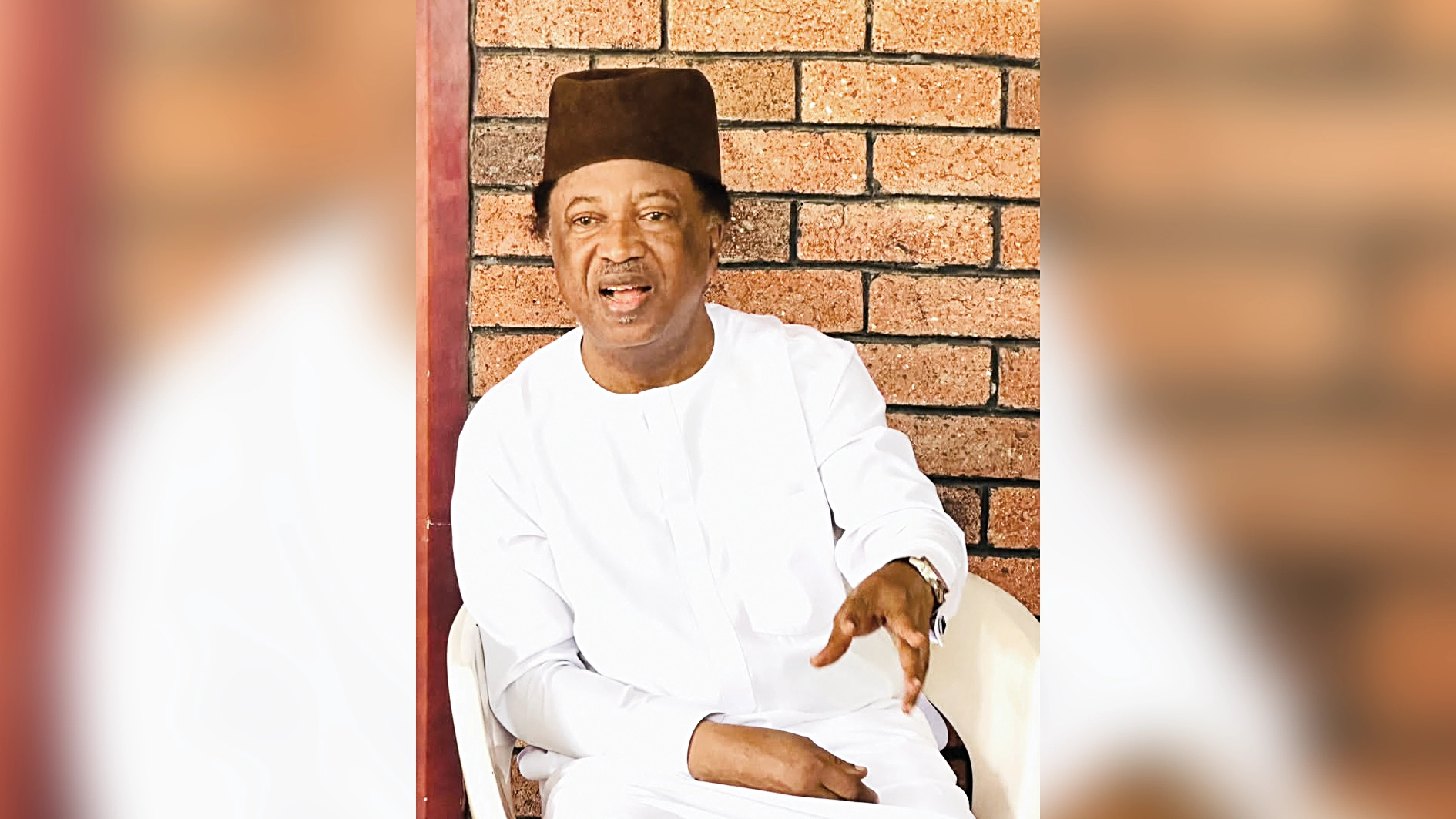
Senator Shehu Sani, who represented Kaduna Central in the Eighth National Assembly, speaks with SAXONE AKHAINE on President Bola Tinubu’s 2027 re-election bid, power rotation, insecurity, his return to the Senate and plans for his constituency.
You have expressed support for President Bola Tinubu’s second-term ambition. Why do you believe the North should support him in 2027?
I believe we must consider the issue within the context of national stability and the understanding that has developed around power rotation. The late President Muhammadu Buhari spent eight years in office, and I believe it is reasonable for the South to complete its current turn before power returns to the North.
This does not mean Northerners should be prevented from expressing their political preferences or exercising their democratic rights. It means political leaders should consider the wider implications of their decisions and avoid turning regional aspirations into a source of unnecessary division.
The North is not a single political bloc. Its people have different religious, ethnic, economic and political interests. Some may support Tinubu, others may support opposition candidates, while many will decide based on the candidates’ records and their assessment of the economy.
I believe the APC should make its case through its achievements, policies and plans for the future. The government must recognise that support cannot be sustained by appeals to regional loyalty alone. People want security, jobs, accessible healthcare, better education and relief from economic hardship.

My support for Tinubu is based on my view that the South should complete its current turn and that continuity could provide an opportunity to pursue national development. It does not mean that every government policy should escape criticism.
The important thing is to conduct the debate without promoting hostility between regions. Nigeria’s unity depends on citizens believing that they have a stake in the country and that their concerns will be taken seriously.
But then some still argue that power must return to the North in 2027 for justice and equity. Their arguments is that the North has a deficit of four years following the death of former President Umaru Yar’Adua?
I believe in the principle of power rotation because it can promote inclusion and strengthen confidence among the different parts of the country. Buhari spent eight years in office, and it is only logical, in my view, that the South should complete its current turn.
The debate should not be reduced to whether a particular individual deserves to become president. It should also consider political stability and the expectations that have developed around the distribution of power.
Atiku Abubakar has contested the presidency on several occasions. My question to those who argue that the North should automatically support him is this: why did he not receive overwhelming northern support in every previous contest? His electoral fortunes have varied, showing that the region is not politically uniform.
My position is that the South should be allowed to complete its four-year turn. Candidates should contest on their respective party platforms, and the electorate should make its choice in a credible election. Rotimi Amaechi can contest under the African Democratic Congress (ADC), Peter Obi under the Nigeria Democratic Congress (NDC), and Tinubu under the APC, subject to the relevant party and electoral processes.
Nigeria is a diverse country, and different communities have concerns about representation, inclusion and their place in the federation. A political arrangement that gives regions a sense of participation can help strengthen national cohesion. However, rotation alone cannot solve every national problem. Good governance, accountability and respect for the Constitution remain essential.
There are people in different parts of the country who hold separatist views. Political inclusion may help address some of the grievances underlying such sentiments, but the country must also confront the social, economic and security concerns that contribute to alienation.
I also believe that some opposition to Tinubu in the North is influenced by political calculations. Economic hardship has created understandable frustration among citizens, and political actors will naturally seek to mobilise that dissatisfaction. But voters deserve an honest discussion of policy choices and their consequences.
Tinubu has a longstanding commitment to market-oriented economic policies. Those campaigning against him should explain what alternatives they propose, how they would finance them and whether their promises are consistent with their previous positions.
The same scrutiny should apply to the ruling party. The government must explain its policies, demonstrate how they will improve living conditions and address the concerns of people facing rising costs and economic uncertainty.
Insecurity remains a major challenge in Nigeria. Some people believe the issue is being politicised. What is your position?
Insecurity has caused enormous suffering in Northern Nigeria and other parts of the country. Communities have experienced attacks, kidnapping, displacement and the destruction of livelihoods. Farmers have faced difficulties accessing their farms in some affected areas, while families have had to cope with the consequences of abductions and other violent incidents.
In the North-West, banditry and kidnapping remain serious concerns. In the North-East, Boko Haram and Islamic State West Africa Province (ISWAP) continue to pose security challenges. The effects extend beyond individual communities because insecurity disrupts education, agriculture, commerce and social life.
These problems have persisted across successive administrations. They also form part of a wider regional security challenge affecting countries around the Lake Chad Basin and parts of the Sahel.
My concern is that public discussion of insecurity sometimes changes according to who occupies the presidency. Former President Goodluck Jonathan faced criticism over the security situation during his administration, particularly following the abduction of the Chibok schoolgirls. When Buhari came into office, many Nigerians expected his military background to translate into substantial improvements in national security.
However, further school abductions and other attacks occurred during Buhari’s tenure. These included the Dapchi abduction and attacks on schools and educational institutions in parts of the North-West and North-Central regions.
The lesson is that no administration should be judged by its promises alone. Governments must be assessed by their ability to protect lives, prevent attacks, rescue abducted persons and restore confidence in affected communities.
I am not suggesting that Tinubu has resolved Nigeria’s security problems. Kidnapping, banditry and terrorism remain concerns, and the government must continue to demonstrate measurable progress. My argument is that the same standards should apply to every administration, irrespective of the president’s ethnic or regional background.
When people criticise the current administration, they should also be willing to examine the records of previous governments. Equally, those defending the present government must acknowledge the difficulties citizens continue to experience.
We cannot address insecurity effectively if the issue becomes merely an instrument of partisan competition. The victims are Nigerians, regardless of their religion, ethnicity or political affiliation. Their lives and livelihoods should be the central concern.
The government must strengthen intelligence gathering, improve coordination among security agencies, support personnel on the front line and ensure that communities receive timely protection. It must also address the conditions that allow criminal groups to recruit and operate.
Political leaders, regardless of party, should work towards a common national objective: making the country safer. Security is too important to be reduced to arguments over which region produced a president.
You have decided to stage a comeback to the Senate in 2027. Why?
My decision is primarily to represent my people, defend their interests and ensure that they benefit from development at the federal level. I believe I have the experience and capacity to project their aspirations, particularly those of the people of Kaduna State, which occupies a strategic position in the political history of Northern Nigeria and the country.
Representation goes beyond occupying a seat in the Senate. It requires someone who understands the challenges confronting the people, can articulate their concerns and has the courage to speak on their behalf. Those elected to represent us must be competent, capable and experienced.
The North continues to face significant challenges in education, healthcare, infrastructure and economic development. These are areas where our representatives must demonstrate commitment and the ability to attract federal interventions. If we do not send capable people to represent us, we risk allowing these challenges to persist.
I also believe the region needs to participate more effectively in national debates. We must have representatives who can contribute to discussions on national policy, engage their colleagues and ensure that the concerns of their constituents receive adequate attention.
How would you assess the quality of debates in the National Assembly, particularly the representation of Kaduna State in the Senate?
We need representatives who can speak authoritatively on national issues, project the concerns of their constituents and ensure that their states benefit from federal programmes and projects.
The National Assembly is an important institution, and its effectiveness depends partly on the quality of the people elected into it. Senators must be prepared to debate legislation, scrutinise government policies and hold the executive accountable where necessary. They must also maintain contact with their constituents so that the issues they raise in Abuja reflect the realities at home.
During my previous tenure, I pursued interventions in healthcare, education, women’s empowerment and support for young people. We worked on primary healthcare facilities, scholarships, training programmes and assistance intended to improve the economic circumstances of our constituents. We also sought to attract federal projects and support for organisations.
There were also periods of disagreement between the National Assembly and the executive under the previous administration. Such differences can affect cooperation between the two arms of government, although the legislature must retain its independence.
This time, I believe that a constructive working relationship with Governor Uba Sani and President Tinubu could improve the prospects of attracting development to Kaduna State. Cooperation does not mean abandoning the responsibility to scrutinise government policies. It means engaging constructively while defending the interests of the people.
If you return to the Senate, what do you intend to do for your constituency? Are you satisfied with how citizens were treated under the previous state government?
My constituency is diverse, with Christians and Muslims living alongside one another. I have often emphasised that representation must serve everybody, regardless of religion, ethnicity or political affiliation.
A senator cannot effectively represent a constituency by favouring one group at the expense of another. Our responsibility is to defend the interests of all constituents, including those who did not vote for us.
My priorities would include healthcare, education, youth development, economic empowerment and the attraction of federal projects. I would also seek to strengthen engagement with local communities so that their concerns inform my legislative work.
The Senate provides an opportunity to influence national legislation, scrutinise government expenditure and advocate policies that benefit the people. I would use that platform to raise issues affecting Kaduna Central and work with other lawmakers to pursue practical solutions.
On the previous state administration, I believe public office holders must be judged by their records and by the experiences of citizens. Questions about public-sector employment, housing, freedom of expression and the treatment of critics are important in assessing governance.
There were controversies during the administration of former Kaduna State governor Nasir el-Rufai, including public disagreements over government policies and concerns raised by different groups. Such issues should be examined fairly, with the relevant parties given the opportunity to explain their positions.
My broader point is that the government must respect citizens’ rights and operate within the law. Policies affecting workers, teachers, residents and community groups should be implemented transparently, with appropriate consideration for due process and the consequences for those affected.
Journalists, civil society organisations, religious leaders and other citizens must be able to express their views within the law. Where disputes arise, the courts and other appropriate institutions should provide impartial avenues for resolution.
The lesson for every administration is that power is temporary. Those who hold public office should remember that they are accountable to the people and that their decisions can have lasting effects on individuals and communities.

