 Follow Us on Google News



 Follow Us on Google Discover
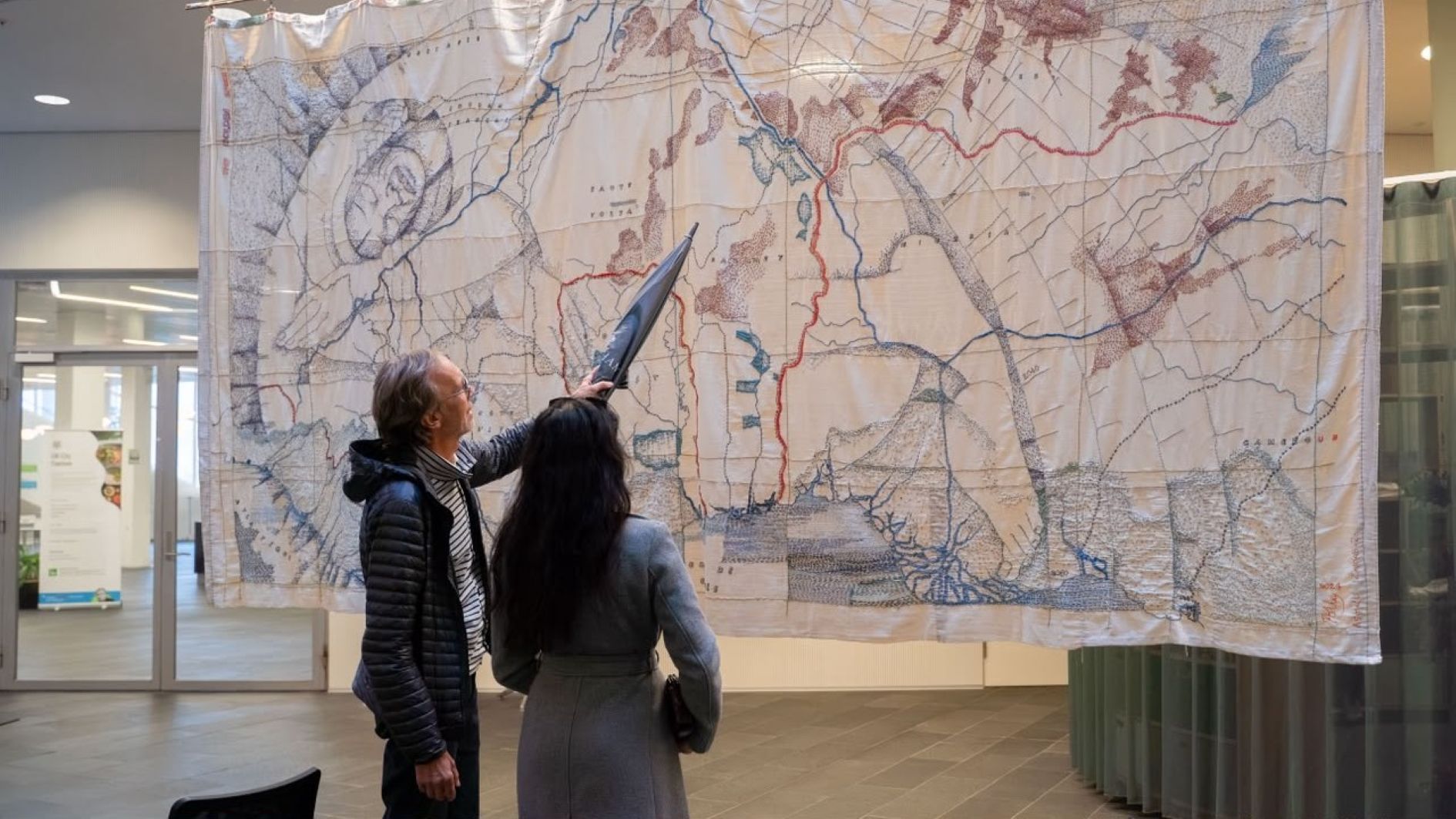
Water scarcity in Nigeria is no longer just a public health or environmental issue; it has evolved into a critical national security vulnerability, driving land competition, economic disruption, and social instability across the federation.
This stark warning formed the backdrop of high-level strategic discussions at the “Stories of a Broken Water Cycle” exhibition, hosted by the Lokoja Dialogues Climate Initiative at the UNFPA Office in Copenhagen, Denmark recently.
The initiative seeks to connect lived community experience directly with national policy, security frameworks, and service delivery.
The high-level event drew significant diplomatic and security attendance, including Nigeria’s Minister of Defence, General Christopher Gwabin Musa (rtd)—represented by Rear Admiral O. Bankole (Rtd.)—alongside Minister of Agriculture Senator Abubakar Kyari, Minister of Arts, Culture, Tourism and the Creative Economy Barrister Hannatu Musa Musawa, Lola Akande, Nigeria’s ambassador to Denmark, Sweden, and Finland, and Ghana’s Ambassador to Denmark and Sweden, Dr. Miewien Chebere.
Throughout the sessions, experts and policy leaders illustrated how environmental degradation, industrial pollution from unregulated mining, and unpredictable water availability directly exacerbate civil unrest, displace agrarian communities, and fuel violent resource-based conflicts over arable land and drinking sources.
Folarin Kuku, Founder and Managing Director of CEFO Premium Logistics, argued forcefully that state security actors must start viewing clean water and utility infrastructure as foundational to national stability and economic resilience.

“Nigeria is not running out of water. We are running into a problem. Water we have,” Kuku explained during the discussions. “What happens to the nation when the water beneath this economy becomes unreliable? Water is not one sector; it sits beneath every sector.”
Olumide Adeosun, Chairman of the Lokoja Dialogues Climate Initiative, reinforced this broad perspective by urging defence, intelligence, and peacebuilding institutions to integrate natural resource management into broader national security strategies.
“We see water as peace infrastructure,” Adeosun stated, emphasizing that long-term national security cannot be decoupled from ecological governance.
The multi-disciplinary panel also raised severe concerns over marginalized rural communities, such as Argungu and other regions visited by Lokoja Dialogues, where environmental destruction and neglected public infrastructure leave vulnerable residents without legal recourse or reliable water access.
“The people in the community are really left helpless,” observed Dr. Hamza Jakada, Vice President of Programmes at the Green Habitat Initiative. “There are very limited avenues for them to register their concerns, and therefore they just have to rely on whatever sources of water they have.”
Delegates at the Copenhagen summit ultimately concluded that failure to repair and protect Nigeria’s water systems invites widespread systemic failure across agriculture, health, and civil order, making sustainable water management an indispensable pillar of modern national security policy

