 Follow Us on Google News



 Follow Us on Google Discover
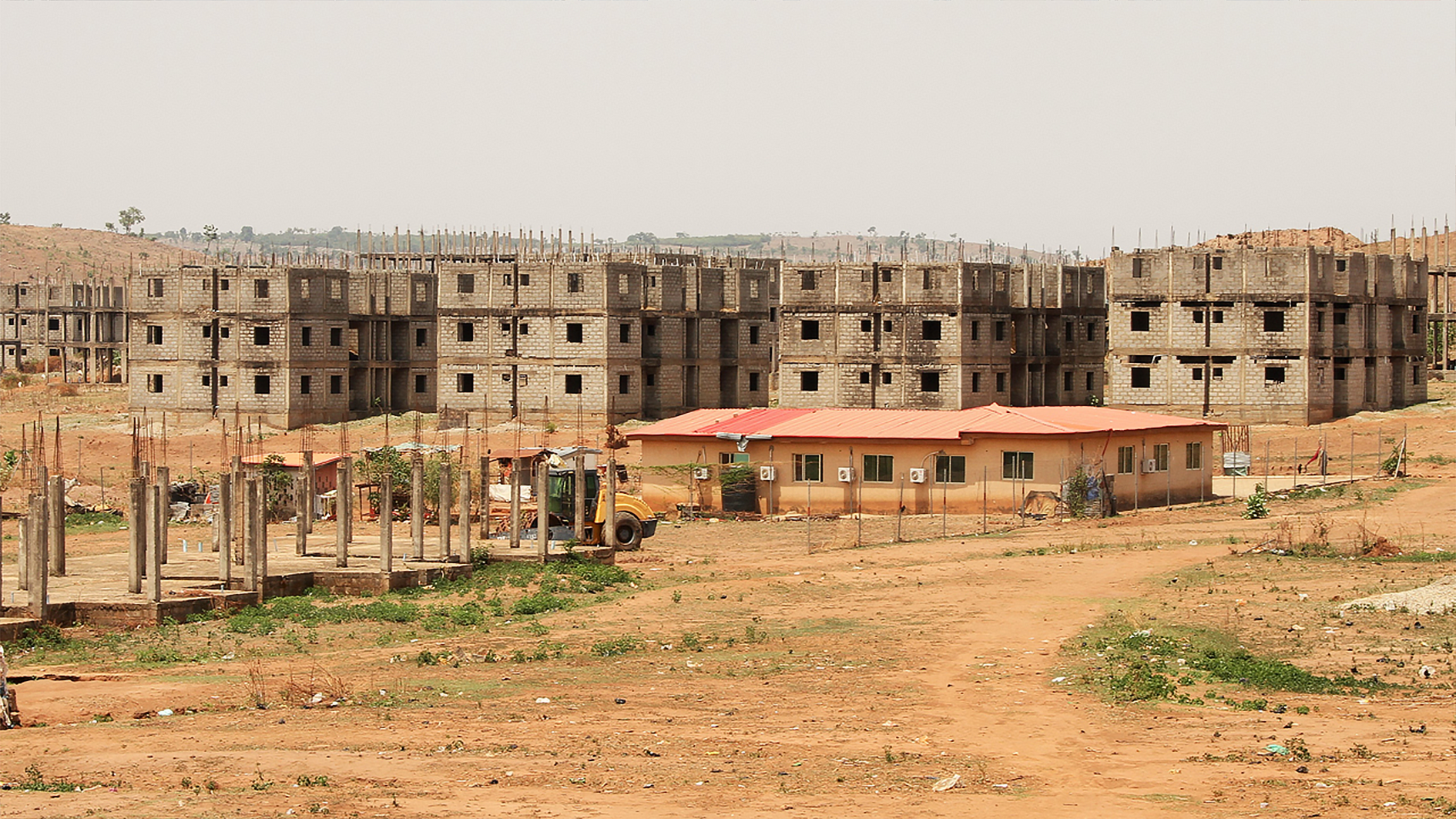
• Govt inherited ongoing projects valued at N14.42 trillion
• Finance ministry plans payment for 1,240 local contractors
• BudgIT knocks BPP over oversight failures in public project execution
• Experts blame delayed payments, incomplete budget implementation
• ‘Prolonged abandonment will reduce surrounding property values’
Nigeria’s abandoned public projects crisis has assumed alarming proportions, with billions of naira committed to infrastructure that remains incomplete, unexecuted or left to deteriorate.
Although the country has no comprehensive, continuously updated national database of abandoned projects, available evidence from government agencies and independent monitors points to the scale of the problem.
The National Assembly recently cited figures indicating that more than 60,000 projects have been abandoned across the country, with their combined value running into trillions of naira. The House of Representatives subsequently called for a comprehensive review of abandoned Federal Government projects, including their contract values, amounts spent and stages of completion.
Field monitoring by BudgIT’s Tracka provides further evidence. Between September 2023 and September 2024, Tracka monitored 1,404 government projects worth N282.5 billion across 25 states. Of these, 720, representing 51 per cent, were completed, while 332 were ongoing. Another 129 projects were abandoned or fraudulently executed, while 223 projects valued at N79.81 billion were not executed.
Tracka estimated the value of the abandoned projects at about N19.81 billion, while abandoned and unexecuted projects together represented more than N99.6 billion in public funds.

Its subsequent assessment of 2,760 Federal Government capital projects under the 2024 budget, valued at more than N1.9 trillion, also showed significant implementation gaps. Only 1,438 projects, valued at N645.56 billion, were completed, while 660 worth N1.95 trillion were ongoing. Another 471 projects, valued at N62.29 billion, had not been executed, while 99 projects worth N29.97 billion were abandoned.
Tracka also found that five states: Taraba, Abia, Nasarawa, Adamawa and Ogun accounted for 97.5 per cent of abandoned Federal Government projects in its monitoring, despite full disbursement of funds. The projects in the five states were valued at N7.8 billion out of N8 billion linked to projects for which funds had been released. Taraba accounted for the largest share, while 17 states recorded no abandoned projects during the tracking period.
The findings have raised questions about accountability and oversight in public project execution, including the effectiveness of the Bureau of Public Procurement (BPP). There has been no record of a domestic firm being blacklisted under the newly implemented debarment framework.
The scale of the problem is particularly striking in the road sector. In November 2025, the Independent Corrupt Practices and Other Related Offences Commission (ICPC), working with the Federal Ministry of Works, commenced a nationwide physical verification and performance audit of 760 federal road projects valued at more than N36 trillion across the 36 states and the Federal Capital Territory. The exercise is expected to identify abandoned projects and strengthen contractor accountability.
In the housing sector, 250,000 housing units have reportedly been identified as abandoned projects for assessment. Officials attributed the stalled projects to factors including approval delays, changes in contractors and rising construction costs.
The Minister of Housing and Urban Development, Muttagha Darma, said the ministry was reviewing abandoned projects nationwide to determine their status, level of completion and the interventions required to restore them for public use.
Darma said that completing the projects would prevent the waste of resources already committed and increase the number of housing units available to Nigerians. Data from agencies under the ministry also identified 46 major abandoned housing projects across the 36 states through the Federal Mortgage Bank of Nigeria (FMBN).
According to the Open Treasury Portal, the Federal Government released approximately N2.68 trillion for the construction, rehabilitation and maintenance of federal roads and bridges. The initial cost of inherited ongoing projects was put at N14.42 trillion, while N3.12 trillion had been certified as paid at the time.
The funding challenge comes amid rising public debt. The Debt Management Office (DMO) reported that Nigeria’s public debt stock stood at N166.79 trillion as of June 30, 2026, an increase of N7.44 trillion from N159.35 trillion at the end of the first quarter.
Funding pressures remain a major challenge to project execution, with industry stakeholders attributing a significant proportion of delayed and abandoned projects to inadequate or delayed payments. The Federal Ministry of Works reported that the Federal Government inherited 2,064 road contracts when it assumed office in May 2023.
Members of the Federation of Construction Industry (FOCI) said that the Nigerian construction industry is facing a crisis arising from inadequate and unpredictable funding, delayed payments and rising operating costs.
FOCI President, Vincent Barrah, blamed the situation largely on the gap between annual budgetary provisions and actual cash releases for infrastructure projects.
According to him, many projects are awarded without adequate multi-year funding, leading to delayed payments, accumulation of certified debts, reduced construction activities and, in some cases, suspension or abandonment of projects. The funding crisis was taking a toll on employment, as about 1,000 senior staff and 40,000 junior workers lost their jobs.
The federation called for a more responsive approach to price adjustments and variations, adding that existing mechanisms often fail to adequately reflect significant changes in inflation, foreign exchange rates and construction input costs.
It noted that the prices of cement, steel, bitumen, diesel, equipment, spare parts and other inputs had risen significantly following the depreciation of the naira, making some contracts awarded several years ago commercially difficult to execute at their original rates.
Barrah said lengthy administrative processes for measurement, certification, approval and payment often force contractors to finance substantial portions of projects while waiting for government payments, increasing financing costs and placing additional pressure on working capital.
He, however, said translating increased capital budgets into completed infrastructure required improvements in project prioritisation, funding, payment discipline, contract administration and implementation policies.
The Guardian learnt that some projects have attracted variations because of sharp increases in the prices of construction materials, including cement and iron rods.
However, the Federal Ministry of Finance said it had approved payments to more than 1,240 local contractors, prioritising businesses with verified claims of N100 million or less. The ministry said the strategy was designed to spread the economic impact of the payments rather than concentrate disbursements among a few large firms.
The payments form part of efforts to clear inherited contractor obligations. The government has processed more than N700 billion in verified contractor payments in recent months, including approximately N436.6 billion in May.
Officials said the payments would enable contractors to return to project sites, pay workers, settle suppliers and meet outstanding financial obligations. The ministry said it remained committed to fiscal discipline while clearing legitimate claims.
The Director-General of the BPP, Dr Adebowale Adedokun, recently clarified that although President Bola Tinubu had approved and gazetted a new debarment policy targeting contractors who deliver substandard work or abandon projects, formal enforcement had only recently commenced and no domestic firms had yet been officially debarred.
The World Bank, however, blacklisted more than 54 Nigerian individuals and companies in 2024 over various fraudulent practices.
The scale of abandoned projects in Nigeria remains unclear, with experts warning that widely cited figures are largely estimates. President, Project Management Institute (PMI), Nigeria Chapter, Dr Gbolahan Oyelakin, said agencies such as the National Bureau of Statistics (NBS), Ministry of Housing and Ministry of Works do not have comprehensive data on abandoned projects, despite overseeing many of them.
“Anybody coming out with figures is just an estimated figure,” Oyelakin said, stressing that “without data, whatever solution you’re trying to prefer, it won’t work because it’s not data-driven.”
He attributed project failure to poor planning and feasibility studies, weak supervision, inadequate capacity and poor financial management. Political interference and changes in government policies can also leave projects without funding.
“Many projects failed right from initiation, when they are not properly initiated,” he said, adding that the absence of proper feasibility and risk assessments before projects are awarded remains a major cause of abandonment.
The immediate past president of the Nigerian Institute of Quantity Surveyors (NIQS), Mr Kene Nzekwe, said the situation has worsened, particularly because of delayed payments to contractors. He noted that incomplete budget implementation in 2024, 2025 and 2026 had contributed to project abandonment, although a reliable current figure was unavailable.
NIQS President, Dr Aminu Bashir, linked abandonment to failures by government or contractors to meet contractual obligations, compounded by inflation and other macroeconomic pressures. He cited a university project awarded at N1 billion that had remained abandoned for more than a year because rising costs made execution difficult.
“I’m working with a contractor who has projects in a university. They signed the project at N1billion, but because of inflation, the project has been abandoned for more than a year,” Bashir said.
He cautioned against starting new projects before completing existing ones, arguing that government should only award projects when funding is assured.
“If you keep rolling out new projects without finishing the old ones, where will you get the money to fund all of them?” he asked.
Former Chairman of the Nigerian Institution of Estate Surveyors and Valuers (NIESV), Lagos State branch, Dotun Bamigbola, said stalled projects should be assessed for their relevance, completion cost and potential benefit before government decides whether to complete, convert or dispose of them. He identified lack of political will as a major cause of abandonment in the public sector.
Bamigbola also warned that prolonged abandonment can reduce surrounding property values, encourage insecurity and create structural and environmental risks, as “squatters take over” abandoned sites and unfinished structures become potential hazards.

