 Follow Us on Google News



 Follow Us on Google Discover
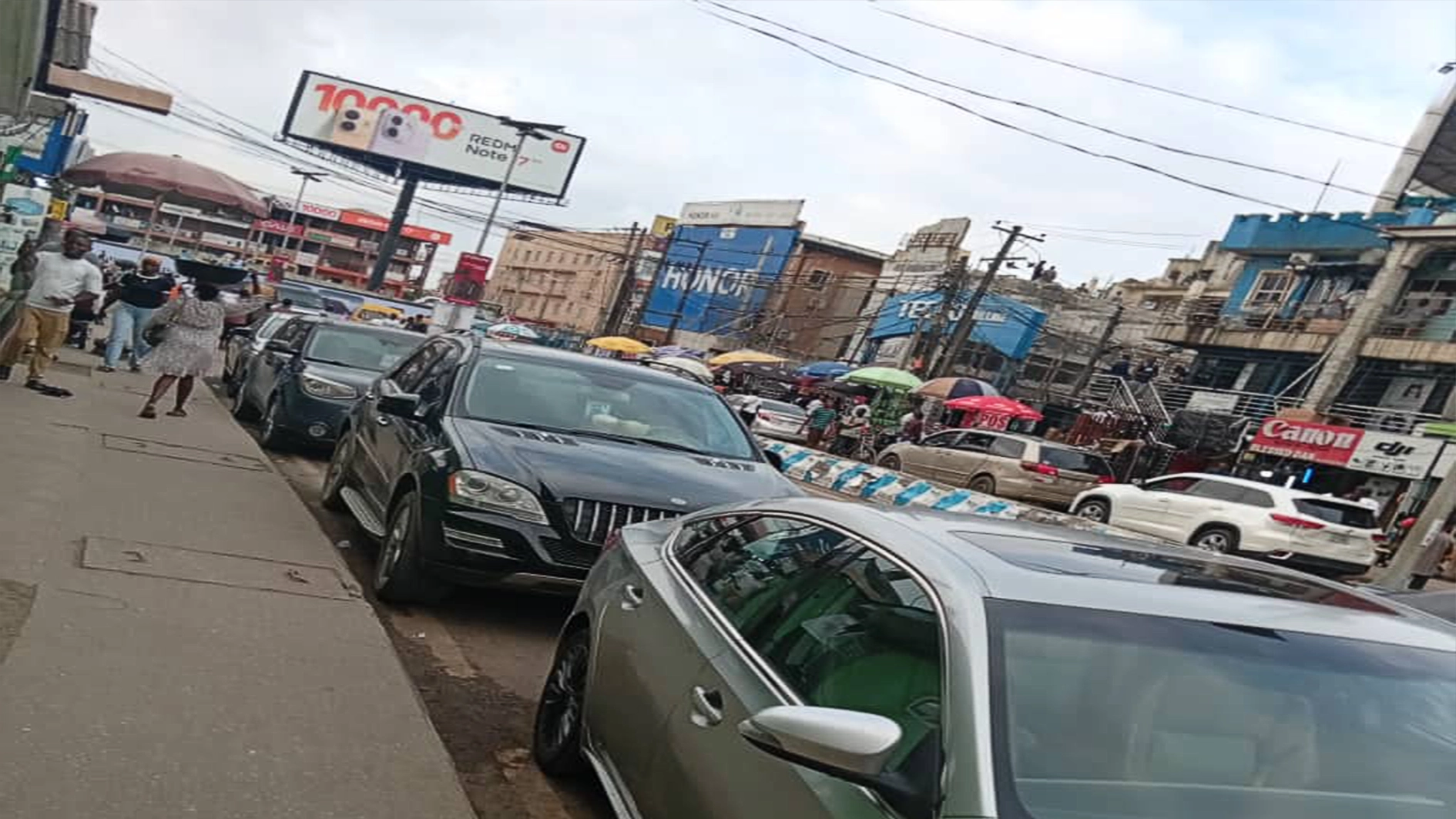
For motorists in Lagos State, finding a place to park can mean more than securing a convenient space. In some areas, it also means dealing with people who demand money for roadside parking, leaving motorists uncertain about who has the authority to collect fees and whether the charges are legitimate.
The practice presents a challenge for the Lagos State Parking Authority (LASPA), which is preparing to introduce its proposed regulated on-street parking scheme to manage designated roadside spaces, regulate fee collection and improve compliance with parking rules.
During visits to Adeniyi Jones, Allen Avenue, Obafemi Awolowo Way, Ikeja Under-Bridge and adjoining streets, The Guardian observed vehicles parked along major roads, including locations where parking appeared poorly organised.
For motorists, the problem goes beyond finding a space. Where people demand payment for parking, it may be difficult to establish whether they are authorised agents or simply exploiting the absence of clear arrangements.
Helen Samuel, who works along Adeniyi Jones, Ikeja, said her workplace’s parking space could not accommodate all staff members, forcing some to consider roadside parking.
She believes better public awareness of parking regulations could encourage compliance, although she acknowledged that not every motorist would follow the rules.
Chika Nyesom, who occasionally visits the Ikeja Under-Bridge area to shop, said roadside parking had been convenient.
She admitted that she had not given much thought to using designated parking facilities before leaving her vehicle by the roadside, but said she would consider doing so in future.
Their experiences illustrate why roadside parking remains common: convenience, limited spaces and the availability of alternatives all influence motorists’ decisions.
However, informal collections by people claiming control of roadside spaces add another layer of uncertainty.
An inter-state driver, Afisu Dada, said he had seen vehicles parked along roads leading towards LASPA’s office at 36B Sasegbon Street, G.R.A., Ikeja, without apparent intervention by enforcement officials.
Drawing on his experience in Agboyi-Ketu and the Ikorodu axis, Dada said parking appeared more organised in some locations where motorists who parked illegally risked having their vehicles towed and being made to answer to the local council.
He believes consistent enforcement could discourage indiscriminate parking and improve access to homes and businesses.
However, the specific enforcement arrangements he described in Agboyi-Ketu were not independently verified during the investigation.
LASPA has been working towards a more structured approach to roadside parking for several years. In January 2024, the authority reported identifying more than 20,000 setbacks suitable for parking across Lagos State, with over 13,000 already in use.
It also reported creating more than 1,800 parking slots through its on-street parking strategy and installing 1,162 signs to guide motorists.
In July 2024, the state announced plans for a regulated on-street parking scheme, with implementation expected in October that year.
Subsequent plans included a proposed pilot in Ikeja, with 200 roads identified for the exercise.
However, full-scale implementation has yet to take place.
In an interview with The Guardian, LASPA General Manager, Adebisi Adelabu, attributed the delay partly to the preparedness of private operators expected to manage the scheme.
She said the authority intended to retain its regulatory role while private operators handled much of the day-to-day parking business.
The technology was ready, she said, but operators were still undergoing training and preparation.
“The technology is ready, but the people are not ready,” she said.
Adelabu also cited the need to coordinate the initiative with the Ministry of Transportation and other government agencies to avoid overlapping responsibilities.
According to her, LASPA is working towards an arrangement involving private operators and local councils before implementing the scheme on a larger scale.
She said the delay had not stopped the authority from responding to parking violations, adding that some enforcement activities began in September 2026. Full-scale implementation is now targeted for the end of the first quarter of 2027, although no definitive launch date has been announced.
According to her, one of the major concerns the scheme is expected to address is the collection of money by people who claim to manage roadside parking without establishing their authority.
Adelabu acknowledged that unauthorised operators sometimes imitate legitimate parking agents by producing their own uniforms and identification.
To help motorists identify approved collectors, she said LASPA had developed a verification system under which authorised agents would wear uniforms bearing identification numbers linked to a database.
Motorists would be able to verify an agent’s identity through a USSD or text-message service.
The system would return the agent’s details and photograph if the person was registered.
She advised motorists not to pay anyone whose identity could not be verified.
The authority also plans to introduce cashless payments, with provisions for motorists who do not have smartphones.

Adelabu said agents could use prepaid cards to process payments where necessary.
She said: “The proposed measures are intended to make it easier for motorists to distinguish authorised agents from people collecting money without approval.
“Their effectiveness will depend on how easily motorists can verify agents, how widely the system is publicised and how complaints are handled.
“Under the proposed arrangement, private operators would manage parking operations while LASPA retained regulatory oversight.
“Local Councils would also participate, drawing on their knowledge of communities and local parking needs.
Adelabu, however, confirmed that towing would form part of enforcement, although she said LASPA’s towing vehicles and other equipment were used occasionally rather than in regular, full-scale operations.
“The availability and cost of formal parking facilities could also influence how motorists respond to the scheme,” she said.
During visits to parking facilities in Ikeja, The Guardian found that Ikeja Club 1966 charged N2,000, up from N1,000 previously being charged. The facility operated from about 8:00 a.m. to 7:00 p.m. and used a gated, card-based system to manage vehicles entering and leaving.
Another facility along Obafemi Awolowo Way charged N1,000 and operated from about 7:00 a.m. to 7:30 p.m. It also offered a car-wash service.
A parking area beneath the Ikeja Under-Bridge, beside a plaza, was reserved for businesses and their customers.
These facilities provide alternatives, but their charges, opening hours and access arrangements vary. Workers whose offices lack sufficient parking and visitors arriving outside operating hours may still struggle to find suitable spaces.
Asked how the scheme would affect existing private car parks, Adelabu said privately operated facilities would continue to operate, provided they met the relevant licensing requirements.
She added that LASPA wanted to encourage investment in parking infrastructure, including multi-storey car parks and technology that could accommodate more vehicles on limited land.
However, she did not announce a definitive tariff for the proposed on-street parking scheme, leaving motorists waiting for details of the approved charges.
For LASPA, the challenge is to turn its plans into a system that motorists can understand and trust.
Clear rules, transparent fees, accessible parking alternatives and easily verifiable agents will be essential to achieving that goal.
Adelabu identified improved compliance by large organisations with their parking obligations and the successful introduction of the scheme as key measures of the authority’s performance.
She also said parking revenue could support public services, including healthcare, education and transportation.
For motorists, however, the immediate concern is simpler: finding a legitimate place to park without facing confusing or unauthorised demands for payment. With full implementation targeted for March 2027, LASPA will need to demonstrate that its proposed system can bring order to roadside parking and make it clear who is entitled to collect fees.

