 Follow Us on Google News



 Follow Us on Google Discover
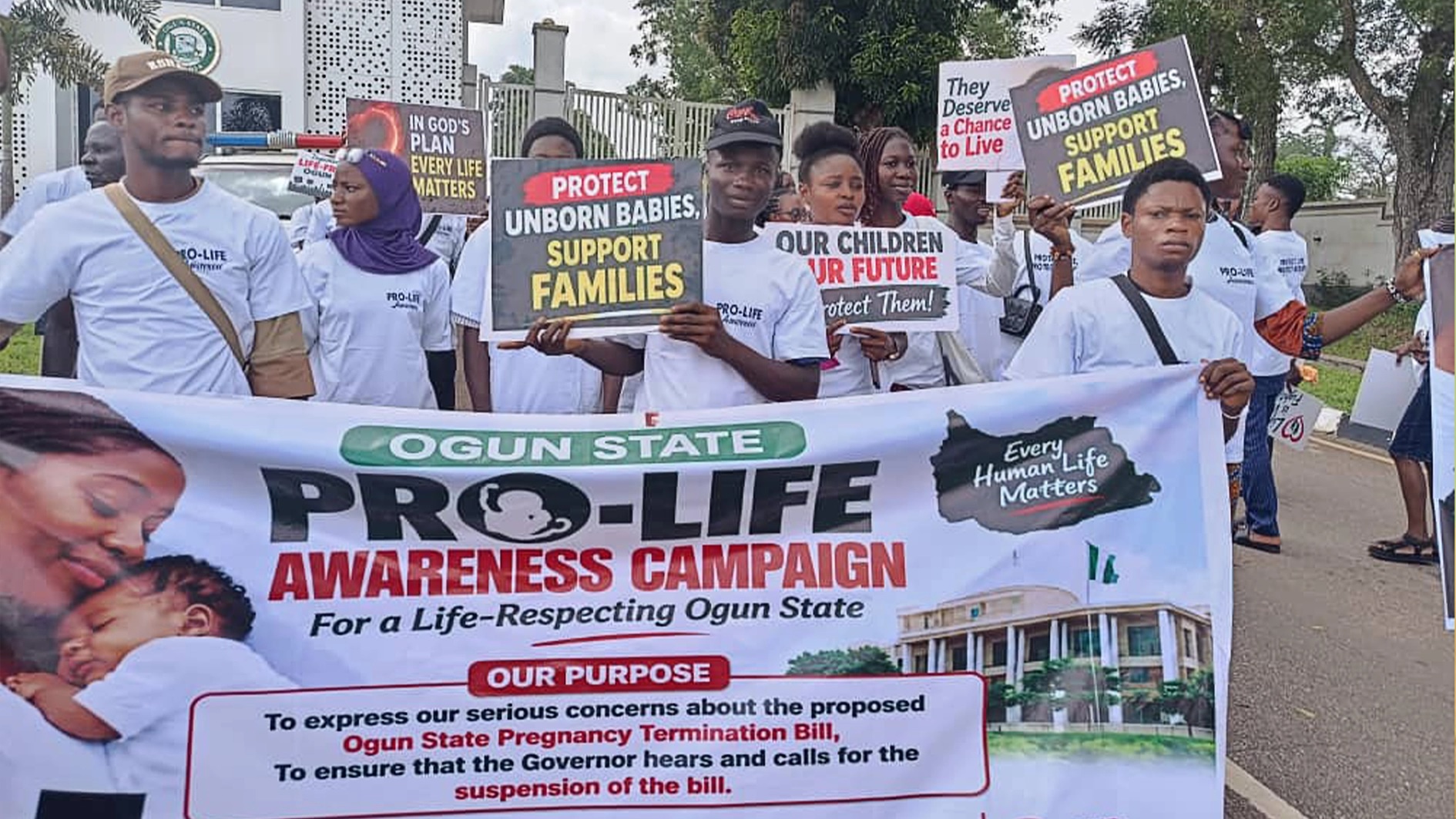
The proposed Ogun State Safe Termination of Pregnancy Law, 2026, has sparked renewed debate over reproductive healthcare, following a protest by a pro-life organisation urging Governor Dapo Abiodun to withhold assent to the legislation.
The AYUBSON Life Foundation staged a peaceful demonstration in Abeokuta, the state capital, on Thursday, calling on the governor to reject the bill, which was passed by the Ogun State House of Assembly in September. The legislation seeks to establish conditions for safe pregnancy termination, with the stated objective of reducing maternal morbidity and mortality.
The protest brings competing perspectives on abortion into focus, particularly the need to protect unborn children, safeguard women’s health and ensure that women facing crisis pregnancies have access to appropriate medical care and support.
Led by its founder and Executive Director, Yusuf Ayuba, the protesters marched from the overhead bridge linking Abiola Way with IBB Boulevard to the Governor’s Office at Oke-Mosan, carrying placards with messages including “Say No to Abortion, Say Yes to Life” and “Protect Unborn Babies, Support Families.”
Speaking during the demonstration, Ayuba said the foundation wanted the governor to consider its objections before deciding whether to assent to the bill.
“We are here to express our concerns about the Pregnancy Termination Bill passed by the Ogun State House of Assembly in September 2026. We understand that the bill is awaiting the governor’s assent before it can be fully implemented in the state,” he said.

The bill, numbered H.B. No. 036/OG/2026, was passed on September 24, following consideration of a report by the House Committee on Health, chaired by Wahab Haruna, during a plenary session presided over by Speaker Oludaisi Elemide.
Ayuba questioned the compatibility of the proposed legislation with Nigeria’s existing legal framework on abortion, arguing that the state should prioritise protecting unborn children and strengthening support for women experiencing crisis pregnancies.
“Even in cases involving crisis pregnancies, I do not believe abortion is the best option or the solution. Women need support. Those experiencing crisis pregnancies need medical care, practical assistance, counselling and guidance,” he said.
He urged the state government to address poverty, hunger and unemployment while expanding assistance for women and families facing difficult circumstances. He also called on the governor not to sign the bill, arguing that its implementation could cause more harm than good.
The foundation said it became aware of the legislation late in the legislative process, prompting it to launch a public awareness campaign and submit petitions to relevant authorities.
“What baffles us most is that the people who will be affected by this bill have no voice and cannot speak for themselves. Many of those who will be affected are not even aware that the bill has been passed,” Ayuba said.
The proposed law has implications for ongoing discussions about maternal health and the legal conditions under which pregnancy termination may be permitted. Its stated objective of reducing maternal morbidity and mortality places the prevention of pregnancy-related illness and death among the issues at the centre of the debate.
Under Sections 228–230 of the Criminal Code Act, which applies in southern Nigeria, various acts relating to unlawful abortion constitute criminal offences. Section 297 provides a defence for certain surgical procedures undertaken in good faith and with reasonable care to preserve a pregnant woman’s life. The legal position must therefore be understood within the applicable statutory provisions rather than through a blanket assertion that abortion is prohibited in every circumstance.
The Constitution of Nigeria also protects the right to life and the dignity of the human person, although the application of these protections to abortion regulation requires legal interpretation.
For women, the debate encompasses access to healthcare, the management of pregnancy-related complications and the availability of reliable information and support when difficult decisions arise. For opponents of abortion, it also raises concerns about the protection of unborn children and the responsibilities of government in supporting mothers and families.
Ayuba said the foundation hoped the governor would consider its position before making a decision on the bill.
As the proposed legislation awaits the next stage of the process, the debate underscores the need for careful consideration of its legal implications, intended public health outcomes and potential effects on women, families and healthcare providers in Ogun State.

