 Follow Us on Google News



 Follow Us on Google Discover
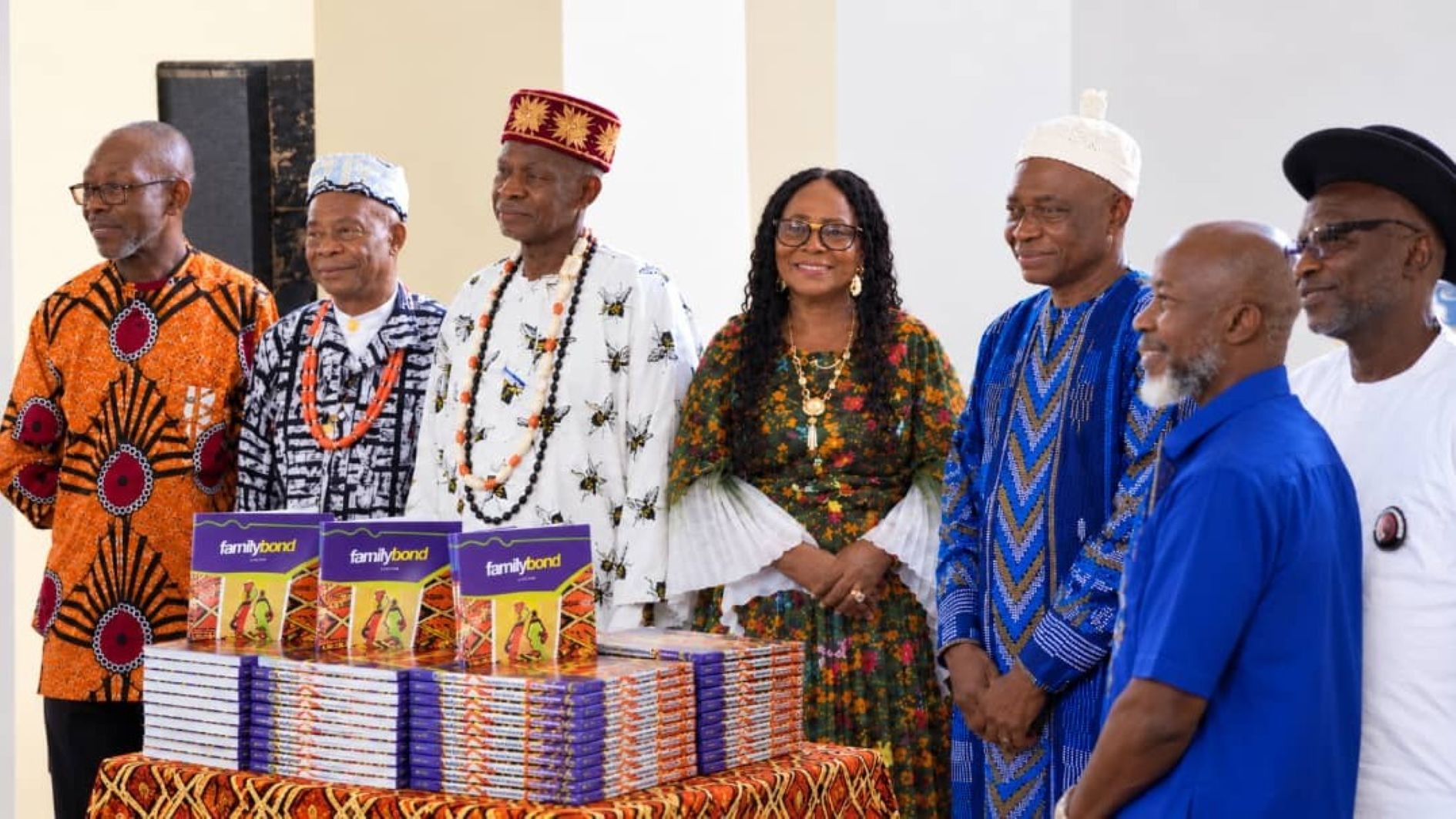
On what would have been her late husband’s birthday, Eugenia Onyemaechi Irobiegbulam returned to the school that helped shape his life, carrying a gift that was both deeply personal and profoundly national: a book about family, cultural identity, friendship and the enduring ties that bind people together.
It was October 7, 2026, and Methodist College, Uzuakoli, in Abia State, was more than a venue for the unveiling of her novel, Family Bond. It was a place where memories of a beloved husband converged with a widow’s determination to preserve the values she believes are slipping away from Nigerian society.
For 29 years, Irobiegbulam had shared her life with her husband, a proud old boy of the historic institution. His education, character and friendships had helped shape the man she loved. With his birthday coinciding with the book launch, she could think of no more meaningful way to celebrate his legacy than to return to the institution that had contributed to his formative years.
Standing before the gathering of school alumni, traditional leaders, literary figures, educators and members of the community, she explained that the occasion was about much more than introducing a new book to the reading public.
“We are gathered here today for much more than the unveiling of a book. We are here to answer a quiet but urgent call,” she said.
That call, as she explained it, was to rescue a society in which indigenous languages were fading from the lips of children and the family values that once held communities together were increasingly under pressure.

For Irobiegbulam, Family Bond is an attempt to confront that cultural drift, using fiction to remind Nigerians of the importance of their roots, the responsibilities of parenthood and the humanity they share across ethnic boundaries.
But the occasion carried an intimate sadness that gave the book’s message an added emotional weight.
Before concluding her address, she requested a minute of silence in honour of her late husband, a man whose memory she had chosen to celebrate through a work intended to influence generations beyond his immediate family.
In that moment, the launch became a meeting point between grief and purpose: a wife honouring her husband, an author offering something to the next generation, and a family memory being transformed into a public statement about the kind of society Nigerians should aspire to build.
Irobiegbulam said Family Bond was written to remind young Nigerians that character matters, resilience is part of their heritage and indigenous languages and traditions must not be abandoned.
She lamented the fading of indigenous languages among younger Nigerians and the gradual erosion of family values, describing Family Bond as a contribution to national reorientation.
At the heart of Family Bond is Obinna, a civil engineer whose life illustrates how family, education and friendship shape personal values.
Obinna marries Nneamaka, a private-school principal, and they have two children, Jewel and Dike. Their experiences move between Lagos and their ancestral home in Uzuakoli, where the children encounter their cultural heritage and discover a world beyond urban life.
But the novel reaches beyond domestic relationships through Obinna’s enduring friendship with Tahirru, a schoolmate from northern Nigeria.
The two meet at Methodist College and maintain their bond beyond their school years. Their friendship eventually influences Obinna’s academic journey at Ahmadu Bello University, where he studies engineering.
Through their relationship, Irobiegbulam challenges ethnic prejudice and presents a vision of Nigeria in which differences in language and background do not prevent people from building meaningful relationships.
The novel’s message resonated with the principal of Methodist College, Very Rev. Mba Eke, who said the institution’s history reflected the importance of education, discipline and brotherhood.
Founded in 1923 by the Methodist Church of Nigeria, the school initially aimed to educate young people who would read, write and teach the Bible before expanding into a full college. According to Eke, it attracted students from different communities and became known for academic achievement and moral instruction.
Its notable alumni include Dr. Michael Okpara, former Premier of Eastern Nigeria, and Dr.Clement Isong, former governor of the old Cross River State.
Eke said the novel’s launch was particularly appropriate because its message reflected the school’s motto: “You first, and I second.”
Linked to Romans 12:10, the motto emphasises honouring others and placing mutual respect above selfish interests.
For the principal, the friendship between Obinna and Tahirru demonstrates the brotherhood the institution seeks to cultivate among students from different backgrounds.
Rediscovering The Mother Tongue
The novel also examines the growing disconnect between Nigerian children and their ancestral roots.
During a Christmas journey from Lagos to Uzuakoli, Obinna’s children encounter village life, traditional greetings and cultural practices unfamiliar to them.
Their experience highlights a challenge facing many families: children who grow up in cities may speak English fluently but struggle to communicate in their parents’ indigenous languages or understand the history of their ancestral communities.
Delivering the keynote address, Prof. Amanze Akpuda, a member of the Association of Nigerian Authors, Abia State chapter, and an academic at Abia State University, warned against attitudes that portray indigenous languages as inferior to English.
He argued that the dominance of English in formal education and administration, alongside negative perceptions of native languages, had contributed to their declining use among younger generations.
Drawing from his experience as a parent, Akpuda said he deliberately spoke Igbo to his children at home, believing that proficiency in an indigenous language was essential to their cultural identity.
He maintained that children could learn English and excel academically without abandoning their mother tongue.
His position reinforced the novel’s central argument that modern education and cultural preservation are compatible.
Indigenous languages, he noted, carry the histories, values and worldviews of the communities that speak them. Parents and schools therefore have a responsibility to ensure that children continue to learn and use their native languages.
For Mazi Ugochukwu Okoroafor, chairman of the occasion and immediate past president of the Uzuakoli Methodist College Old Boys Association, the event was also a homecoming.
He recalled beginning his education at the school in 1967, describing it as a place where he acquired knowledge, discipline and friendships that endured beyond the classroom.
Although he had not read Family Bond before the launch, he commended Irobiegbulam’s achievement and urged Nigerians to support the book.
He also warned against tribalism, religious intolerance and political manipulation, arguing that Nigerians share fundamental aspirations for dignity, security, opportunity and a better future for their children.
People can disagree politically, he said, without becoming enemies, just as they can cherish their own cultures while respecting those of others.
He emphasised that national unity begins at home, where children learn tolerance by observing how adults treat people from different backgrounds.
Parents, teachers, government and citizens, he added, must each fulfil their responsibilities in building a peaceful society.
Reviewing the novel, Dr. Stanley Nduagu described Family Bond as a 17-chapter, 170-page work exploring family, marriage, motherhood, cultural identity and enduring friendship.
He praised the author’s combination of fiction with historical and cultural references, including accounts connected to Methodist College and the former leper colony at Uzuakoli.
The novel also draws attention to historical personalities associated with Abia State and Nigeria, giving readers an opportunity to encounter aspects of the country’s heritage through storytelling.
Nduagu said the book’s cultural value lay in its documentation of indigenous language, marriage traditions, family relationships and village life at a time when urbanisation and globalisation were changing how younger generations related to their roots.
He argued that children should inherit not only their parents’ material possessions but also their history, language and sense of belonging.
For Irobiegbulam, the launch remained deeply personal. By unveiling Family Bond on her late husband’s birthday at his alma mater, she transformed an intimate act of remembrance into a wider appeal for cultural preservation and national cohesion.
Her message is that families must do more than provide material necessities for their children. They must also pass on the values, languages and traditions that connect generations.
Through Obinna and Tahirru’s friendship, the novel challenges ethnic divisions. Through Jewel and Dike’s journey to Uzuakoli, it urges young Nigerians to rediscover their heritage.
Ultimately, Family Bond presents family as the foundation of a more tolerant society, arguing that cultural differences need not prevent people from living together in peace.
For the widow who chose literature to honour her husband’s memory, the book is both a tribute to a cherished life and an investment in the next generation.
Its enduring message is simple: a people can embrace modernity without forgetting their roots, and a nation can celebrate its differences without losing its sense of brotherhood.

