 Follow Us on Google News



 Follow Us on Google Discover
…Demand justice Over 20,000 deaths
…Urges presidential declaration of national dialogue and reconciliation
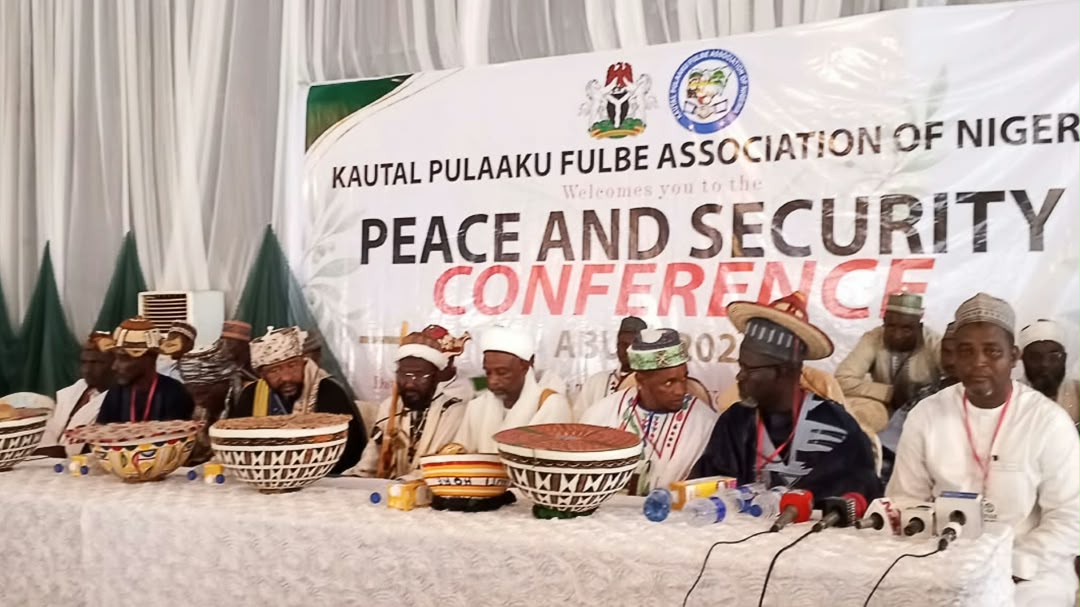
Members of the fulanis ethnic nationalities under the aegis of the Kautal Pulaaku Fulbe Association of Nigeria has called for an independent investigation into alleged killings of pastoralists across the country, citing an estimated 20,000 deaths in farmer-herder conflicts over the past decade.
The association while demanding an immediate end to the profiling of Fulani communities as bandits, kidnappers and terrorists also urged President Bola Tinubu to convene a national dialogue and reconciliation conference involving pastoralist groups, farmers, traditional rulers, religious leaders, security agencies and state governments to address the persistent conflicts and establish a framework for peaceful coexistence.
At a peace and security conference, the association said hundreds of pastoralists had allegedly been killed in attacks in Plateau, Niger, Sokoto, Kebbi, Zamfara and other states in recent months, with women, children and elderly people among the reported victims.
It further alleged that thousands of cattle had been rustled or killed and settlements belonging to pastoralist communities destroyed, leaving families displaced and livelihoods devastated.
The claims by the pastoralist coalition were made by Dr Muhammad Hussein Buzaye, president of Kautal Pulaaku Fulbe Association of Nigeria, under the Confederation of Pastoralist NGOs (CONPA) at the start of the conference held in Abuja on Sunday.

The group called on the Federal Government to investigate the reported killings, ensure that perpetrators were brought to justice and provide relief materials and assistance to displaced pastoralist families.
It urged the National Emergency Management Agency (NEMA) and the National Commission for Refugees, Migrants and Internally Displaced Persons (NCFRMI) to extend assistance to affected pastoralist communities, arguing that they were entitled to the same protection and support as other Nigerian citizens.
“For too long, the word ‘Fulani pastoralist’ has been profiled and criminalised as synonymous with banditry, kidnapping and terrorism,” the association lamented.
It added that the stereotyping had encouraged what it described as jungle justice, extrajudicial killings and hate speech against innocent pastoralists, including women and children who had no connection with criminal activities.
The association, however, condemned banditry, kidnapping and other criminal acts, insisting that offenders should be identified and prosecuted individually rather than having an entire ethnic community held responsible.
“Criminals are criminals and have no tribe. We call on security agencies and the media to stop ethnic profiling but arrest and prosecute criminals as individuals, not as an ethnic group. An entire community cannot be punished for the sins of a few,” the statement said.
The association called on security agencies to strengthen protection for vulnerable pastoralist communities and investigate reported attacks without discrimination.
It maintained that addressing insecurity required impartial law enforcement, accountability for human rights violations and cooperation among communities affected by farmer-herder disputes.
On the Federal Ministry of Livestock Development, the association commended Tinubu for establishing the ministry, describing the decision as a significant step towards addressing longstanding demands for a dedicated institutional framework for livestock production.
It, however, expressed concern that the ministry remained inadequately funded and lacked a sufficiently developed operational framework to deliver its objectives at the grassroots.
The association urged the President and the National Assembly to allocate at least 30 per cent of the agricultural budget to the ministry, immediately gazette and protect the country’s 417 grazing reserves, and establish pilot ranches and fodder production projects across the six geopolitical zones.
It described livestock as a major economic sector with an estimated value of ₦30 trillion, arguing that greater investment in animal production, processing, veterinary services and modern livestock management could improve livelihoods and strengthen food security.
The group said the ministry should develop practical programmes that would reach pastoralist communities and provide sustainable alternatives to the longstanding conflicts associated with access to land, water and grazing routes.
On the proposed national dialogue, the association said military operations alone could not provide a lasting solution to farmer-herder conflicts, which it claimed had resulted in more than 20,000 deaths over 10 years.
It called for a presidential declaration of national dialogue and reconciliation to establish a process for truth, justice, forgiveness, compensation and a roadmap for peaceful coexistence.
The proposed dialogue, according to the association, should bring together Miyetti Allah groups, farmers’ associations, traditional institutions, the Christian Association of Nigeria, the Jama’atu Nasril Islam, security agencies, state governments and other relevant stakeholders.
It said the process should address grievances on all sides, establish accountability for violence and develop practical mechanisms for preventing further clashes.
The association also acknowledged that pastoralist communities had responsibilities in preventing and resolving conflicts.
It urged pastoralist leaders, households and young people to respect the rights and property of farmers and other citizens, prevent livestock from straying into cultivated farmland, cooperate with lawful security investigations and report cattle rustling, kidnapping and other crimes.
The group further called on pastoralist communities to reject violence, retaliatory attacks and misinformation, encourage children to attend school, promote peaceful dialogue with neighbouring communities and support responsible livestock management and environmental protection.
It disclosed plans to embark on mass awareness and sensitisation campaigns across the six geopolitical zones, saying a framework had been developed for the proposed mobilisation.
The association said the initiative would encourage peaceful coexistence, discourage criminality and promote constructive engagement between pastoralists, farmers and host communities.
It also called on traditional rulers, governments, security agencies, farmers’ associations and development partners to work together towards lasting solutions to insecurity and the marginalisation alleged by pastoralist communities.
“We are Nigerians. We are pastoralists. We are not bandits. We love this country. Our cattle feed this nation. Our children want to go to school,” the statement said.
The association maintained that sustainable peace required justice without discrimination, security without exclusion and development that included pastoralist communities alongside farmers and other citizens.
It urged Nigerians to replace suspicion with dialogue and retaliatory violence with cooperation, insisting that mutual respect and the rule of law were essential to national stability.
The conference was attended, among others by the association’s President-General, Ardo Aliyu Liman Bobboi; national secretary, Ardo Abdullahi; Sheikh Dahiru Usman Bauchi; Sheikh Sani Yahaya Jingir; Ustaz Abdulkarim Bayero Jos; Ibrahim Adamu, Mai Gunduma; Dr Muhammad Hussein Buzaye; Alhaji Sani Juli; and several pastoralist and cattle breeders’ leaders.
Other participants included Ardo Tambari, Ardo Bello Kwairi, Ardo Lawal, Ardo Samaila Rabe, Ardo Salisu Garba Bashankai, Ardo Muhammad Lawal, Ardo Gotsho, the president of Gan Allah, and Alhaji Usman Geljarma, president of the cattle breeders’ association.
The organisers said their objective was to promote security, justice and peaceful coexistence while ensuring that criminal acts were addressed through lawful processes rather than ethnic generalisations.

