 Follow Us on Google News



 Follow Us on Google Discover
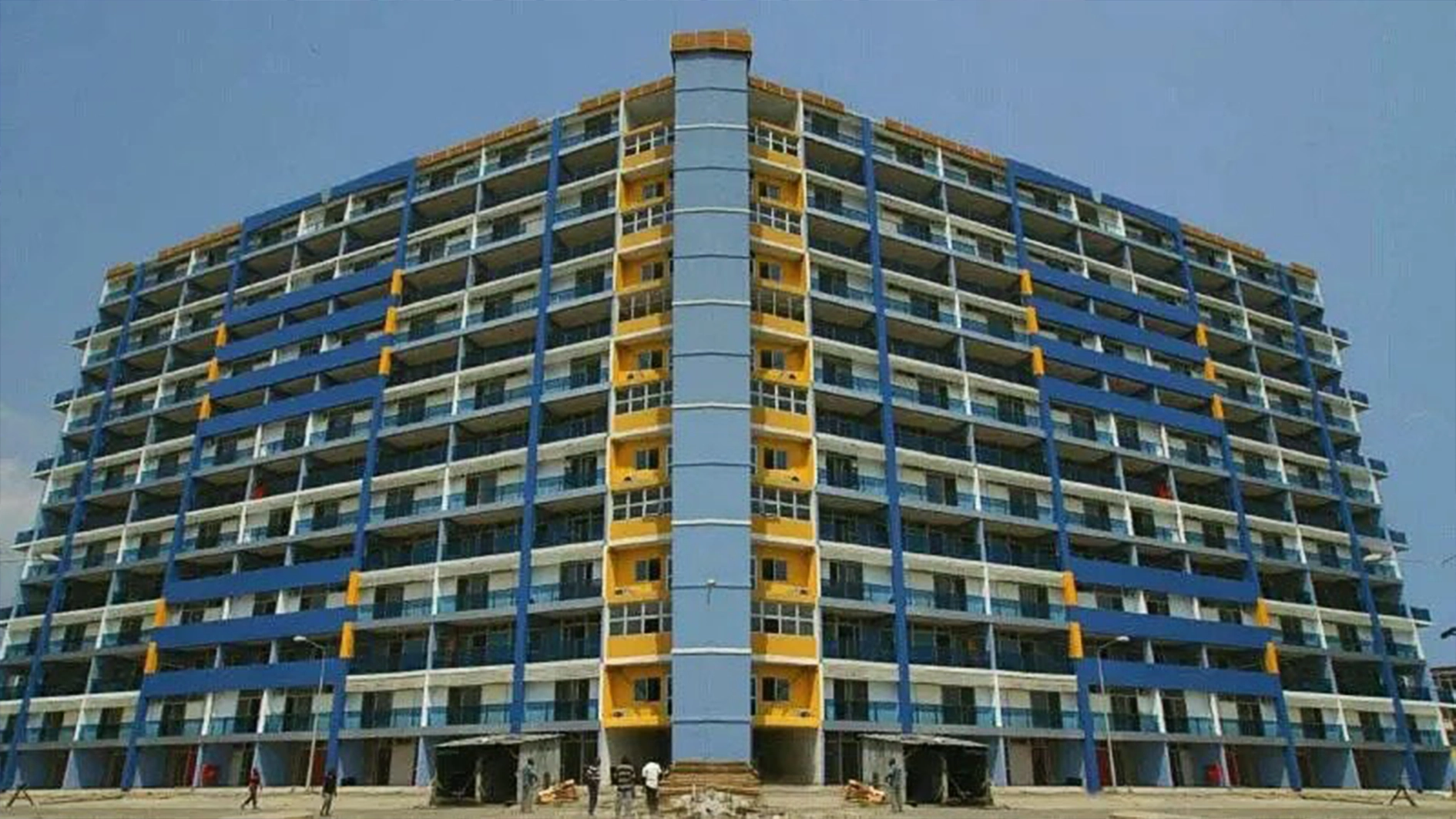
Property listings are increasing ahead of the 2027 general elections, with some market operators attributing the trend to politicians seeking to raise campaign funds while others see it as a market slowdown often triggered by pre-election anxiety and uncertainty. However, real estate experts say the anticipated election spending is yet to translate into widespread sales, as buyers remain cautious amid economic uncertainty, VICTOR GBONEGUN reports.
As political activities gather momentum ahead of the 2027 general elections, property listings are reportedly increasing as some politicians put houses, land and other real estate assets up for sale to raise campaign funds. The development is bringing more properties onto the market, although it remains unclear how much of the increase is directly linked to election spending.
Estate surveyors and property market operators are divided over the reasons for the trend. While some attribute the listings to politicians seeking to raise funds for campaigns, others say property owners are selling to finance businesses, travel and other personal needs amid difficult economic conditions.
The increase in supply could intensify competition among sellers, but its effect on prices will depend on buyers’ purchasing power and the volume of properties available.
The scale of the reported sell-offs and their implications for property values remain key concerns for the sector. Market operators say the coming months will reveal whether the increase in listings translates into lower prices, faster transactions or a glut of unsold properties, particularly as prospective buyers adopt a cautious approach ahead of the polls.
Campaign activities for the 2027 elections are gathering momentum, with the presidential and National Assembly elections scheduled for January 16, 2027, while governorship and state Houses of Assembly elections are slated for February 6, 2027.

The Guardian’s survey of the property market last week found marketers increasingly seeking buyers on behalf of developers and property owners in locations including Ikeja, Ojodu Berger, Victoria Island and Lekki in Lagos, as well as Abuja, Asaba, Uyo, Warri, Awka, Ibadan, Abeokuta, Benin City, Kaduna, Owerri, Onitsha, Kano and Port Harcourt.
In one street in an upscale Lagos neighbourhood, at least two properties valued at more than N600 million were reportedly listed for sale within a week, while another property worth about N300 million had been sold. Market sources also reported more than 1,000 properties listed for sale across Lagos and Abuja, although the figure could not be independently verified.
Nigeria’s previous election cycles have often been characterised by cautious investment decisions as buyers and developers assess political and economic risks. Checks by The Guardian suggest that the 2011, 2015 and 2019 elections were accompanied by periods of uncertainty and slower property transactions, followed by varying levels of recovery. The period leading up to the 2023 elections also saw liquidity shifts in some segments of the property market.
Despite the uncertainty, real estate remains a significant contributor to the economy. National Bureau of Statistics (NBS) data showed that the sector recorded growth of 3.5 per cent in the third quarter of 2025, supported by activities including rentals, facility management, property management and valuation services.
The sector contributed 12.71 per cent to Nigeria’s real gross domestic product in the second quarter of 2026, ranking third among the country’s economic activities, while overall GDP grew by 4.43 per cent, according to the NBS. The construction sector contributed 5.57 per cent.
However, the property market continues to face a supply-demand imbalance. While more properties are being offered for sale, access to financing and weak purchasing power remain major constraints for prospective buyers. High property prices and rents have put homeownership beyond the reach of many Nigerians, including salaried workers.
Even with interventions such as the Ministry of Finance Incorporated Real Estate Investment Fund (MREIF), which offers mortgages at an interest rate of 9.75 per cent, affordability remains a major challenge. Many workers earning the N70,000 national minimum wage cannot realistically finance properties worth hundreds of millions of naira, leaving a widening gap between available housing stock and effective demand.
The President of the International Real Estate Federation (FIABCI), Nigeria Chapter, Ayodeji Odeleye, confirmed that more property owners were putting their assets on the market, with some reportedly seeking funds for electioneering.
“What is happening now in the sector is that a lot of people are putting out their properties for sale. Operators are attributing this to people wanting to raise funds for elections,” he said.
Odeleye, however, noted that the politicians and other high-net-worth individuals who traditionally account for a significant share of high-value property purchases were also holding back on investments as they focused on campaigning and related expenses.
While he could not quantify the resulting decline in transactions, he said the slowdown was affecting developers, particularly those relying on sales to finance ongoing projects. “There are projects that people want to deliver, but because of the paucity of funds, they are stalled. People who would normally buy five properties are holding on to their money. Developers are feeling it, too, and are sending marketers out to look for clients,” he said.
He added that joint-venture developments were continuing, although progress on some projects had slowed because of funding constraints and weaker demand.
Odeleye predicted that the market could witness renewed activity after the elections, as investors seek to reinvest available funds in real estate. He also suggested that luxury property transactions could increase after the polls, although the scale of any recovery would depend on how the political and economic climate evolves.
He said the strongest period for property marketing and deal-making might have been between 2025 and the first half of 2026, when marketers were actively pursuing buyers but were struggling to close transactions.
A past chairman of the Nigerian Institution of Estate Surveyors and Valuers (NIESV), Lagos branch, Mr Dotun Bamigbola, offered a more cautious assessment, saying the current listings were not necessarily evidence of a fresh wave of election-related asset disposals.
He said the property market was still adjusting to substantial price increases recorded last year, with values continuing to rise, albeit more gradually, across many major cities.
Bamigbola said property prices in several locations could be 35 to 45 per cent or more above their levels at the end of 2025, although Port Harcourt had experienced a different pattern because of specific local factors.
On whether politicians were already selling properties to finance campaigns, he said the trend was not yet clearly distinguishable from existing market activity. “It is not different from what was already on the ground before now. The sales of high-end properties have been going on since January this year. For specific reasons, people want to cash in on the price surge and move on. Others need funding for business or travel,” he said.
According to him, difficult economic conditions have compelled some property owners to unlock the value of their assets, while households whose incomes have failed to keep pace with housing costs are moving from expensive neighbourhoods to locations with lower property values.
Bamigbola said the effect of the elections on transactions might become clearer towards November and December, when political campaigns gather momentum. He also expects the usual end-of-year return of Nigerians in the diaspora to influence market activity.
He noted that uncertainty surrounding a possible change in government could cause private investors to postpone new developments or delay projects that had not reached advanced stages of construction.
“Projects in the private sector that are time-bound may continue, but investors want to be sure that the economic situation will not change after the elections. For new projects or those that are not yet near completion, developers may prefer to hold back because of financing concerns and post-election uncertainty,” he said.
Government projects already nearing completion, he added, might proceed as politicians seek to showcase achievements during campaigns, although delivery would depend on the stage of construction and available funding.
Speaking to The Guardian, the Chief Investment Officer of Panterra Real Estate Group, Ayo Ibaru, said local investors with a strong understanding of the market and policy direction would be better positioned to navigate the pre-election period.
He expects rents in major cities to continue rising, while construction activity persists but becomes more selective. “Construction will continue, but investors will be cautious. Those with committed investments, particularly projects that have already been paid for upfront, will see their developments continue,” he said.
The Chairman, Board of Trustees of NIESV, Prof. Austin Otegbulu, also confirmed a slowdown in property transactions, particularly in commercial real estate and high-value residential developments.
He said some residential purchases would continue where buyers had immediate accommodation needs and sufficient funds, but many prospective investors were adopting a wait-and-see approach.
Otegbulu recalled that previous election cycles had sometimes brought a flood of properties onto the market as politicians sought to raise campaign funds, creating a mismatch between available properties and the number of willing buyers.
“I am not too sure that practice is still common now. But in the past, we used to have more properties coming into the market during elections than there were buyers. There are still many properties in the market, but you cannot get buyers, perhaps because people are holding back,” he said.
He attributed the hesitation partly to concerns about political stability and the possibility of electoral violence, arguing that Nigeria’s democratic process had yet to provide the level of certainty that would allow businesses to operate without disruption during election periods.
According to him, the fear of losing investments in the event of violence or instability is discouraging some buyers from committing funds to property transactions.
“If the elections were conducted peacefully and people were confident that the process would proceed normally, businesses would continue as usual. But many people are becoming cautious because they feel anything can happen,” he said.
Otegbulu, however, expects property transactions to recover once the elections are concluded and stability returns to the market, noting that investors would eventually seek opportunities to put their money to work.

