 Follow Us on Google News



 Follow Us on Google Discover
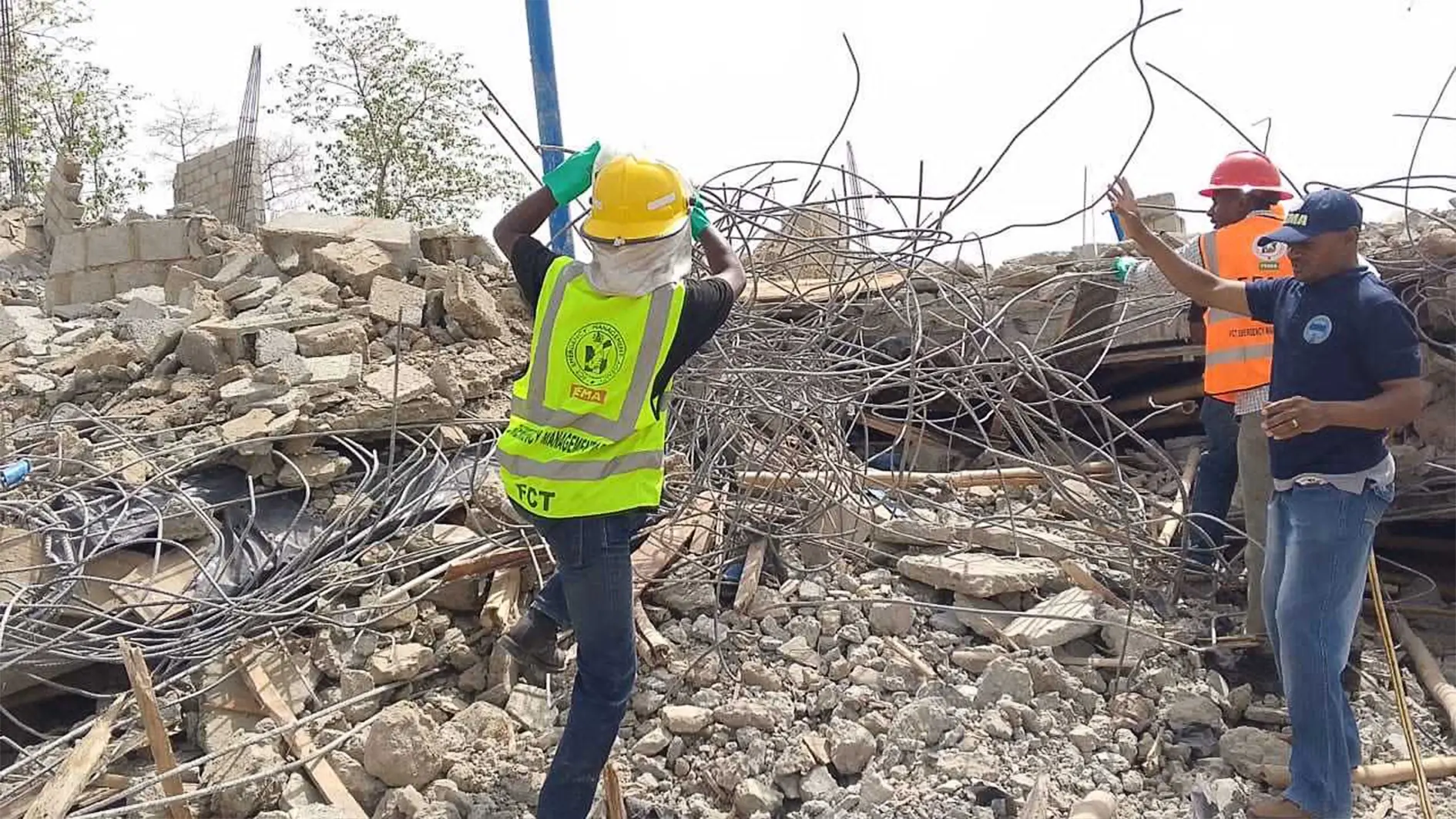
Built environment experts have called for stronger professional collaboration, construction governance, accountability and regulatory enforcement to prevent building collapse and make safety a priority throughout the construction process.
The Founder and Chief Executive Officer of Beseh Planning and Developers Limited, Agatha Irabor, made the call at a webinar organised by the Building Collapse Prevention Guild (BCPG), Abuja Chapter, themed “Strengthening Nigeria’s Construction Governance: Professional Collaboration for Building Collapse Prevention”.
Irabor, an architect, said governance reforms should promote an integrated professional team for every construction project, mandatory verification of registered professionals and their practice status, project-specific compliance checklists and traceable material testing for critical structural elements.
She also advocated independent inspections for high-risk buildings and complex structures, digital building safety records, clear accountability mechanisms and protection for professionals who raise legitimate safety concerns.
She said a building was only as safe as the system that produced it, adding that professional success should be measured not merely by the number of buildings designed or constructed, but by the safety of their occupants.
Irabor described building collapse as a governance, professional ethics, regulatory and capacity challenge that ultimately threatened public safety, requiring coordinated action by architects, engineers, builders, regulators, communities and other stakeholders.

She cited a 2026 study published in the University of Abuja Journal of Engineering and Technology, which analysed 111 validated building collapse incidents in Nigeria between 2015 and 2025, resulting in 321 deaths and 344 injuries.
According to her, the study found that incidents were concentrated in rapidly urbanising states, with low- to mid-rise buildings and structures under construction frequently represented. Structural defects, poor construction techniques and inferior materials were among the leading identifiable triggers.
She said the findings reinforced the need to treat building collapse as a predictable socio-technical problem requiring integrated engineering, regulatory and institutional interventions.
Irabor noted that studies on Abuja also identified substandard materials, structural failures, the use of unqualified practitioners, inadequate supervision, insufficient geotechnical investigations, and inappropriate foundations as leading causes of building collapse.
She urged the Federal Capital Territory Administration to strengthen construction governance through a digital building safety record system capturing each building’s identification and location, approved drawings, registered professionals, geotechnical reports, structural designs, material test results, inspection records, approved variations, completion and occupancy records, as well as maintenance and alteration histories.
Such a system, she said, would make buildings’ safety records accessible throughout their lifecycle, strengthen enforcement and maintenance, and support evidence-based policymaking.
Irabor said government agencies should provide clear, consistent and enforceable construction regulations, strengthen technical inspection and materials-testing capacity, and improve coordination among planning authorities, development control agencies, emergency management bodies and professional regulators.
She added that authorities should develop interoperable building-risk and incident databases, ensure timely enforcement and documented resolution of identified non-compliance, and establish accessible channels for reporting unsafe construction.
For professionals, she advocated proper review and supervision before signing project documents, documenting design and construction deviations, reporting unsafe instructions, coordinating across disciplines before critical work proceeds, and treating quality assurance and materials testing as essential safety measures rather than administrative requirements.
She also urged practitioners to maintain professional competence as materials, technologies and construction risks evolve.
To improve prevention efforts in Abuja, Irabor recommended mapping high-risk construction zones and recurring failure patterns, strengthening BCPG cells, establishing referral and escalation protocols with relevant regulators, and developing a professional construction safety stop-work protocol.
She further called for joint inspections and technical clinics involving built-environment professionals, a digital incident and risk register, and periodic building safety reports for Abuja and the FCT to inform professionals and the public.
Earlier, the Chairman of the BCPG FCT Chapter, Dr Emmanuel Agbator, urged professionals, regulators and artisans to strengthen collaboration and enforce construction standards to ensure buildings were safe, functional and habitable.
Agbator said the webinar formed part of the guild’s advocacy and public awareness programmes aimed at highlighting the dangers of recurring building collapse and its consequences for human lives and the economy.
He said quality housing depended on collaboration, cooperation, co-creation, co-production and coordinated delivery among stakeholders throughout the construction process. Agbator urged the Standards Organisation of Nigeria (SON) and other relevant agencies to tackle quackery and substandard building materials, particularly reinforcement bars circulating in the Nigerian market.
He also called on the government to equip SON’s zonal and state offices with adequate personnel and resources to strengthen nationwide monitoring and enforcement. In addition, he recommended returning SON officials to the nation’s seaports to help detect and prevent the entry of substandard reinforcement bars into the country.

