 Follow Us on Google News



 Follow Us on Google Discover
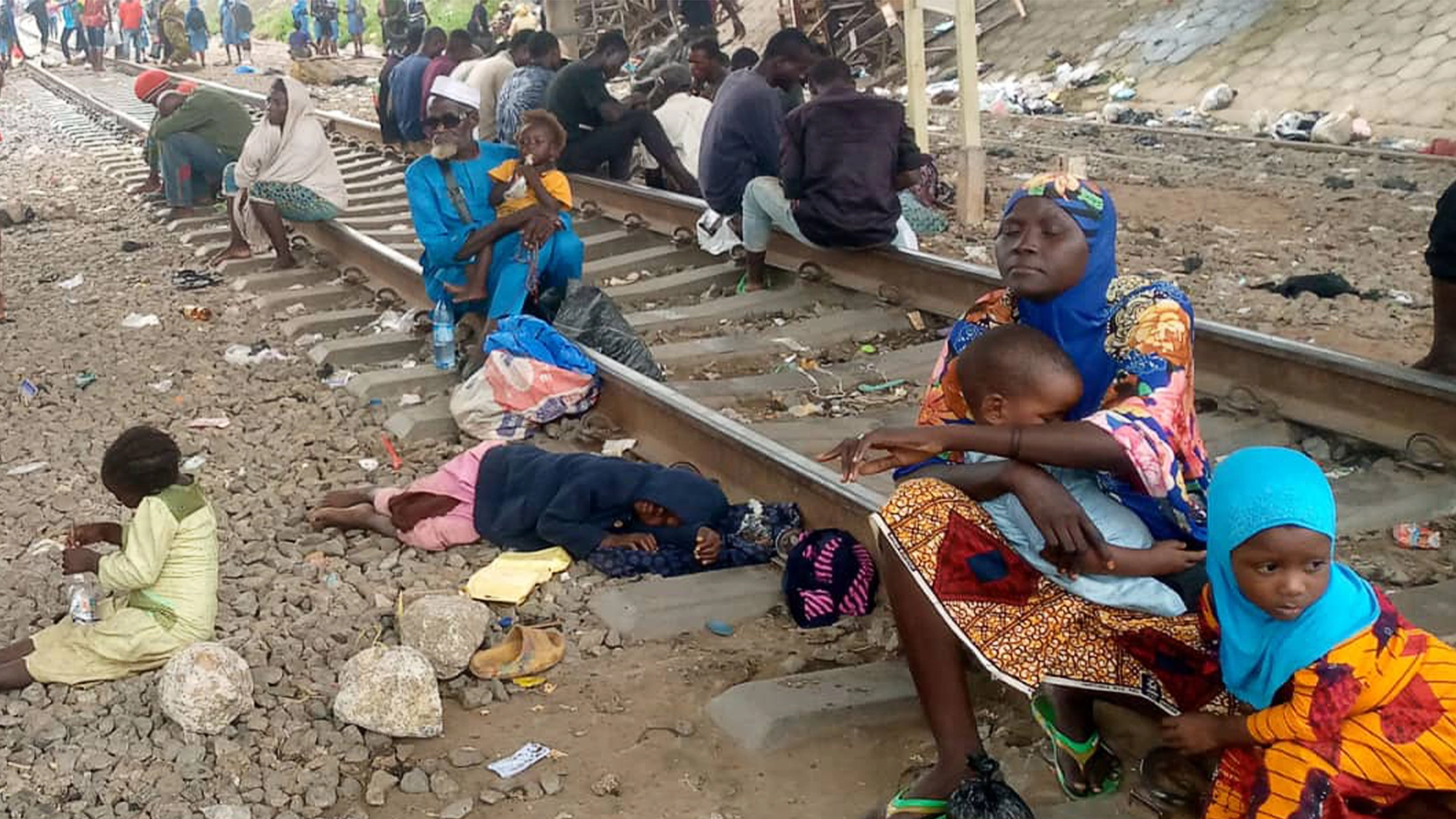
From busy highways and crowded markets to public institutions and spaces beneath bridges, the sight of sick, destitute, physically incapacitated and psychologically distressed people struggling to survive has become a troubling feature of life in Lagos. Despite repeated government attempts to remove these vulnerable people from public spaces and rehabilitate them, many remain exposed to hunger, homelessness, abuse and neglect, raising questions about the reach of the state’s welfare system and what happens after they are taken into care, ENIOLA DANIEL reports.
The streets have become more than a temporary refuge for some. They are places of survival. Some have lost contact with their families, others have been abandoned or displaced, while many living with illnesses or disabilities lack the resources, support or access to services required to meet their basic needs.
Their circumstances expose a difficult contradiction in a city striving to maintain orderly public spaces while confronting the human cost of poverty, illness, family dislocation and inadequate social support.
Behind every person sleeping beneath a bridge, wandering through a market, or struggling to care for themselves on a roadside may be a story of abandonment, economic hardship, untreated illness, or a broken support system.
The central question is not merely how many vulnerable people are removed from the streets, but how many receive the sustained care necessary to recover, regain their independence where possible and live with dignity.
Records obtained by The Guardian show that the Lagos State Government’s Rehabilitation and Training Centre in Majidun attended to 60,949 cases between 2020 and July 20, 2026. The figures point to sustained demand for rehabilitation services, even as vulnerable people continue to be encountered in public spaces across the state.

The records, however, do not establish how many cases involved distinct individuals, how many people completed rehabilitation, how many were reunited with their families or how many successfully reintegrated into their communities; neither do they provide a comprehensive estimate of the number of vulnerable people living on Lagos streets.
Nevertheless, the scale of the caseload raises questions about the capacity of existing facilities, the adequacy of aftercare services and the extent to which government interventions address the circumstances that leave people unable to fend for themselves.
The centre recorded 8,148 cases in 2020, 8,993 in 2021 and 8,739 in 2022. The figure rose to 9,473 in 2023, 9,764 in 2024 and 10,619 in 2025, representing an increase of about 30.3 per cent between 2020 and 2025.
Between January and July 20, 2026, another 5,213 cases were recorded, bringing the cumulative total to 60,949.
Although the figures represent cases handled by the facility rather than a confirmed count of individuals living on the streets, they underscore the pressure on the state’s rehabilitation system. They also raise a question about the relationship between admission, recovery and lasting reintegration.
For people without dependable family support, the consequences of inadequate care can be devastating.
Without shelter, medical attention or assistance with daily living, those already struggling with illness, disability or other personal difficulties can become increasingly isolated and vulnerable to exploitation.
Sakiru Tochukwu, (not his real name), knows what it means to confront such circumstances without a reliable support system.
The Lagos-based trader, who found temporary shelter under Ikeja Bridge, began experiencing psychological difficulties about two years ago. With no family members in the city and no close friends readily available to intervene, he struggled without the support he needed.
Before long, people around him reportedly interpreted his behaviour as a personal failing rather than a possible health crisis requiring professional assessment and care.
His experience illustrates how illness and social isolation can combine to push someone from relative independence into acute vulnerability.
A person who once earned a living may, without timely intervention, become dependent on strangers, exposed to abuse or unable to navigate the process of obtaining treatment.
Similar difficulties confront people with physical disabilities, chronic illnesses and other conditions that limit their independence.
For those without family care, accessible accommodation or dependable welfare support, everyday survival can become an exhausting struggle.
The challenge, therefore, extends beyond removing people from roadsides, markets and other public spaces.
It involves identifying their individual needs and ensuring that they receive appropriate medical care, shelter, social assistance and protection.
Some may require urgent medical assessment, while others need food, accommodation, disability support or help tracing relatives.
Those whose families cannot be found, or who cannot safely return to their previous living arrangements, may need longer-term residential or community-based care. Without such interventions, street-clearance operations risk providing only temporary relief, leaving the circumstances that caused people to become destitute unresolved.
The Lagos State Government has established legal and administrative mechanisms to address the needs of vulnerable people. Under the state’s mental health legal framework, relevant authorities have responsibilities in specified circumstances involving people who require mental healthcare and intervention.
The framework provides for police involvement in circumstances covered by its provisions, while relevant health, environmental and social welfare authorities are expected to coordinate interventions and facilitate access to appropriate services.
The Ministry of Youth and Social Development also has responsibilities relating to rehabilitation, social welfare and reintegration.
However, the continued visibility of vulnerable people in public spaces raises questions about coordination among these institutions, the availability of appropriate services and whether existing facilities can meet the needs of those requiring sustained assistance.
The Permanent Secretary of the Lagos State Ministry of Youth and Social Development, Oluwatoyin Oke-Osanyintolu, acknowledged that increasing demand for rehabilitation and aftercare services was one of the major challenges confronting the ministry.
Her acknowledgement highlights a problem that goes beyond the number of people admitted into rehabilitation facilities. When demand increases and centres face overcrowding, the quality, duration and individualisation of care become important considerations.
Without adequate resources and structured aftercare, rehabilitation may not translate into lasting recovery or reintegration.
Oke-Osanyintolu said the ministry has continued to provide care, rehabilitation, counselling, skills development and reintegration support for vulnerable people, including those experiencing mental health and psychosocial difficulties.
She also identified stigma and discrimination as obstacles to successful rehabilitation, noting that some families and communities struggled to accept and support people recovering from mental health challenges.
According to her, the ministry uses stakeholder engagements, community outreach, media programmes, public enlightenment campaigns and social media to raise awareness of mental health, child protection, social welfare, disability inclusion, substance abuse and other emerging social concerns.
She said the government’s approach was to promote early intervention, discourage discrimination, encourage families to seek appropriate help and ensure vulnerable people were treated with dignity and supported towards rehabilitation and reintegration.
The absence of reliable information on where vulnerable people live, the services they require and the outcomes of previous interventions presents another challenge for policymakers.
Without such information, it becomes difficult to determine where additional facilities are needed, which categories of people require specialised support or whether rehabilitation programmes are producing sustainable results.
The problem is also not confined to mental health. While some people encountered on the streets may require psychiatric assessment, others may be living with physical disabilities, chronic illnesses, age-related limitations, homelessness or abandonment. Treating these different circumstances as one problem risks directing people towards interventions that do not meet their needs.
The Chairman and Chief Medical Director of the Medical ART Centre, Prof. Oladapo Ashiru, identified economic hardship, unemployment, family dislocation and substance abuse among factors contributing to some cases of psychological distress.
He said unemployment, job losses, currency devaluation and broader economic pressures could contribute to depression and increase the use of recreational drugs.
“A great number of people are depressed, and the depression is as a result of unemployment, job loss, devaluation of the currency and the economic infrastructure not supporting the system. That leads to an increase in the use of recreational drugs,” Ashiru said.
He also linked some difficulties to family separation arising from migration, while noting that certain conditions could have genetic or medical causes, including family histories of depression, bipolar disorder and psychosis, as well as head injuries.
Ashiru said stigma remained a significant barrier to seeking professional help and called for stronger mental healthcare infrastructure, including facilities that provide dignified and supportive environments.
A Consultant psychiatrist at the Lagos University Teaching Hospital, Dr Shakiru Oyedokun, similarly advocated greater public awareness, early intervention and improved access to professional treatment.
He urged people who had experienced psychological difficulties or recovered from substance dependence to share their experiences to challenge harmful stereotypes and encourage others to seek assistance.
Oyedokun also called for mental health education in secondary schools, supportive workplace policies and professional treatment for addiction. He said families should support relatives experiencing psychological difficulties rather than stigmatise them, adding that caregivers also needed assistance because caring for vulnerable people could be emotionally and financially demanding.
The experts’ recommendations point to the importance of intervention before personal difficulties become crises visible on the streets. Early access to treatment, family counselling, social assistance and community-based services could help some people retain their independence and reduce the likelihood of abandonment or prolonged homelessness.
However, the wider welfare challenge requires a response that goes beyond healthcare.
People whose vulnerability stems from physical incapacity, poverty, displacement or the loss of family support may need accessible housing, income assistance, food, personal care and protection from exploitation.
Others may require a combination of medical treatment and long-term social support.
For Lagos, an effective policy would require stronger coordination among health, social welfare, environmental and security agencies, backed by reliable data on the different categories of vulnerable people encountered across the state.
It would also require clear procedures for assessing individual needs, providing appropriate accommodation and treatment, tracing families where possible and monitoring outcomes after rehabilitation. Where family reunification is unsafe or impossible, alternative arrangements and sustained aftercare would be essential.
The government should also establish clearer measures for evaluating rehabilitation programmes, including the number of people who complete treatment, receive family support, obtain suitable accommodation or access community-based services after discharge.
Such information would help determine whether interventions are addressing the causes of vulnerability or merely responding to its most visible manifestations.
Street-clearance operations may be necessary in particular circumstances, but they cannot substitute for a comprehensive welfare system. Treating every vulnerable person found in public spaces as an environmental or security problem risks overlooking the circumstances that have left them without care.
The 60,949 cases recorded at Majidun between 2020 and July 2026 indicate the workload facing a state rehabilitation facility. They do not reveal how many people remain outside the system or how many successfully rebuild their lives after intervention.
Ultimately, the effectiveness of the state’s policy should not be measured only by the number of people taken into care or the streets cleared of visible cases of destitution.
It should also be measured by whether those people receive the treatment, shelter, protection and continuing support they need to live with dignity beyond the rehabilitation centre.
Until the gap between rescue and recovery is addressed, Lagos may continue to confront the same troubling reality: vulnerable people taken off the streets, while the conditions that leave them without care remain unresolved.
Quote:

