 Follow Us on Google News



 Follow Us on Google Discover
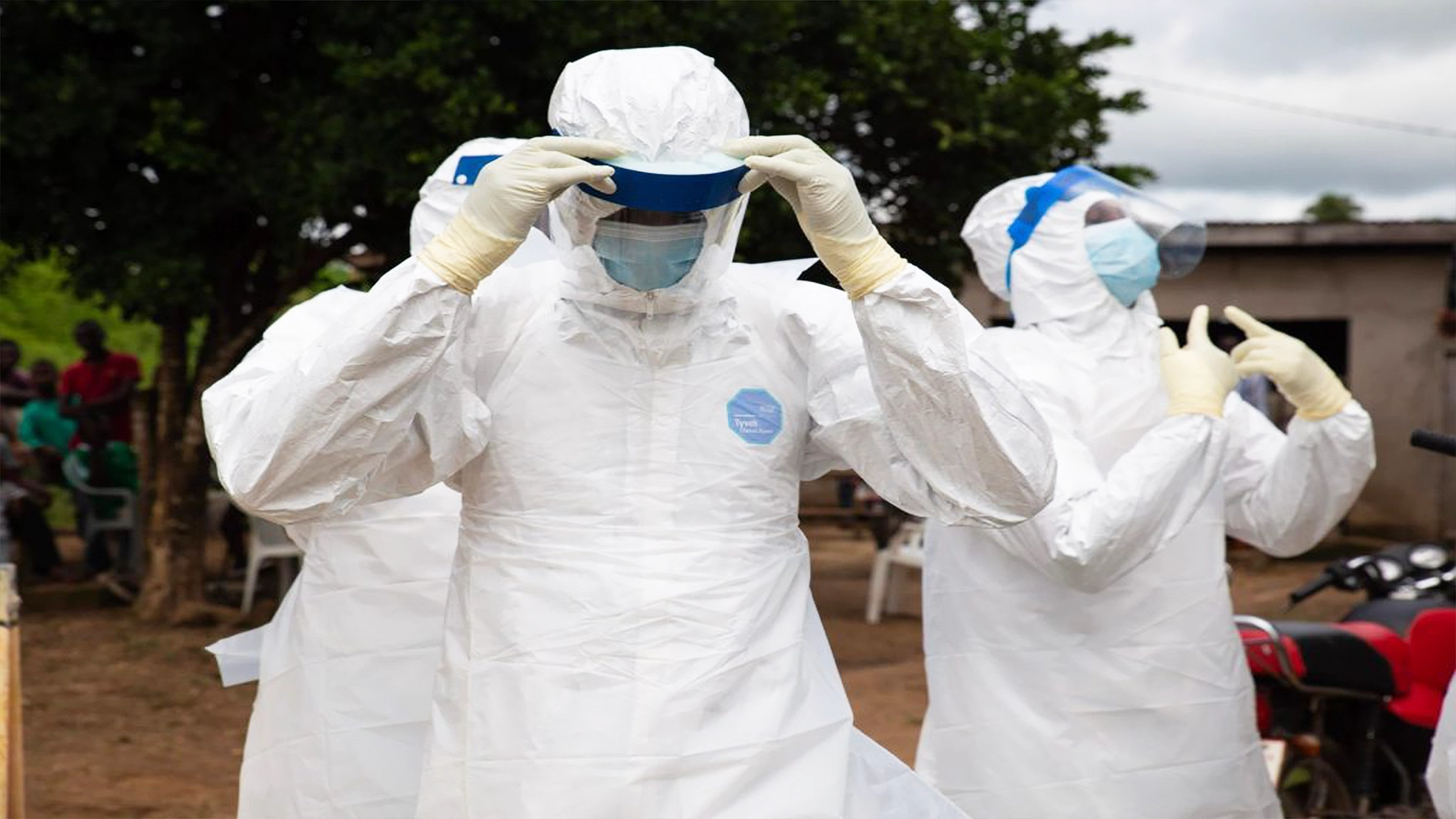
• Pate: Nigeria may declare Ebola outbreak over by December 7
• Academy calls for vigilance despite evacuation of index case
• Adebayo warns against election postponement
• Idris: Why Nigeria approved patient’s evacuation to Switzerland
Following yesterday’s safe evacuation of 42-year-old Nigeria’s Ebola index patient and her husband to Switzerland aboard a medical plane, all attention is now on the 52 contacts linked to the country’s confirmed case of the Bundibugyo strain of the virus under surveillance, just as the World Health Organisation (WHO) clarified that Nigeria is yet to be declared Ebola-free.
Authorities are monitoring the contacts to identify possible infections and prevent further transmission, as WHO stressed that continued surveillance and compliance with public health monitoring requirements remained essential until conditions for officially declaring the outbreak over were met.
As it stands, Nigeria may have to wait till December 7, 2026, before declaring the Ebola outbreak over if no further confirmed or probable cases are detected in the country.
Recall that the first confirmed Ebola patients in Kenya and Nigeria were reported to have crossed paths at Uganda’s Entebbe International Airport, weeks after the East African country reported no active Ebola infections and was declared Ebola-free. Both patients passed through Entebbe International Airport on October 3, according to the Head of Emergency Preparedness and Response at the Africa Centre for Disease Control and Prevention (Africa CDC), Wessam Mankoula.
This is just as the Nigeria Centre for Disease Control and Prevention (NCDC) successfully traced the Uber driver who transported the evacuated index patient to an earlier hospital in Abuja, bringing the number of primary contacts being monitored to 54.

The Director-General of the NCDC, Dr Jide Idris, disclosed this on Monday while speaking on Channels Television’s Politics Today, saying the new contact was identified after health officials obtained additional information about the patient’s movements before her diagnosis. Idris said the new development underscored the need for continued surveillance and contact tracing, despite the medical evacuation of the index patient and her husband to Switzerland.
“As it is now, yesterday was 54, right? One has left; the index case has left, so we had 53. Today, we got one more suspected case contact, who actually was the Uber driver who drove her before to the first hospital,” he said.
The NCDC boss explained that health authorities were monitoring the identified contacts for 21 days, corresponding to the maximum incubation period used for Ebola contact monitoring. He said more than 40 contacts were in quarantine facilities in Abuja, while six others were under home-based self-quarantine because their risk of infection was considered low.
According to him, those under home quarantine were being contacted regularly, with their temperatures monitored in the morning and evening to detect any changes in their clinical condition. Idris disclosed that three people who were retested after developing symptoms or showing changes in their clinical condition returned negative results.
He, however, warned that Nigeria was not yet out of danger, as health officials were still identifying and tracing contacts who might have been exposed through the primary contacts. “We are not out of the woods yet until we are sure that all the contacts have been followed up. Because the index case is out doesn’t mean that we don’t have an active positive case,” he said.
The NCDC director-general clarified that Nigeria currently had no confirmed active Ebola case following the evacuation of the index patient, but stressed that contact monitoring and investigations remained critical to preventing further transmission. He said health officials would systematically trace secondary contacts as more information emerged from interviews with those already identified.
CONFIRMING the medical evacuation of Nigeria’s first imported Ebola virus disease patient from Abuja to Switzerland, the Minister of Health and Social Welfare, Prof. Muhammad Ali Pate, said the December 7 date remained provisional, pending validation of the 42-day countdown by the Nigeria Centre for Disease Control and Prevention (NCDC) and the WHO. He added that any further confirmed case would require a fresh countdown in line with WHO criteria for declaring an Ebola outbreak over.
The minister said the patient departed Nigeria earlier on Monday after showing significant clinical improvement. According to him, she was stable, conscious, communicating and had clinical laboratory test results approaching baseline levels. However, Pate cautioned that the improvement did not necessarily mean the patient was no longer infectious, noting that strict public health protocols remained in place throughout the evacuation.
He said the patient was evacuated alongside her spouse, who had remained asymptomatic, and commended the clinical staff who provided care for the patient as well as public health personnel who ensured that the evacuation complied with appropriate public health measures.
Switzerland also confirmed receiving Nigeria’s Ebola index patient and her husband. In a statement yesterday, the Swiss Federal Office of Public Health (FOPH) said the patient was receiving treatment at Geneva University Hospital (HUG), while her husband, identified as a close contact, had been placed in isolation at Zurich University Hospital (USZ). The Swiss authorities said the case poses no health risk to the country, adding that both hospitals were equipped to manage patients with infectious diseases such as Ebola while protecting healthcare workers and other patients.
Switzerland’s Federal Councillor, Elisabeth Baume-Schneider, expressed appreciation to Nigeria’s minister of health during a telephone conversation. She thanked the doctors and other healthcare professionals in Nigeria for caring for the two Swiss nationals before their evacuation. She also commended the Nigerian government and the WHO for their cooperation in facilitating the evacuation.
The NCDC has explained why the Federal Government approved the medical evacuation of Nigeria’s confirmed Ebola patient to Switzerland, citing diplomatic requests, human rights considerations and compliance with international health regulations. The Director-General of NCDC, Dr Jide Idris, said the decision followed consultations with the Coordinating Minister of Health and Social Welfare, Pate, and consideration of the safeguards required to prevent further transmission of the virus during the patient’s transportation.
Speaking on Channels Television’s Politics Today on Monday, Idris said the patient, a Swiss national, was still testing positive for Ebola when she was evacuated, adding that the Swiss authorities had been informed and made appropriate arrangements for her transfer. He dismissed suggestions that the patient had been secretly removed from Nigeria, explaining that the evacuation followed a diplomatic request from the Swiss Embassy.
“I won’t use the word ‘snuck out’. That’s a no-brainer. It is the first time something like that has happened,” he said.
According to him, the government considered the implications of the evacuation for international health regulations, public health and the patient’s human rights before granting approval.
“In making that request, after discussion with the Honourable Minister, a lot of factors were considered. One, how does it touch international health regulation issues? Can we beat it back? Can we prevent such a thing? Second, the issue of human rights and, of course, one aspect of it being a public health issue,” Idris said.
He explained that the authorities ensured that appropriate infection prevention and control measures were maintained from the hospital where the patient was receiving treatment to the aircraft that transported her to Switzerland. “There is an infection prevention and control guideline, starting from the hospital where the patient was taken, and that was maintained. This was how the patient was protected.
“The patient was removed down to the aircraft that came from Switzerland because we were sure that there was going to be proper receipt of the patient at the other end,” he said.
Idris disclosed that the patient had tested positive twice before the evacuation, while her husband, who was also evacuated to Switzerland, tested negative.
On concerns about the patient’s continued positive status despite reports of clinical improvement, the NCDC chief explained that the treatment provided by Nigerian doctors had helped stabilise her condition but did not necessarily mean the virus had been cleared from her body.
He said Ebola treatment involved managing symptoms and complications while the patient’s immune system fought the infection, noting that there was no established antiviral treatment specifically targeting the virus strain responsible for the current outbreak. “The patient can remain positive because the virus is still in the blood. There are no drugs to deal with this virus,” he said.
Idris commended the Nigerian medical team for stabilising the patient, who had reportedly developed multiple organ failure during her illness. He explained that Ebola could affect several organs, including the kidneys, liver and brain, potentially leading to severe complications, fluid loss, shock and death.
The NCDC director-general said the disease could initially present with symptoms such as fever, body aches and headaches, which might resemble malaria. However, he warned that the condition could progress to more severe symptoms, including diarrhoea, bleeding, lethargy and organ dysfunction.
He also cautioned Nigerians against relying on herbal mixtures as a means of preventing or treating Ebola, noting that although some ingredients might offer general health benefits, there was no established evidence that such preparations could prevent or cure the infection. Idris further warned that herbal products could have side effects, depending on their ingredients and how they were used.
MEANWHILE, the Academy of Medical Sciences has urged health authorities to intensify contact tracing and monitoring of exposed persons following the evacuation of the index case, warning that her departure does not totally eliminate the risk of further transmission.
The Academy, in a statement issued yesterday and signed by its President, Emeritus Prof. Osato Giwa-Osagie; Foundation President, Prof. Oladapo Ashiru; and Rapid Response Committee representative, Prof. Boaz Adegboro, commended the Federal Ministry of Health and Social Welfare, the NCDC, and the clinicians, nurses, laboratory scientists and public health officers who cared for the patient. It said the medical team stabilised the patient before she was evacuated to her country of nationality by air ambulance together with her asymptomatic spouse.
The Academy noted that the coordinated medical evacuation of a clinically stable patient to her country of nationality, under strict biosafety protocols and with the agreement of both governments, was permitted under the International Health Regulations (IHR 2005) and consistent with World Health Organisation (WHO) practice
However, it stressed that the patient’s evacuation must not lead to a relaxation of Ebola preparedness measures, adding that contact monitoring and access to high-level isolation and treatment facilities must be strengthened to mitigate the risk of further transmission.
“The source case leaving the country does not reduce the risk among the 53 contacts, who include health workers and domestic staff. Each must complete 21 days of follow-up, and WHO requires 42 days without a new case before an outbreak can be declared over,” the Academy said.
The Academy also expressed concern over the delayed recognition of the infection, noting that approximately 13 days elapsed between the onset of symptoms and testing. According to the statement, the patient visited more than one private health facility during that period, potentially exposing healthcare workers to the virus. “This exposed health workers and shows a low index of suspicion for viral haemorrhagic fever in febrile travellers, despite a PHEIC declared in May,” it stated.
On healthcare equity and emergency preparedness, the Academy called on the Federal Government to establish at least one high-level isolation and treatment centre in each of Nigeria’s six geopolitical zones, adding that the facilities should be supported by trained personnel and access to investigational therapeutics through WHO-coordinated clinical trials.
It further stressed the need for the completion of 21-day monitoring for all contacts, with daily monitoring, rapid testing of any who become ill, and fully funded welfare for those in quarantine. “Nigeria contained Ebola in 2014 through speed, discipline and the sacrifice of its health workers. The same qualities are needed now. The Academy stands ready to offer its Fellows’ expertise in clinical care, infection control, laboratory science and public health to the national response,” the statement added.
In another development, presidential candidate of the Social Democratic Party (SDP), Adewole Adebayo, has rejected any attempt to delay the 2027 general elections or suspend campaigns over Nigeria’s Ebola outbreak. He accused the APC government of exploiting a public health concern for political advantage.
Speaking at an SDP Presidential Campaign Council dinner in Abuja, Adebayo argued that Nigeria can protect public health without undermining democracy. “One single instance of Ebola is not enough to talk about an epidemic,” he said.

