 Follow Us on Google News



 Follow Us on Google Discover
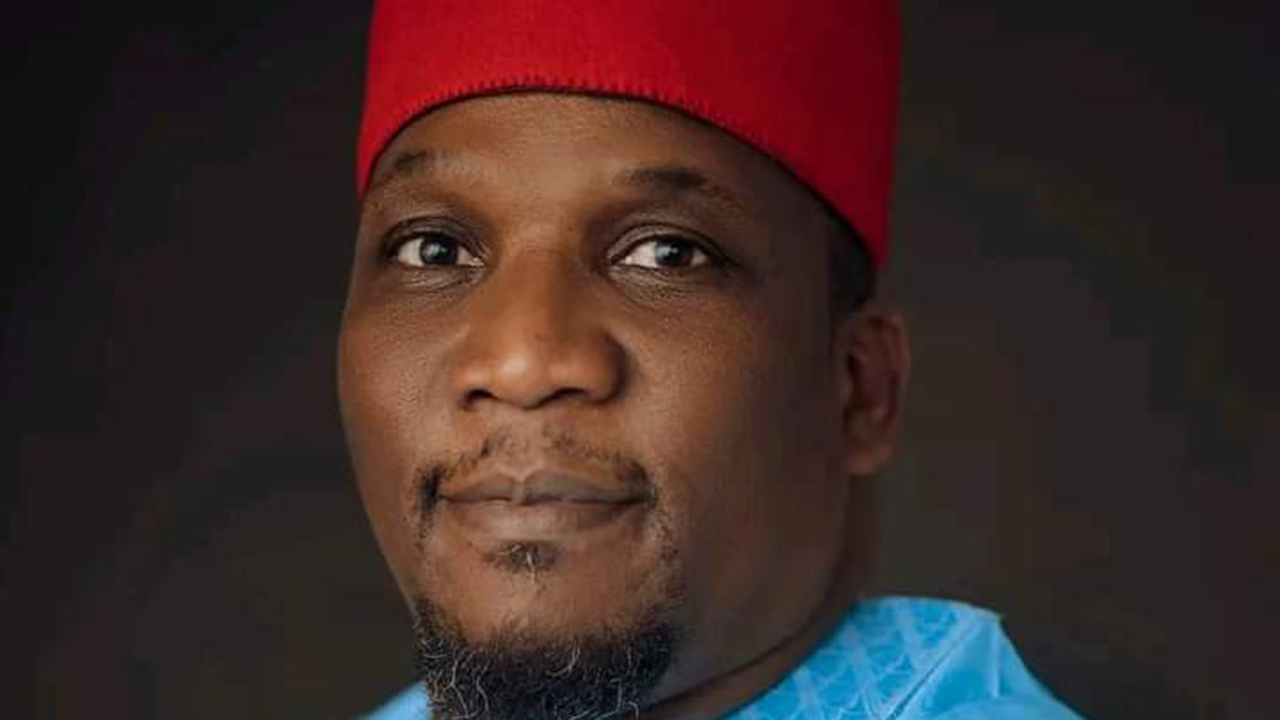
Peoples Democratic Party (PDP) Governorship candidate in Kaduna State, Usman Shehu Bawa, has raised alarm over the state’s rising debt profile, describing it as a major threat to sustainable development, while promising inclusive governance, improved security and accountability if elected governor.
Bawa made the remarks on Wednesday, October 28, 2026, during a one-on-one policy dialogue with governorship candidates in Kaduna State, organised by the Partnership for Issue-Based Campaign (PICaN).
Speaking during the engagement, the PDP candidate alleged that Kaduna State’s total public debt had reached approximately ₦1 trillion, warning that the debt burden could undermine the government’s ability to provide essential services and improve residents’ living conditions.
“Currently, Kaduna State is in a debt trap. The total public debt of Kaduna State is ₦1 trillion,” Bawa said.
He further claimed that the debt translated into a significant financial burden for residents, arguing that the state needed a more accountable and sustainable approach to public borrowing and expenditure.
According to him, the state’s debt profile, alongside poverty, poor learning outcomes and high out-of-pocket healthcare expenses, underscores the need for a new approach to governance.

Bawa cited figures which he said showed that Kaduna State’s external debt stood at $684.29 million, while its external debt-to-revenue ratio had risen to 312.66 per cent, exceeding the 150 per cent limit he referenced during his presentation.
He also highlighted what he described as persistent development challenges in the state, including multidimensional poverty, learning poverty and the high cost of accessing healthcare.
However, the figures presented by the candidate were not independently verified at the event.
In his presentation, Bawa compared Kaduna State’s debt profile under previous PDP administrations between 1999 and 2015 with the period of All Progressives Congress (APC) administrations from 2015 onward.
He claimed that the state’s external debt increased from $226.37 million during the period he associated with PDP administrations to $684.29 million under APC administrations.
He also put domestic debt at ₦49.85 billion during the PDP period and ₦84.64 billion during the APC period.
Explaining why he considered the comparison necessary, the candidate said his proposed administration would be guided by the PDP manifesto and would prioritise continuity in policies that deliver tangible benefits to residents.
“I am a PDP candidate, and my manifesto is guided by the PDP manifesto,” he said.
He added that governance should be driven by clear policy commitments rather than political arguments over borrowing.
“I believe that if it is a PDP government, I will take those policies and make sure we actualise them. What we do in the PDP is to go by the manifesto of the party,” Bawa stated.
Outlining his policy agenda, the governorship hopeful promised to adopt a bottom-up approach to governance, insisting that communities must have a direct say in determining their development priorities.
He said his administration, if elected, would engage stakeholders across the state’s 255 wards to identify local needs and ensure that public resources were allocated according to the priorities of individual communities.
“Our approach is a bottom-up approach, not a top-down approach,” he said.
Bawa explained that if his government had a budget of ₦100 billion, for instance, the resources would be distributed across the state’s three senatorial zones, with stakeholders consulted to determine the most pressing needs of each area.
“We want to build the bridges in the exact wards that need those bridges, not build boreholes where you do not need them or build classrooms where you do not need them,” he said.
According to him, direct consultation with communities would help prevent wasteful spending and ensure that government projects address the actual needs of the people.
He also pledged equitable governance and fair distribution of resources, stressing the importance of building trust among the different religious and social groups in Kaduna State.
Kaduna, which has a diverse population of Muslims and Christians, requires an inclusive governance model that gives communities a sense of belonging, he suggested.
The PDP candidate identified security, healthcare, education, infrastructure, economic empowerment and institutional accountability as key priorities of his proposed administration.
He said a secure and peaceful state would create an enabling environment for residents to live and prosper, while also restoring confidence among businesses and investors.
Bawa further promised to improve access to healthcare and education, strengthen social protection and create opportunities for small and medium-sized enterprises (SMEs) to grow.
He said his development agenda would focus on human capital development, justice, peacebuilding, infrastructure, institutional reforms, innovation, technology, agriculture and environmental sustainability.
Describing the framework underpinning his vision, Bawa said it would prioritise investment in people, strengthen security and justice systems, improve infrastructure, promote open governance and accountability, and drive economic transformation.
He maintained that sustainable development required a long-term vision that extended beyond a single administration.
“I was thinking of doing 20 years or more because if you have a plan for a state, you have to use long projections and see how you plan within and beyond the government,” he said.
He argued that Kaduna’s development challenges could not be adequately addressed through short-term policies, calling instead for a strategic framework that would guide successive administrations.
Bawa also promised to introduce a multi-level monitoring and evaluation system to ensure transparency in project implementation and effective use of public funds.
Under the proposed arrangement, community, ward and local government monitoring committees would be responsible for tracking projects at the grassroots level.
Their findings would then be escalated to local government and sector-level institutions before reaching the central government’s monitoring and evaluation structure for assessment and decision-making.
According to him, involving community members in monitoring public projects would help ensure that contractors deliver according to specifications and that projects serve their intended beneficiaries.
“Once you take a project to the community, one of the best ways to be sure that the work has been done is by involving the local people there,” he said.
He added that the proposed system would provide a mechanism for identifying performance gaps, evaluating results and ensuring that public projects were properly implemented.
The candidate identified political will, people-centred governance, long-term strategic planning, budget alignment and multi-level accountability as essential requirements for achieving his development agenda.
Beyond his policy proposals, Bawa shared aspects of his entrepreneurial journey, recounting how he started in the phone and accessories business before expanding his operations internationally.
He said he initially travelled between Nigeria and Dubai to purchase mobile phones and chargers for resale, operating across markets in Kano, Kaduna and Abuja.
According to him, the business was demanding and involved considerable risks, but careful calculations and a focus on profitability helped him grow.
“I did my maths, and I was sure of the price I bought at and the price we sold at,” he said, explaining how he identified opportunities in the market.
Bawa disclosed that a major supply opportunity helped expand his business, while the turnover generated from his transactions eventually enabled him to obtain a credit line from his bank.
He said the experience taught him the importance of identifying opportunities, taking calculated risks, and remaining focused on long-term goals.
“When you have the timing and focus, certainly, you will make it. We don’t all have to be nine-to-five workers. There are different ways you can impact, and there are different ways you can grow,” he said.
He encouraged aspiring entrepreneurs to believe in their ideas and remain committed to their goals.