 Follow Us on Google News



 Follow Us on Google Discover
• 2025 capital spending still running alongside 2026 budget
• Overlapping budgets weaken oversight, dull investment signal, says expert
• Oil output rise falls short of FG’s 2026 budget target
Amid previous pledges to end multi-year fiscal overlap, the Federal Government yesterday disclosed plans to present the 2027 budget before the end of the year, thereby adding another spending plan to a fiscal calendar that is already crowded.
As of today, the capital component of the 2025 budget is still in force, alongside the 2026 budget after the National Assembly, earlier in the year, ratified both budgets to run concurrently.
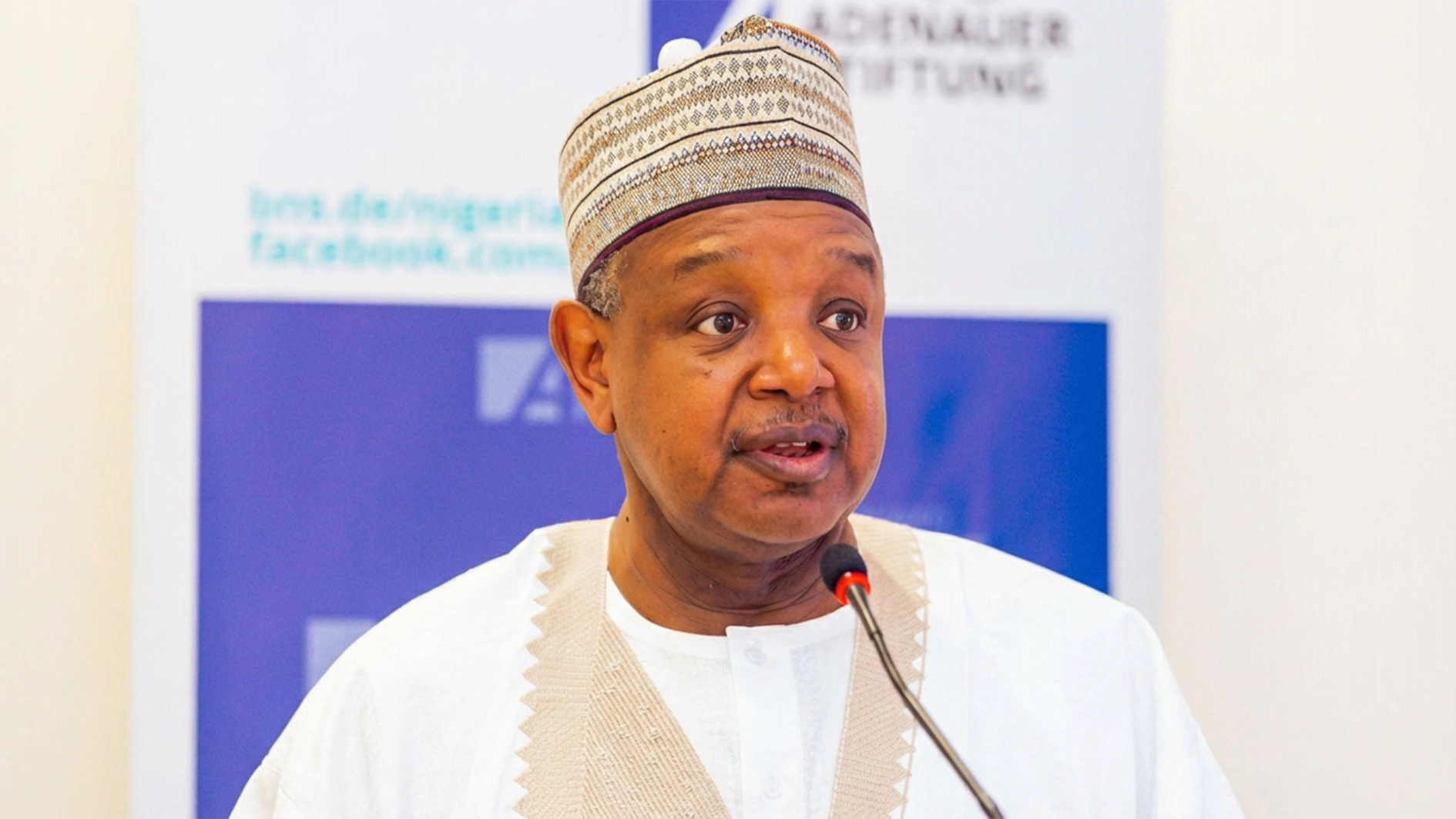
The Minister of State for Budget, Dr Doris Uzoka-Anite, said on Wednesday after the Federal Executive Council (FEC) meeting in Abuja that the government intends to present the 2027 budget before the year-end, as an early presentation is meant to give the National Assembly time to pass it before the new fiscal year.
She also said that FEC had officially endorsed the National Development Plan 2026–2030 alongside new legal frameworks designed to tackle child stunting and boost national food security. Speaking with correspondents following the council meeting, Uzoka-Anite announced the key approvals while reflecting on the successful conclusion of the 32nd edition of the Nigerian Economic Summit (NES) held in Abuja from October 26 to October 28.
She said FEC also approved a Revised National Policy on Food and Nutrition (2026) to replace older frameworks to establish sustainable financing and strengthen inter-ministerial collaboration across agriculture, livestock, health, education, and development partners.

The planned timeline is expected to allow the National Assembly to scrutinise the proposed estimates and deliberate on the government’s revenue projections and expenditure priorities before the commencement of the 2027 fiscal year. The yearly budget serves as the Federal Government’s principal fiscal policy instrument, setting out its spending priorities, revenue expectations and economic objectives for the year.
The timeline comes as the 2025 capital budget, which should have expired on December 31, 2025, remains open. President Bola Tinubu signed the fourth extension on September 30, 2026, after both chambers passed it a day earlier. The deadline was earlier moved from March 31 to June 30, then to September 30, and now to December 31, 2026.
Explaining the reason for the adjustments, the National Assembly said the extensions were needed to allow for the execution of some 2025 capital projects in the current year.
The 2026 budget of N68.32 trillion took effect on April 1. It is therefore running at the same time as the unfinished 2025 capital spending. The practice is not new. In 2024, Nigeria effectively operated three budgets: the N21.8 trillion 2023 budget, the N2.17 trillion 2023 supplementary budget and the N28.7 trillion 2024 budget. The capital component of the 2024 budget, due to end in December 2024, was extended to June 2025 and then to December 2025.
In December 2025, the National Assembly repealed and re-enacted the 2024 and 2025 Appropriation Acts. The revised 2024 budget stood at N43.56 trillion, including N22.27 trillion for capital expenditure. The 2025 budget was extended to March 31, 2026. The President then promised that Nigeria would move to a single budget cycle from April 2026 and that outstanding capital obligations would be cleared by March 31.
That did not happen. The government had also directed ministries, departments and agencies (MDAs) to roll over 70 per cent of their 2025 capital allocations into 2026. Weak implementation has driven the rollovers. The Public and Private Development Centre (PLAC) said, citing the 2025 implementation data presented with the 2026 budget, that only 18 per cent of the capital budget had been spent by the end of September 2025, while revenue stood at 61 per cent of target. Officials told the Senate Finance Committee in December that the 2024 capital component was funded after revenue reached the N26 trillion projection, but the 2025 component was not.
Lawmakers have criticised the practice. Recall that Senator Danjuma Goje, representing Gombe Central, called multiple budgets within a fiscal year unacceptable and said it must end. A member of the House of Representatives, Hon. Abubakar Bichi, also acknowledged that extending an old budget deep into a new year weakens clarity and fiscal discipline.
Against this background, Head of Research and Strategy at GTI Investment Group, Abiodun Ogunniyi, said starting a 2027 budget while the 2025 and 2026 budgets are running together is “very, very problematic”.
He said investors, local and foreign, read budgets as a statement of government priorities and use them to decide where to put their capital.
“When the government is running overlapping budgets, the utility of the budgets as an economic signal becomes weakened,” he said. He described the situation as “a terrible signal for the investment community” and said it had persisted for about two years.
Ogunniyi also said the arrangement hurts the government’s own oversight: “When you are running multiple budgets, how do you ensure proper fiscal oversight? How do you actually monitor your revenue and your expenditure, when you could say that this is the beginning and this is the end of it?” he questioned.
He noted that President Tinubu had said at the start of the year that the practice would be abandoned, yet it continued. “It weakens accountability. It limits the usefulness of the budget as an economic signal and as a capital allocation signal,” he said, adding that the Federal Government needs to drop the practice.
The 2027 budget will face the same test. If MDAs do not complete 2026 capital projects, the pattern of 2024 and 2025 suggests those projects could be carried into 2027, so the overlap would continue into another year. The government has not said how it will avoid this.
This is as details of the 2027 budget, including its size, revenue assumptions, deficit and sector allocations, are yet to be released to the public.
Meanwhile, Nigeria’s crude oil production rose by two per cent month-on-month to 1.53 million barrels per day (mbpd) in September 2026, recovering from two consecutive months of decline and exceeding the country’s Organisation of Petroleum Exporting Countries (OPEC) quota for the fourth time this year.
However, the modest recovery remains insufficient to bridge the widening gap between actual output and the Federal Government’s 2026 budget target, raising concerns over the country’s ability to maximise revenue from the current surge in international crude oil prices. Latest data from the Nigerian Upstream Petroleum Regulatory Commission (NUPRC) showed that crude oil production increased to 1.53mbpd in September, above Nigeria’s OPEC quota of 1.50mbpd.
Despite the improvement, Nigeria’s oil production continues to fall short of expectations, particularly as the government seeks to strengthen public revenue, improve foreign exchange earnings and reduce fiscal pressures. Average daily oil production, including condensates, stood at 1.65mbpd in the first nine months of 2026, significantly below the 1.84mbpd benchmark contained in the 2026 budget.
The shortfall means the country must substantially increase production in the fourth quarter to approach its annual target, putting pressure on regulators and operators to address persistent operational challenges across the upstream petroleum industry.
The production gap has become more consequential as international oil prices have surged to levels that could significantly improve Nigeria’s fiscal position if the country produces and exports sufficient volumes.

