 Follow Us on Google News



 Follow Us on Google Discover
Your Excellency,
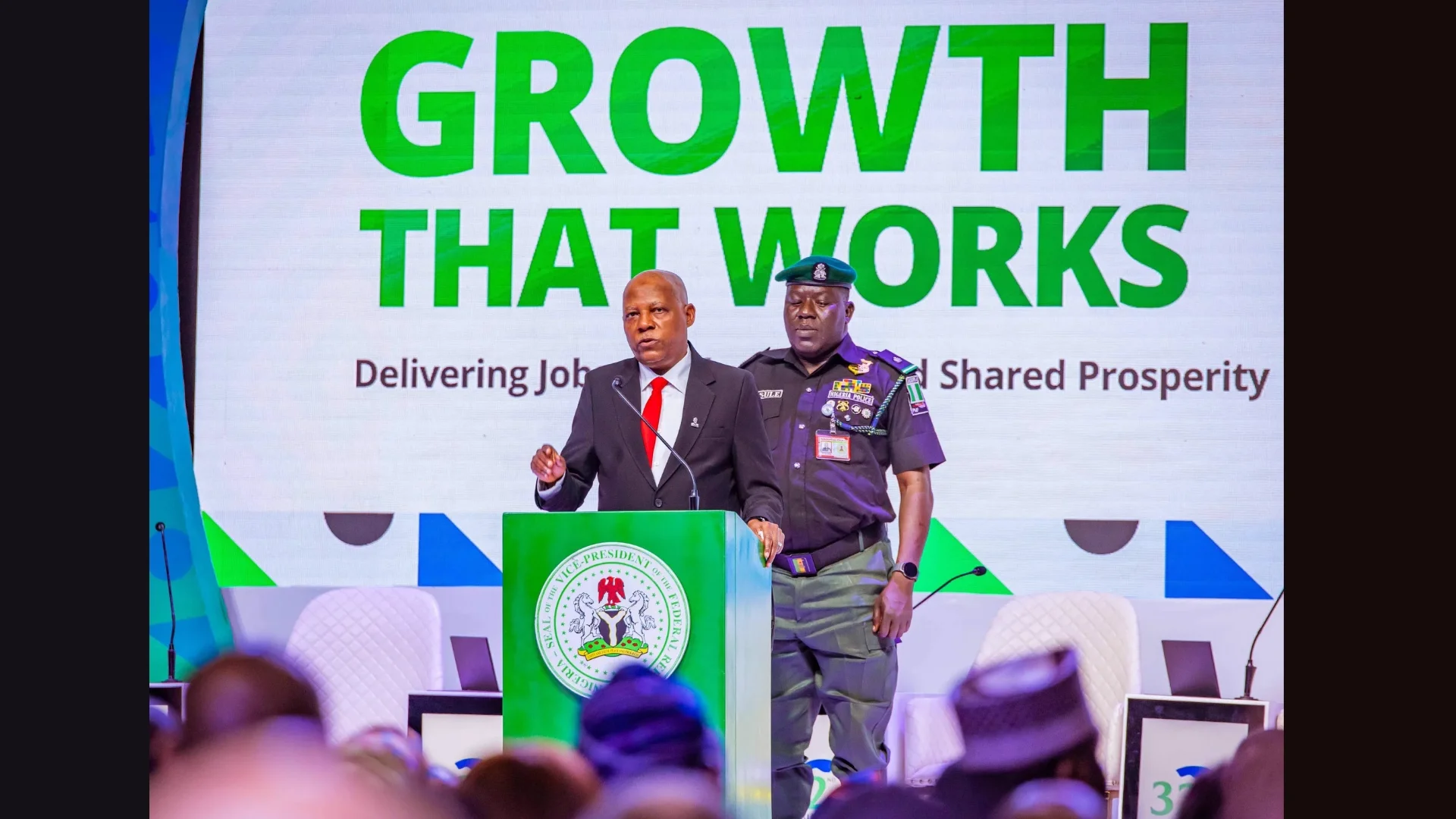
On Monday, 26 October, Vice President Kashim Shettima (GCON), representing you at the 32nd Nigerian Economic Summit, addressed investors, business leaders, and development partners, delivering a message of confidence. He cited 3.89 per cent GDP growth in the first quarter of 2026, capital inflows of $10.37 billion (an 83.8 per cent year-on-year increase), and a trade surplus of N7.55 trillion. He also spoke of reducing regulatory burdens, strengthening policy predictability, and expanding access to finance.
Before the Vice President’s address, Finance Minister Taiwo Oyedele unveiled a draft National Economic Policy Framework to curb policy reversals and establish a national economic doctrine that transcends administrations. Everything your government said at the summit aligned with the summit’s theme: Growth that Works.
Two days later, on Wednesday, 28 October, the House of Representatives Ad Hoc Committee on telecommunications threatened to issue bench warrants to arrest the chief executive officers of the country’s major telecommunications operators if they failed to appear personally on 4 November. After much harassment, the committee rejected the chairman of the Association of Licensed Telecommunications Operators of Nigeria, Gbenga Adebayo, who had attended on behalf of the industry, and described the operators’ absence as contempt.
Your Excellency, these two events cannot coexist in the same economy without consequence. An investor in the audience at NES 32 on Monday, hearing your government promise predictability and reduced regulatory burdens, saw by Wednesday that the legislature was threatening to arrest the chief executives of the country’s largest private-sector employers over an issue the Nigerian Communications Commission is already managing. The question investors now ask is simple: which signal should I believe?
The telecommunications sector has invested almost ₦ 3 trillion in infrastructure over the past two years alone. The NCC, the regulator established by Parliament under the Nigerian Communications Act 2003, has developed an active quality-of-service enforcement framework that delivers measurable results. As of October 2026, 75 million subscribers have received compensation for service failures under the Consumer Compensation Framework.

This year alone, operators have carried out more than 6,500 network interventions, including equipment upgrades, new site deployments, and capacity expansion in high-demand areas. Plans are underway for 12,000 base station upgrades before the year ends. The system your government built is working.
The remaining challenges are structural, running deeper than any single operator’s performance. Nigeria’s telecom industry recorded 155,397 fibre-cut incidents between April and May 2026 alone, driven by vandalism, road construction and infrastructure degradation.
In 2023, the telecommunications sector recorded costs exceeding N14 billion, and that figure continues to climb as road construction accelerates without coordination with underground infrastructure. Meanwhile, 11,000 rural telecom sites burn 40 million litres of diesel every month because the national grid does not reach them, a cost that compounds every quarter and erodes the capital available for network expansion.
These realities shape the quality of service Nigerians experience, and a legislative summons addresses none of them. A summons will not repair a severed fibre cable in Lagos or bring electricity to a base station in Borno. It will not harmonise the right-of-way fees that vary across 36 states and the FCT, adding billions in cost and years of delay to network rollout. These problems require legislation, and that is precisely where the House of Representatives has the constitutional authority and institutional capacity to make a lasting difference.
Your Excellency, Section 88 of the Constitution limits the National Assembly’s investigative power to two purposes: making or amending laws, and examining the management of public funds appropriated by the legislature. Quality-of-service regulation falls outside both.
In Tony Momoh v. Senate (1982), the court held that investigations beyond these constitutional purposes are invalid. A related suit filed by ALTON in 2018 challenging the legality of repeated legislative summonses of telecom executives remains pending before the Federal High Court in Abuja.
What the nation needs from its legislature are laws that address the root causes of poor network quality: a national dig-once policy to prevent fibre from being destroyed every time a road is built, criminal penalties for the deliberate vandalism of telecommunications infrastructure, harmonised right-of-way regulations, and spectrum allocation reform to support next-generation connectivity. These measures fall within the House’s mandate. They would deliver real results for the 220 million Nigerians who rely on these networks every day for voice calls, financial transactions, education and commerce.
Your administration has asked the private sector to invest, build, create jobs, and power the $1 trillion economy, and the private sector is responding with capital, infrastructure, and employment at scale. The question that remains is whether every arm of government is sending the same message, because the investors, entrepreneurs and business leaders your reforms have worked to attract are listening to all of them and will make their decisions based on the full picture, not just the parts said during the 32nd National Economic Summit in Abuja this week.
Respectfully,
Aliyu Garba, a Telecommunications Industry Stakeholder, writes from Kaduna

