 Follow Us on Google News



 Follow Us on Google Discover
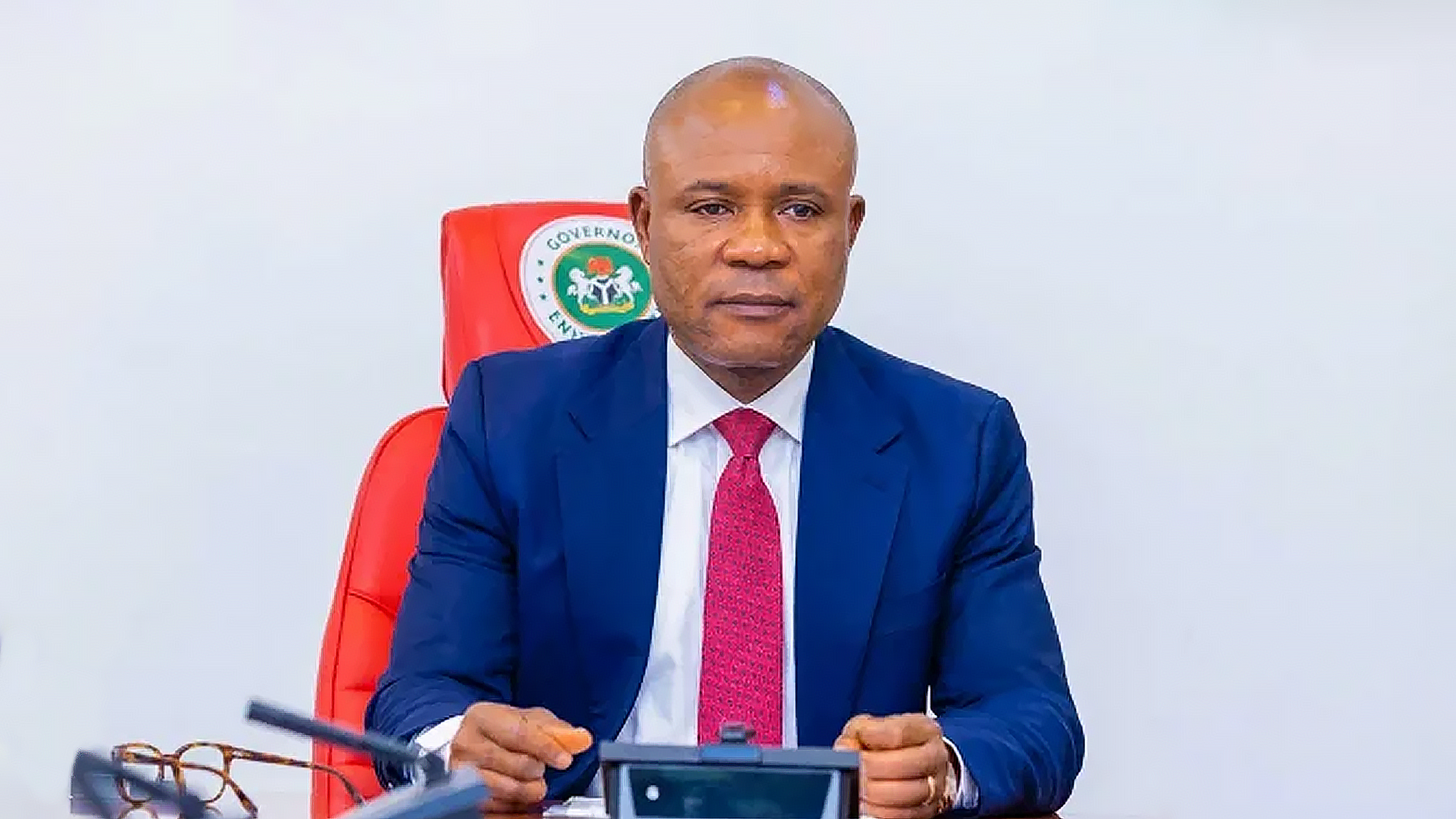
Last week, Enugu Governor, Peter Mbah faced a town hall meeting where he spoke about the achievements of his administration in nearly four years, answered questions about his government and exuded confidence in securing the mandate of the people to continue in office next year. LAWRENCE NJOKU was there.
Having watched you work for nearly four years, tell us why Enugu should renew your tenure in 2027?
Let me invite Ndi Enugu to imagine something with me. Let us imagine the Enugu we knew four years ago. Let’s just imagine an Enugu without Hotel Presidential. Let’s imagine an Enugu without an International Conference Centre. Let’s imagine an Enugu without Enugu Air. You don’t want to imagine an Enugu without an International Hospital, an Enugu without CNG buses, The Niger Gas. It’s endless.
Let’s stretch the imagination a little further. Imagine an Enugu in four years time that will be generating 660 megawatts of electricity where you can live in the entire state and we are able to provide 24\7 electricity. You cannot come into your house and you have the lights off. Businesses can flourish. You can run your business for a whole week without worrying about the cost of diesel.Just imagine an Enugu where we generate electricity and the people of Enugu are buying that at N120 because they own the coal that is powering the electricity. Imagine an Enugu where you just have to ride not just on our CNG buses but you have the monorail that can take you from point A to point B. Imagine an Enugu where you can fly from here to the UK, USA, China and Dubai .
We have asked you to do some imagination over what we were a few years ago before we came in. But even more profound is the work that we have ahead of us. You just imagine an Enugu where our children are receiving education that prepares them for the world because they have the evolving 21st century skills. They’ve been imbued with those skills. Imagine again an Enugu where all the roads are paved, where you don’t have any part of the city with an unpaved road.
And so the decisions we make in the days, weeks and months ahead are quite decisive. It’s going to be very decisive. So we do have a duty.
If these imaginations capture our fancy to do some work, that work is to uphold this Enugu of our dreams. We do have a duty to fight for it. We do have a duty to continue to make sure that that bar does not come down, that that standard we have set, that Enugu trajectory, that Enugu story is sustained. So I would invite Ndi Enugu to continue to keep faith with us on this journey; this journey of greatness; this journey of growth and this journey of development.
Looking back at your campaign promises in 2023, do you think your vision is beginning to take shape?
Before our election in 2023, we had imagined what Enugu could become. We also outlined what Enugu could become and we challenged or urged our people to stretch their imagination. We imagined an Enugu where our young people could build their futures; an Enugu where businesses would flourish; an Enugu where our children would receive education that prepares them for the future; an Enugu where our people would have access to quality healthcare, live securely and take pride in a place they call home. So, I’m really excited to engage our people to see whether that ambition, in their view, is also beginning to take fiscal shape or whether it’s still within their imagination. I would like to hear it from them.
Just imagine a few years back an Enugu without an international conference centre. This international conference centre has opened its doors to Nigeria and the world.
If you look beyond the walls, the Enugu International Hospital is about to be commissioned. There are several roads connecting our communities, transportation, Enugu Air, revamping our industries, building new ones. I mean, the list is endless.
A lot has been said about the smart school project. What has the budget performance been like for education?
What we have done over the last three budget cycles has been to dedicate 33 per cent to education. I think the lowest we came was 32 per cent. But on the average, it’s been 33 per cent across the three budget cycles we’ve had since we assumed office.
Again, we did that because we could see the connection. Today, we hear quite a lot of talk about the smart green schools and, of course, all the beauty around it. But for us, it was never about the bricks and mortar. We recognised from the very onset that the sector needed aggressive intervention and in fact, something akin to an emergency declaration.
We couldn’t expect our children just going through the motion of learning without actually acquiring the relevant skills required for the New World Order. So, what we’ve done is to transform the entire education system. For the first time in the history of the state, we provided access to early child learning in public schools. I don’t think it happens anywhere in this country, where from age three, our children are able to assess learning.
Beyond learning, we’re also able to use the same platform to intervene in their health care. Because when we bring the index child at age three, we also look at the health profile of that child. By the way, you know, in our smart schools, we have clinics. And we also have the clinics manned by registered nurses. So, that way, we are able to assess the medical records of the kids. Most of these schools are in the rural areas, as you already know. And you may even have kids that do not have medical records. From that point, we’ll begin to regularise their medical records, ensure that they have received their prophylaxis; the vaccinations that they ought to have taken before the age of three; that they are up to date with that.
The other major transformation in the education sector is we have also built a system where we now have basic one to basic nine. So, what used to be known as primary one, you get to primary six, you have to take your common entrance, then you go to another school, your parents will have to pay so much to get you enrolled in that. All that is now eliminated. In Enugu, in our smart green school location, you’re able to start from your basic one all the way to basic nine, without interruption.
So you technically have 12 years of compulsory and free education. And when we say free, we mean free in the true sense of the word. That means there’s no registration fee. You don’t have to buy a uniform. As a parent, we provide uniforms to the kids. You don’t buy any textbooks. You don’t buy any notebook. They are all provided. And we’ve also done something very radical. We’ve transformed pedagogy. We’ve moved away from the rock system of learning to what we now refer to as an experiential system where we teach the kids by practicing.
So, beyond the digital skills that they all have to be exposed to at that very young age, we are also talking about each smart school having robotics, artificial intelligence hub, and all that. We have an innovation hub where these kids are taught how to build robots. Of course, we also have practical skills. The important thing now is that learning no longer travels in one direction where the teacher stands in front and is just giving to these kids what to memorise and repeat. The kids now see their classrooms as a creativity hub. They see themselves as potential problem solvers. They are exposed to the compelling social problems and they are taught how to address them.
Let’s look at the quality of work on the smart schools and the incidents that have been recorded every time there’s heavy rain. The smart schools we have in the state now, are they the smart schools of your dream? What are the smart schools you envisioned before you got into office in 2023?
Well, just imagine the scale of the projects we’re talking about. What we have done in the last three years, building 268 smart green schools. And the buildings are outstanding.
It’s perhaps, you know, something that probably could take 10 to 20 years to do. So, when you fast-track at that scale, you’re bound to have tipping problems and we’re not oblivious of it. We’re not unmindful of the fact that these tipping problems would come. But the question is: Are we resolved to deal with them? Certainly, we would address them. We don’t procrastinate. We wanted to do these things at scale. That was the whole idea. Not to leave any child behind in the state. We could have decided to say, ‘you know what? Let’s do three smart green schools, one per zone.’ That would still be great, because each smart school is bigger than a model school. Recall how model schools were built those days. You probably have one in one state or maybe even one per zone. But if we had just done three smart schools in the state, it would still be mega and would make headlines.
But we didn’t say we wanted to build 17 smart green schools. We could have also built one per local government. We said every child in this state must have access to quality learning and we did 268 smart green schools. So, with the tipping problem, some structural defects here and there, roof going up, those are very insignificant challenges that we are addressing. We’re going to address them. We’re going to make sure all the schools are fit for purpose.
You talked about fast-tracking the project. Does this absolve the contractors of guilt with regards to the incidents recorded?
Certainly not! We do have records of these contractors. Those ones where you have these defects naturally go back to fix them. And for those we cannot, you know, those that have been recalcitrant, we blacklist. And there are consequences for that. Don’t forget that we got an advance payment guarantee from all these contractors. And we do have an option to call those up if it becomes necessary.
Let’s talk about your government’s programmes in agriculture. How have they fared?
For agriculture, when we assumed office, we upgraded the Ministry of Agriculture. First, it was originally known as the Ministry of Agriculture. Then we moved it to the Ministry of Agriculture and Agro-industrialisation. We did that not just because we wanted a fancy nomenclature; we did that because we realised the contribution of agriculture to our GDP. Don’t forget that the target was to grow the GDP sevenfold in eight years. Agriculture is one of our critical sectors. We decided to activate all the state’s assets in that area. The first thing we did was to have a joint venture with a company called Pragmatic Farm to activate our United Farm Products Limited, what used to be UPPL, but is now Enugu United Farm Products Limited (EUPPL).
We had a joint venture that would see an injection of about N100 billion into the investment in Farm Products Limited. Today, that plantation is very active. It’s a total of 6,700 hectares of land.
Then, of course, a number of those trees were not producing because of their age. But today, we have over 2,000 hectares that have been cultivated and produced. Some of the old trees have also been activated, resold, you know, reduced to produce. We have reactivated what used to be AVOP, the Anambra Vegetable Oil Products. It is now EVOP, Enugu Vegetable Oil Products. We actually produce palm oil, at the UPPL production. But beyond the production of palm oil, we’re even taking it a step further where we would soon receive the refinery because we also want the equipment for the refinery. We want to be refining the palm oil to vegetable oil and the rest of other ancillary products that would come from that.
We have what used to be known as the Songhai in Henneke, in Ezeagu. That was also dormant. Nothing was being done about it. It’s 10,000 hectares of farmland. Today, it’s fully active. We have a private investor that we’re working with, a company called Tribu. So, it’s known today as Tribu Songhai Farm. The Sunrise Flour Mill is also another example. It was dormant. It was docile.
It was not doing anything. It was moribund. Today, the Sunrise Flour Mill is being reactivated with the cultivation of 10,000 hectares of land – cassava.
The list is endless. You know the intervention in the farm estates, what we’re doing today. We have six pilot farm estates that are ongoing as we speak. The idea is to have at least 260 of those farm estates. Each has a minimum of 200 hectares of land where we have a total fence. We have a warehouse. We then push all the machinery so that we can migrate our smallholder farmers to mechanise, creating their ability to move from just subsistence farming methods to a mechanised farming system. I really don’t want to spend the whole day talking about agriculture.

Would you say that Enugu State have reliable potable water?
I know this question and, of course, the familiar 180 days’ commitment would come up. I told you in 180 days water would flow in every household and we were committed to that. We didn’t make that commitment because we wanted to earn some public acclaim or for posturing. We knew where water ranked in the order of priority of our people. We knew how not having access to water keeps a child out of school. Or when they are supposed to be doing their homework, they are roaming around the streets looking for water. So we knew.
I recall during my campaign how I would walk on some streets and see kids, you know, filed up in a queue just trying to get water from a tanker. I saw all that. So, I knew it was something we needed to crack. I didn’t want to spare any effort or time in resolving it.
I knew that I had committed during my campaign that I would solve this problem in 180 days. And I had done the analysis around the production segments; I realised that the state at the time was producing two million litres daily. Enugu needed 80 million litres to at least ensure that water flows in all the homes in Enugu. So, what did we do? Even before swearing in, we front-loaded the procurement because some of the items we needed to procure were long-lead items. They were not off-the-shelf so a lot of them would be customised. So we had to order for them. Some of them had a need time of about four months, particularly the big pumps. So, we front-loaded the procurement and we were able to save at least two months. Two months into our administration, the pumps arrived and we started working on increasing our production. We also reactivated the 9th Mile scheme, which had been dormant over the years. So by the 180th day of our administration, we were already able to produce 120 million litres.
But I’ll tell you what happened. As those supplies increased, as we built the capability to produce at that scale, as the water got into the pipes, they began to burst. We started having burst pipes. So, the pipes were brittle. They had over-leased their design life. We also had to deal with some of the pipes that were asbestos. Some of the pipes had actually been, you know, built on. The right-of-way of those pipes had been compromised by buildings. So, you could see that what was already a complicated situation became even more complex. We had to start dealing with all that. We had a choice. Should we start pulling down those buildings that were on the right-of-way? Or should we start reconnecting, doing a new network? Well, these are our citizens. We shouldn’t pull down their buildings. So the truth today is that Enugu can have a buffer of over 50 per cent to serve the entire city of Enugu with the production capacity we have.
What we’re now dealing with is making sure that the water gets to the last mile. And we’re doing that also aggressively. We’ve zoned the city. We have about 14 zones. And we have work going on across the 14 zones, connecting to the last miles. It’s a bit slower because of all the obstructions you have to deal with.
And we’ve even procured trust-boring equipment so that we can do horizontal drilling. In most cases, we won’t have to cut the road open. As I said, we will solve the water problem and I understand how important that is. We’re on it. I get briefings on the progress we’re making in the water sector or sub-sector every day.
Poverty eradication, zero hunger and ease of doing business were among your measurable indicators. We studied your manifesto in 2023 and this was bold there. But taxes remain one of the biggest claims of Enugu residents. We are even told that your administration is overtaxing traders. What do you say to these claims?
This is one falsehood that has been so peddled that it’s even beginning to take a semblance of a truth. Meanwhile, it does not exist and I think those who think we may be taxing more are essentially looking at the sort of growth we have recorded in our IGR and they somehow, because they couldn’t have imagined such growth happening within the period it happened, felt perhaps the only justification is that we have burdened the people of Enugu to realise that. But that’s far from it. I’ve tried to explain this in several fora.
We cannot legislate on taxation. It is not within the state’s legislative purview. The issue of taxation is under the exclusive legislative list. The National Assembly will legislate on the rate of your personal income tax, your company income tax, your VAT, your withholding tax, and all the other stuff you do with some duties and others. Now, I think perhaps what some would view as taxation and maybe, in a generic term, also assume that it’s payment they make for services – provision for removal of your waste, business premises, maybe water. When you go to apply for your C of O, fees that you pay and then maybe fees like management fees if you are living in an estate; your land use charge and all that. If you look at the fees we charge for those services, what we did was to enact a state law that consolidated, because what was the problem before now was businesses felt that there was multiple taxation. People were asked to pay taxes, tax for that, fees for this, rates for that, and charges for that, and we said, no, let’s consolidate all that. Let’s bring them into just one payment. And how much did we say we should charge? N36,000 annually for those businesses. And these include your business premises, a whole lot of rates are built into that. So, going to those people to ask for payments for any sort of thing is prohibited. And the way we looked at it was, if you do the calculus, this is barely N100 per day. It’s N3,000
When this issue of taxation was raging, I just wanted to be on the path of caution. I set up a committee, I think, headed by the SSG or so. I asked that they do a comparison of what we charge for these services across, against other states around us. And I also said; get us the rates in Lagos and Abuja. I got that report from the committee, I think after three weeks. It was clear to us that in the entire Southeast, we charge by far the lowest rates in terms of those service areas. And then, what did I do with respect to land use charges? When we looked at the land use charge figure, before the committee’s inauguration, the fees for land use charge was around N150,000, in some cases N200,000 and all that. We crashed it.
But because we have expanded the net, we now have more people. When we came in, we had barely 9,000 units that got their demand notice to pay their land use charge. But when we did the survey, we found out that we had over 800,000 billable household units that demand notice could be sent to. I said, well, since we have expanded the tax net, we can also crash the price so that there will be voluntary compliance. That was the whole idea.
We also had these complaints about people going to the market, I’m sure maybe from the local governments, to collect money. I made an announcement to stop that, that nobody should collect N100 or N200 from our market women. I ended that also.
Again, I don’t want to talk about some of the recent announcements we have made with respect to even the tricycle riders, where we have also, again, crashed their fees. These really don’t have much impact on our IGR. What did we do to grow our IGR? First of all, we plugged all the leakages.
We ensured that nobody makes payments in cash on behalf of the state government. We have so far activated a whole lot of our dormant assets. We now earn quite a lot from those assets.
Before we came into the office, the Nike Lake Hotel, we were paying money to sustain it. The government was paying money to those running it at the time to ensure that the place was alive. Today, we earn over N300 million from the sort of arrangements we got into. For Hotel Presidential, the government earns over N1 billion just from the sort of arrangements we have. The International Conference Centre, the government makes money. I don’t want to start calling them, but some very huge amounts and this goes to all the other partnerships we have with the United Farm Products Limited, where the government owns 40 per cent of that arrangement.
The Sunrise Flour Mills limited, government also owns 40 per cent. At the Shongai, we own about 30 per cent or so of that arrangement. So, our government is making money from what were dormant assets before.
You said that in July this year, there would be a groundbreaking for a 660 megawatt coal-fired power plant with a 24-month construction timeline. This is October; we are yet to see it happen?
We have been ready since July but for the wet season. We do have the 660 megawatt plant procured not by the state. We’re working with an investor. But the plant is ready. We need to do our own base, which is the civil work; we are even trying to do the road to the location. This plant is going to be sited at Amansiodo. It’s going to be fed by coal and Amansiodo holds our largest reserve of coal. So, that’s why we’re citing the plant there because we wanted it to be close to the production plant. We’re still committed to doing this, once we do the groundbreaking, to have it ready. As I talk to you, the plant is being brought in from China. So, everything is still on track. The reason we haven’t done the groundbreaking, as we promised in July, is again because of the wet season. And now we’re hoping that once we get a window, we’ll just go for the groundbreaking and the civil works will start.
In the last two most and since the start of electioneering campaigns, you have opened your doors to more appointments. It is said that these were out of fear for the elections. What’s your plan of sustaining them?
You’re talking about whether the appointment is sustainable and about me being nervous. I think what I understand you to be saying is that at a time when a lot of people who think that the administration is coming to an end, we’re doubling down, we’re being proactive, we’re saying no, there’s still work to be done. I think you should give us credit for bringing in more hands to make sure that we accelerate the pace of work. And that’s what we’re doing. So, it’s not being nervous.
It’s actually saying that there’s still a lot to do and we have to do it. And that’s essentially what we’re doing. It’s not a problem.
Is APC paying the N150 million fee imposed on political parties to paste campaign posters in Enugu?
Okay, so the fees that people pay for signage, it’s not even an executive order. It is the law of a state. I think some people have actually gone to court to challenge that law and the court has given judgment that it is legal because, as I said, it is established by law. Go back to the law. Go and review it. I challenge you to look at that law. You will never see in that law where it exempts APC. So, it means it’s of general application. So, everybody is covered. You have to pay the fees. And of course, failure to do so is a violation of the law.
What is your take on President Tinubu’s economic policies?
Before the bold and courageous decision made by President Bola Ahmed Tinubu, we were almost at an economic precipice in this country. I’m sure you knew that the ways and means we had accumulated was over N27 trillion. What that means is like we’re in a hole. The only way we were trying to get out of that hole was digging deeper. What would have happened if we had continued in that trajectory was a total collapse; we would have had a failed nation. You don’t need to go far to see where these things have happened. He would have said, let’s keep printing money.
When we talk about micro hardship, households, unemployment and all that, what we’re witnessing or experiencing today would have been a child’s play if those decisions were not made. The way a nation functions effectively is for you to, first of all, address the macro pressures. If you do not address those pressures, make sure that your indicators at the macro level are stable.
For example, today, we have a reserve that can sustain us for the next 10 to 11 months. Our foreign reserve is about 56 to 58 billion dollars – the highest in almost two decades. Now, you look at our foreign exchange. It has somehow stabilised because we allowed it to be driven by the forces of the market. So, it floats. It isn’t any longer controlled. We were controlling what we couldn’t back; that was why we were rapidly declining in our foreign reserve. So, it was arrested. Today, the economy is stabilised because all the indicators at the macro level are looking very good. Now, the next thing you want to push would be growth.
So, you have to stabilise the economy to attract those capital to come. And once they begin to come, what would you experience as a people? You have shared prosperity. You have a poverty level coming down because people are able to work. Their earning power is increasing. That’s what this President has done. I think we must commend his courage to take that decision. In fact, we never had anybody in the first term of the administration, even in their second term, having the courage to take those bold decisions. We are on the right path. I can tell you from the numbers we’re seeing and the growth we are witnessing now; we are seeing the lights at the end of the tunnel.
What is your take on the debate for a possible return of fuel subsidy as a means of ending the hardship among citizens?
I think it’s a misconception. There is no confusion. What I think we should do when we have an opportunity or platforms like this is to dismantle the misconception. First of all, as you alluded to in your question, my background is business and of course, specifically in the oil and gas sector.
I had written several pieces on why the subsidy, even before I came into public service, is not sustainable and why it should be removed. I knew when I did the project that I did in Lekki; that project could only thrive in a non-subsidy environment. So, I knew that subsidy on petroleum was not something that is sustainable because it wasn’t a targeted subsidy. It was a general subsidy. Don’t forget that the subsidy had been long gone on diesel, which is even what the mass transit vehicles use. The subsidy that we were dealing with was a subsidy on PMS. That’s the premium motor spirit. If you think about it, it is those guys with the SUV, with the big vehicles that actually benefited more from that subsidy. If you wanted to talk about subsidies or apply subsidies, I don’t think the subsidy we practiced before the President removed that subsidy was even the right one for the country, because even the people we were looking at benefiting from that subsidy were insignificant. It was largely beneficial to our wealthy ones.
But, of course, you can have targeted subsidies and then begin to decide how you target a particular segment of the society, the very downtrodden. I think you can almost notice that the government is doing that. The government is aggressive on cash transfer. There is also the wards development programme, where the government is targeting 1,000 persons per ward across the entire country to be able to provide seed capital for them to become productive. And that’s targeted. You can see the funds we’re saving from the removal of that subsidy is channeled to the segment we really want to help. So, anybody essentially talking about bringing back subsidies, for me, I would regard it as a pathetic misconception of where this country is or the direction this country should go. So, if you re-introduce subsidy today, the rate of naira, whatever you thought, you know, you are trying to gain in terms of removal of subsidy, you would end up maybe losing 10 times. The poverty rate that we’re going to experience would spike and the naira would automatically be devalued.

