 Follow Us on Google News



 Follow Us on Google Discover
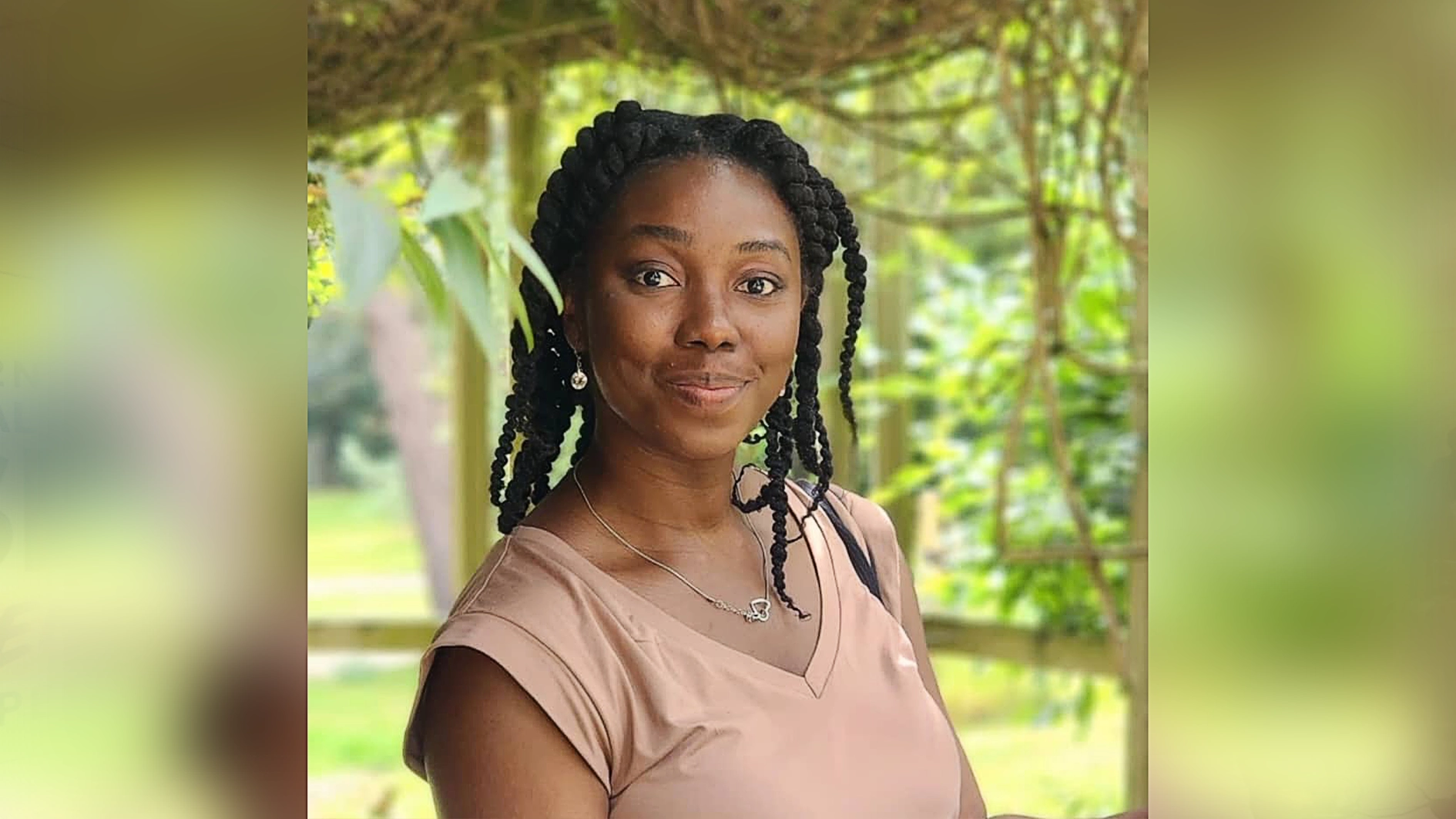
UK-based Nigerian artist Onome Olotu, will examine the complexities of identity, body image, historical memory and belonging in Before We Know Ourselves, her debut solo exhibition in Nigeria, opening at SOTO Gallery on November 3.
The exhibition, sponsored by Art Audry and curated by Uche Obasi, will run until December 15 as SOTO Gallery’s final exhibition for the year. It brings together two bodies of work, the Postcard Series and the Mask Series, through which Olotu interrogates how personal experiences, archival records and societal expectations shape perceptions of individuals and communities.
Drawing on her experiences of living and studying in the United States and the United Kingdom, the artist examines what it means to inhabit spaces where one’s presence is questioned, while negotiating the pressures of cultural assimilation, racial identity and social acceptance.
The exhibition’s title reflects an ongoing inquiry into how people come to understand themselves amid competing social narratives and the expectations imposed by others. Through painting and printmaking, Olotu invites viewers to reconsider the relationship between visibility and invisibility, particularly as it affects Black people, migrants and individuals whose bodies fall outside conventional ideals.
For the artist, the two series converge around the need to be recognised beyond surface appearances and dominant representations.
“The Postcard Series and the Mask Series coalesce at the point where we ask people to see us for who we are and for what we offer,” Olotu said, explaining the thinking behind the exhibition.
The Postcard Series draws from her experiences as an international student and non-immigrant in the United States between 2021 and 2026, and her subsequent relocation to the United Kingdom. Using archival photographs, historical documents, newspaper headlines and reconstructed postage stamps, she explores displacement, longing and the complicated relationship between personal memory and recorded history.
Her use of the postcard as an artistic device reflects the familiar experience of leaving home and attempting to maintain connections with people and places left behind. However, the works extend beyond nostalgia to question how institutions and societies construct their histories, including the experiences and contributions that are excluded from dominant narratives.

She combines acrylic paint, plaster and paste to create heavily textured surfaces that obscure and reveal fragments of images and writing. The layers, she explained, represent the ways historical accounts can be altered, partially preserved or rewritten over time.
“The texture surfaces are metaphors for written historical records,” she said. “Information, as it travels from one person to another, gets distorted, and at the end of the day, what is left is automatically taken as the truth, irrespective of what it was initially.”
The works also incorporate carefully selected newspaper headlines and postage stamps highlighting figures whose contributions to their respective fields deserve recognition. Among those referenced are African and diasporic figures including Kwame Ture, Miriam Makeba, Ngozi Okonjo-Iweala, Chinua Achebe, Chimamanda Ngozi Adichie, Olaudah Equiano, Claudia Jones, Olive Morris, Mary Prince, Sade Adu and Chiwetel Ejiofor.
By bringing these figures into her visual compositions, Olotu considers the role of historical representation in determining whose achievements are remembered and how communities understand their place in the world. Two strands of the Postcard Series focus specifically on Black community histories in Princeton, New Jersey, and Ithaca, New York.
In developing Postcards from Princeton, the artist became interested in the history of the Witherspoon-Jackson community after questioning the relatively small number of Black families she encountered in the town. Research at the Historical Society of Princeton, assistance from the Arts Council of Princeton and conversations with residents helped her uncover stories spanning several generations.
She also worked with Shirley Satterfield, a custodian of the community’s history, who connected her with families willing to share their experiences and permit her to paint them.
The resulting works imagine the postcards she might have sent to Nigeria, preserving memories of Black life in Princeton before demographic and social changes altered the community.
Similarly, Postcards from Ithaca emerged from archival research at The History Center in Ithaca and Cornell University’s Rare Manuscript Collections. Rather than reproducing historical photographs directly, Olotu reinterpreted them through painting, combining archival material with her own observations of the university town.
The resulting images question the apparently seamless histories of American educational institutions and the social relationships underpinning their public identities. Through the accumulation of paint and the partial concealment of images, she asks what experiences may have been obscured in the making of these histories.
The Mask Series shifts the focus from place and historical representation to the body, identity and the experience of being seen through other people’s expectations.
Initially inspired by the widespread use of protective face masks during the COVID-19 lockdown in 2020, the series began with literal representations of African masks. Olotu subsequently moved away from the physical objects, developing a visual language in which the body itself becomes a metaphor for masking.
Influenced by W.E.B. Du Bois’s concept of double consciousness and Frantz Fanon’s Black Skin, White Masks, the works explore the psychological tensions that arise when individuals are compelled to understand themselves through the standards of a dominant society.
Du Bois’s concept describes the divided consciousness associated with being Black in a society shaped by racial inequality, while Fanon examines the psychological consequences of colonialism and the adoption of dominant cultural values. Olotu extends these ideas to the experiences of big-bodied women and the stigma associated with their appearance.
Her paintings feature full-figured subjects whose proportions and contours are distorted by layers of paint, screen-printing, plaster and other materials. The technique creates an interplay between concealment and revelation, reflecting the tension of being physically visible while remaining unseen as a complete person.
Works such as The Crime of a Little More Flesh challenge assumptions about body size and the tendency to reduce individuals to their physical appearance.
The series is also informed by the artist’s personal experiences, particularly her younger sister’s encounters with body shaming and body dysmorphia. Olotu said learning about the insults and judgements directed at her sister forced her to confront the difference between how she understood a loved one and how society perceived her.
“I saw her as just my sister, the baby that I watched grow up. So I assumed that society saw her in that lens also,” she said. “Only for her to share screenshots of what people had told her. People had called her names, and I was brought back to reality that people were not seeing her as I did.”
The experience prompted her to consider how artistic practice could challenge the assumptions that diminish people’s self-worth.
During her postgraduate studies, she also invited people who felt insecure about particular parts of their bodies to participate in a project in which she made moulds of those areas, with their consent. Using construction net and other materials, she sought to create a sense of protection while allowing the forms to remain visible.
For Olotu, the project underscored the desire to be recognised for more than physical appearance and to have one’s abilities, character and experiences acknowledged.
Her exploration of body image also draws on cultural practices in Nigeria, including the fattening-room tradition associated with parts of southeastern Nigeria, where a fuller female body has historically been linked to beauty, marriage and fertility. She contrasts such traditions with the pressure to conform to thinness promoted through Western media and commercial culture.
Archival research has helped her trace how these ideals have been constructed and circulated. In examining historical American magazines, including Ebony, she observed differences between representations of Black communities and the body-conscious advertising found in mainstream publications.
The research informs her wider argument that perceptions of beauty are neither universal nor fixed but are shaped by historical, cultural and commercial forces.
“The body itself can function as a kind of mask because it is hiding so many things that the human eye cannot see,” she said.
Olotu holds a Master of Fine Arts in Creative Visual Arts from Cornell University, where she received the 2026 John B. “Kip” Brady Prize for her experiments in printmaking. Her practice spans painting and printmaking, with recent explorations in ceramics.
Her works have been exhibited in Nigeria and North America, including This Body Is Under Review at Experimental Gallery, Ithaca, in 2026; All About That Bass at Bibliowicz Family Gallery, Ithaca, in 2025; Postcards from Ithaca at Tjaden Gallery, Ithaca, in 2025; and Being at Home in Princeton at Princeton University’s James Hall Memorial Gallery in 2024.
Her works are held in the collections of the Princeton Municipality, ProCES at Princeton University and private collectors. She currently lives and works between Cambridge, United Kingdom, and Lagos.
Although she moved to the UK in June, Olotu said it was too early to determine how the new environment would influence her practice. The relocation, however, has reinforced her interest in the precarious position of international students and migrants navigating changing political attitudes towards immigration.
With Before We Know Ourselves, the artist brings these concerns into a shared space, connecting the personal experiences of displacement and body image to broader questions about history, cultural identity and social acceptance.
Rather than offering definitive answers, the exhibition asks viewers to look beyond familiar representations and reconsider the assumptions through which they see themselves and others.
Inline image

