 Follow Us on Google News



 Follow Us on Google Discover
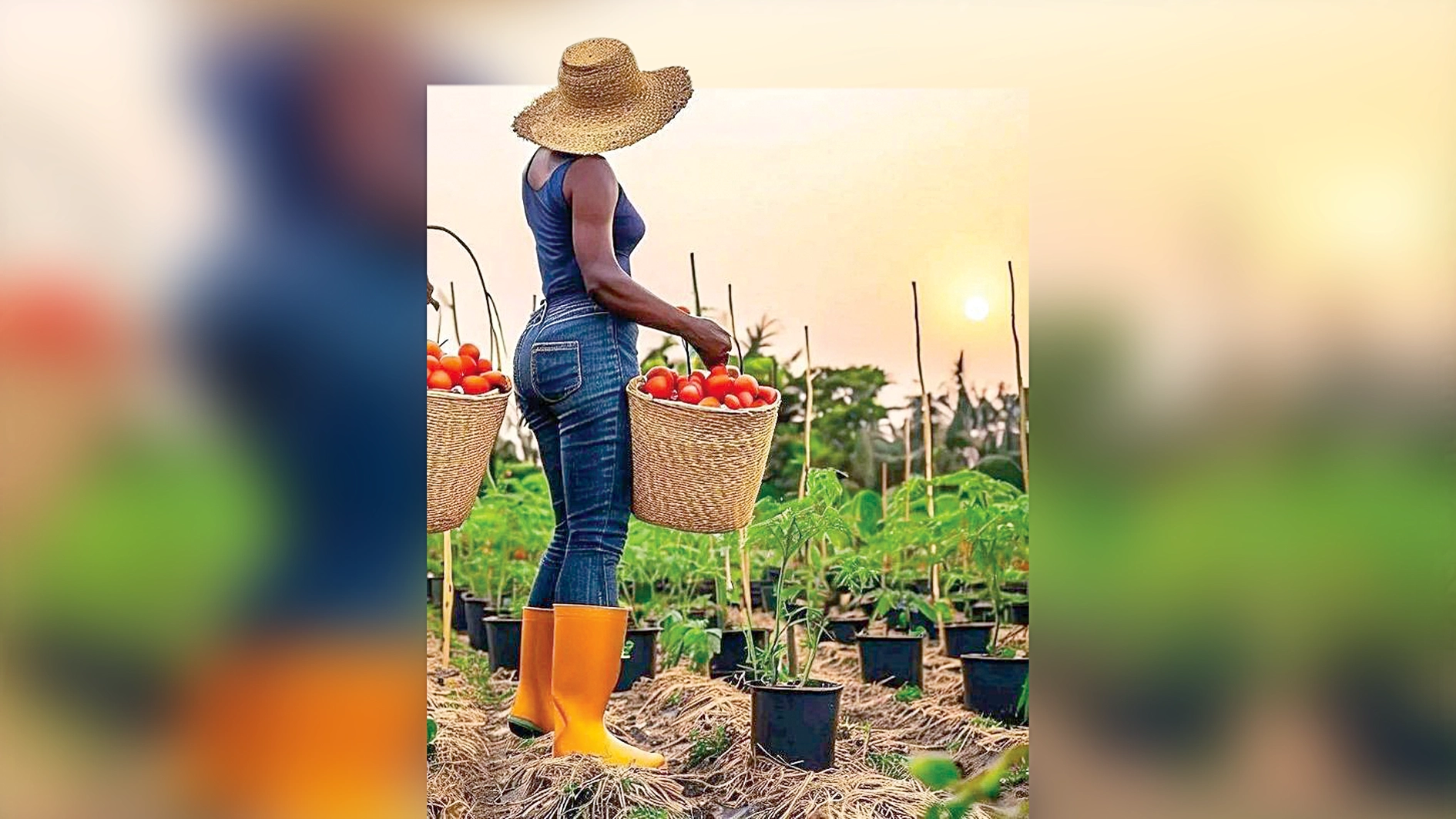
DATA from the Food and Agriculture Organisation of the United Nations (FAO) shows that 76 per cent of working women in sub-Saharan Africa are employed in agrifood systems, the largest share worldwide. Women in rural areas are also four times more likely to engage in off-farm work than men.
Despite their contribution, women continue to face barriers that limit their ability to expand production and increase their earnings. A farmer may spend months cultivating crops only to face rising input costs, inadequate storage or difficulty finding buyers willing to pay a fair price.
The challenge is not simply whether women can produce food, but whether they have the resources and opportunities to earn enough from their work to sustain their farms and support their households.
The challenges women farmers face form part of a wider pattern across agrifood systems, where women contribute through farming, processing, trading and other activities that support food production and household nutrition.
The FAO report identifies limited access to and control over natural resources as a major challenge for women across the sector. Women are also more likely than men to experience food insecurity.
The report further highlights gaps in social protection across the region. Only 13 per cent of women receive cash benefits, while fewer than seven per cent have access to pensions.
Despite these barriers, women continue to sustain their livelihoods by diversifying their activities, establishing community savings and credit associations and implementing agroecological practices, among other strategies.
Hurdles of being a woman farmer
Women farmers’ contribution extends beyond paid work. Unpaid care responsibilities, including fetching water and caring for children and older people while supporting household welfare and food and nutrition security.
These responsibilities can place additional demands on women who are also trying to maintain farms and increase their earnings. When they lack the resources to improve production or make adequate returns, their ability to reinvest in their businesses and withstand future costs can suffer.

The implications extend beyond individual farmers. Women’s ability to earn a stable income from agriculture can affect their households, while their participation in farming, processing and trading remains important to the wider food system.
The ordeals
While it is an established fact that women play a significant role in Nigeria’s agriculture, from producing food to processing and trading farm produce, yet, for many women, turning their labour into a stable livelihood remains difficult because of limited access to land, finance, agricultural services and markets.
A woman farmer, Abisola Adewuyi, said women contribute significantly to food production and rural economic activities but continue to encounter difficulties accessing funding, land, agricultural services and markets.
She explained that farming requires money at the right time, particularly for buying seeds and fertiliser, paying workers and maintaining the farm throughout the planting season.
“When I want to farm, I need money for seeds, fertiliser and labour. If the money is not available at the right time, it affects the way I prepare the farm and the amount I can plant,” she said.
Without adequate funding, women may have to reduce the size of their farms or limit the inputs they use, affecting the quantity they eventually harvest. Even when they produce a good harvest, however, making a profit can remain difficult.
“When the crops are ready, you still have to look for who will buy them. If there is no good market, you may be forced to sell at a low price because you cannot keep the produce for long,” Adewuyi said.
She noted that rising production costs, storage difficulties and expensive transportation could leave farmers with little profit even after a good harvest.
“Sometimes, you work hard and harvest well, but what you get back is not enough because the cost of farming has increased. If you cannot store the produce or take it to where buyers will pay better, you may not make much profit,” she said.
Her experience shows how the challenges of farming extend beyond production. Without affordable ways to preserve and transport their produce, women may struggle to recover their costs and reinvest in their farms.
For some women, the challenge begins before they can plant a crop.
Balikis Ahmad, a vegetable farmer who wants to grow crops such as ugu, spinach and tomatoes for sale, said difficulty accessing land had limited her ability to expand her business.
“Sometimes, you have the willingness to farm and even know what to do, but you don’t have the land. You cannot just enter somebody’s land and start planting. You have to look for land you can afford, and even when you find one, you may not have the money to pay for it,” she said.
The difficulty makes it harder for Ahmad to invest confidently in her farm. Beyond paying for seeds, fertiliser and other inputs, she must consider whether she will have access to the land for as long as she needs it.
Her experience highlights how the inability to secure affordable land can restrict women’s plans to grow their farming businesses, even when they have the knowledge and willingness to produce food.
Can female farmers exercise control over resources?
Executive Director and Project Lead at Menitos Charity Foundation, Tolulope Daramola, said improving women’s access to agricultural resources requires looking beyond ownership to consider whether they can exercise control over those resources.
She explained that discussions about land ownership often focus on whether women can obtain formal documents without adequately considering their ability to manage the land and make decisions about its use.
In some communities, Daramola said, male farm workers may be unwilling to take instructions from a woman. A woman who owns or manages farmland may therefore have to employ a male manager or rely on a male relative to supervise workers.
The situation, she explained, is not necessarily a reflection of women’s competence. Rather, it exposes attitudes that can undermine their authority even when they have the resources and knowledge to manage their farms.
Securing land, therefore, does not automatically give a woman the freedom to manage it independently. She must also be able to direct farm operations and make decisions about how her resources are used.
Weight of social expectations
Beyond land and finance, women’s choices are often shaped by expectations about their responsibilities within the family and community.
Daramola said many women were raised to see their roles largely in terms of caring for their families. Problems arise when these expectations limit their ability to pursue economic independence, own property or participate in decisions affecting their communities.
She explained that women who seek greater independence may face resistance from relatives or community members who view established gender roles as part of their culture and tradition.
Such resistance can make a woman’s effort to improve her circumstances appear to challenge the existing social order rather than represent a legitimate pursuit of opportunity.
Daramola said improving women’s agency requires more than making opportunities available. Women must also be able to recognise their right to pursue those opportunities and participate in decisions that affect their lives.
For women farmers, this means being recognised not only for their labour but also for their ability to own and manage farms, make financial decisions and determine how their businesses develop.
Why men must be involved
Daramola noted that efforts to improve women’s opportunities must also engage men and boys, particularly where established attitudes continue to shape women’s access to resources and decision-making.
She said programmes that focus on empowering girls and women without addressing how boys and men are socialised may leave the attitudes responsible for inequality unchanged.
She explained that men should be included as partners who understand the benefits of women’s participation in economic and community life, rather than being treated simply as people expected to permit women to exercise their rights.
Daramola described this approach as “gender optimisation”, through which women are supported to maximise their potential while men understand that women’s progress does not diminish their own position in the family or society.
When men support women’s access to land, business opportunities and leadership, women can be better positioned to develop their enterprises and make decisions without unnecessary resistance. Such involvement is important if efforts to improve women’s economic opportunities are to challenge restrictive attitudes within families and communities.
Government support beyond farm inputs
Improving women’s agricultural livelihoods requires support that extends beyond providing seeds, fertiliser and other farm inputs.
The government investment should also cover extension services, irrigation, storage, processing, transportation, aggregation and dependable markets.
Support focused only on production could have limited benefits if farmers could not sell their produce profitably. Farmers must be able to preserve their produce, transport it to buyers and earn enough to cover their costs and prepare for the next planting season. Without these opportunities, women may continue to work hard without making sufficient returns to expand their farms or improve their livelihoods.”
The FAO findings also show why support must recognise women’s contributions across the wider agrifood system, including their work in off-farm activities and their unpaid care responsibilities.
Government agricultural programmes, where available, need to be assessed not only by the inputs distributed or the number of farmers reached, but also by whether women can access the support, use it effectively and earn better returns from their work. Establishing how existing programmes perform would require evidence from the relevant authorities and women farmers themselves.
QUOTES:
‘Women contribute significantly to food production and rural economic activities but continue to encounter difficulties accessing funding, land, agricultural services and markets’
—————————————————————————————————————————————————————————-
‘Men should be included as partners who understand the benefits of women’s participation in economic and community life, rather than being treated simply as people expected to permit women to exercise their rights’.
————————————————————————————————————————————————————————————
‘When men support women’s access to land, business opportunities and leadership, women can be better positioned to develop their enterprises and make decisions without unnecessary resistance’.
PHOTO SLUG: Women farmer 1-2

