
 Get Guardian on Google
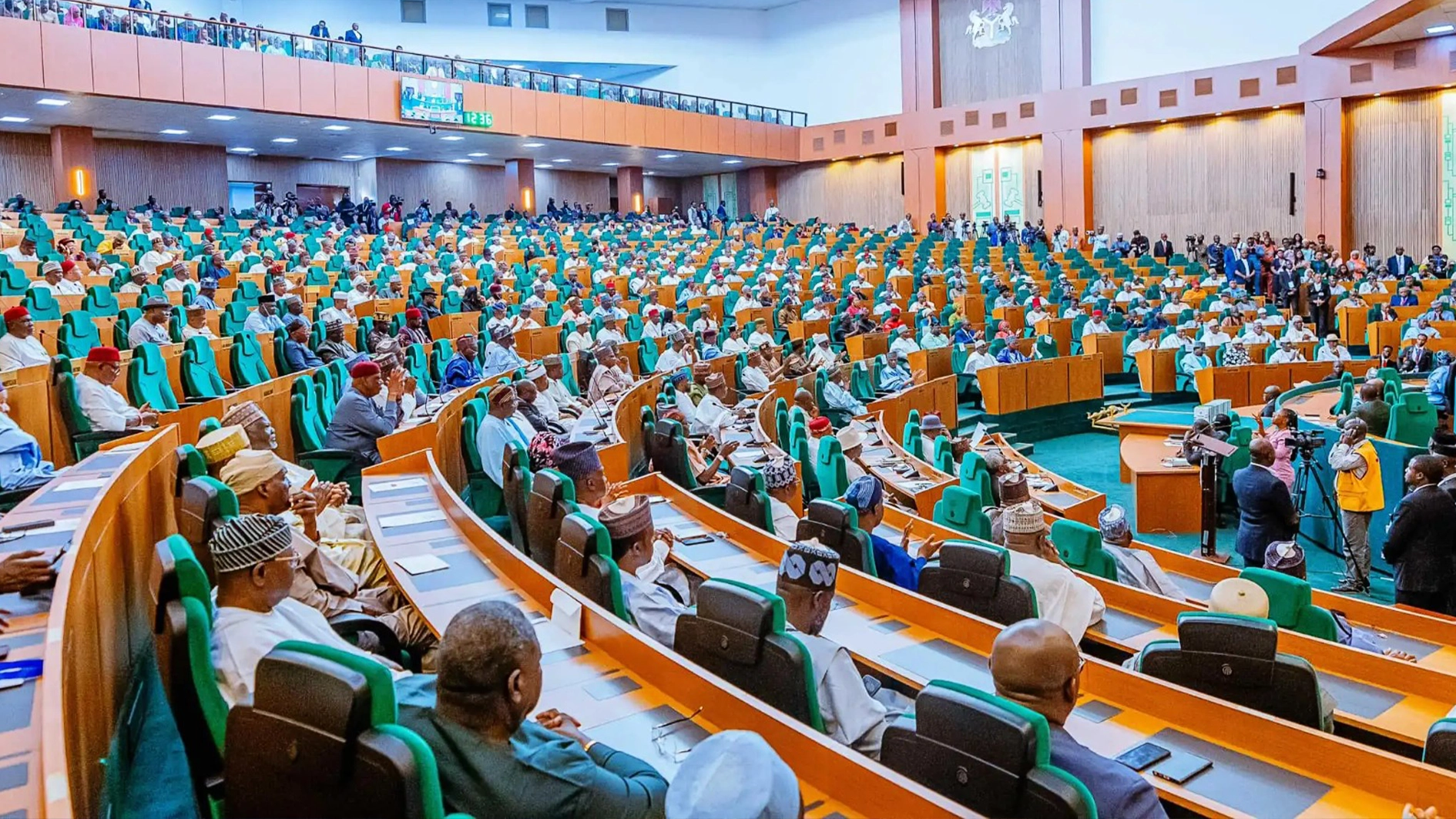
The House of Representatives has begun moves to reform Nigeria’s 69-year-old Trustee Investment Act to align the regulation of trust funds with developments in the country’s financial markets.
The proposed legislation seeks to repeal the existing Trustee Investment Act, Cap T22, Laws of the Federation of Nigeria, 2004, and enact a new Trustee Investment Act, 2026.
The bill, HB.2762, sponsored by Hon. Solomon Bob, was the subject of a public hearing organised by the House Committee on Capital Market and Institutions at the National Assembly, Abuja, on Monday.
Speaking at the hearing, Speaker of the House, Tajudeen Abbas, said the existing law had become inadequate following significant changes in Nigeria’s economic and financial environment since its enactment in 1957.
Abbas, who was represented by Hon. Dahiru Abubakar Sarki, representing Lafia/Obi Federal Constituency of Nasarawa State, said the expansion of capital markets, emergence of sophisticated financial instruments and new investment opportunities made legislative reform necessary.
He noted that the law governing trust investments went beyond financial management, as it involved protecting property, preserving family wealth and securing the interests of people whose assets were entrusted to others.

According to him, trust funds could represent the inheritance of children, the financial security of widows, resources belonging to charitable organisations or the accumulated wealth of families.
He said the proposed legislation must balance the need to protect trust assets with the opportunity to generate reasonable returns for beneficiaries.
Abbas warned that an overly restrictive framework could deny beneficiaries legitimate investment opportunities, while inadequate regulation could expose their assets to imprudent decisions and avoidable risks.
He said HB.2762 sought to establish a more comprehensive investment regime by expanding permissible investment opportunities while strengthening safeguards, fiduciary responsibilities and regulatory oversight.
“The governing principle must remain unmistakable: trustees hold assets for the benefit of others, not for their personal advantage,” he said.
The Speaker stressed that trustees must be guided by prudence, integrity and transparency, adding that modernisation should not become an excuse for speculative investments or exposure of trust property to unreasonable risks.
He also said a credible framework for managing trust investments could help deepen Nigeria’s capital market and mobilise domestic resources for long-term investments needed to address infrastructure deficits, expand productive capacity and stimulate enterprise.
Abbas urged the committee to pay particular attention to investment categories, diversification requirements, fiduciary obligations, professional delegation, regulatory oversight and protection available to beneficiaries.
Earlier, Chairman of the House Committee on Capital Market and Institutions, Solomon Bob, said the public hearing was convened to address the gap between the existing law and the realities of Nigeria’s financial market.
Bob observed that when the Trustee Investment Act was enacted in 1957, Nigeria’s investment options were largely limited to Federal Government bonds.
He contrasted this with the current financial landscape, which he said had evolved into a capital market valued at more than N80 trillion, pension assets exceeding N30 trillion and several new investment instruments.
These include Real Estate Investment Trusts (REITs), infrastructure funds, green bonds and other financial products that were not contemplated when the existing legislation was introduced.
Bob said the proposed law would expand permissible investments to include corporate bonds, equities, exchange-traded funds, collective investment schemes, real property, foreign investments through licensed custodians, private equity, regulated virtual assets and environmental, social and governance-compliant bonds.
The bill also proposes a 20 per cent investment limit in a single issuer to reduce concentration risks and prevent excessive exposure of trust funds to one investment.
On accountability, Bob said the proposed legislation would formally establish trustees’ obligations of loyalty, prudence, care and impartiality.
Under the proposed provisions, trustees would be required to manage entrusted assets with the level of caution expected of prudent persons handling their own affairs.
The legislation would also permit trustees to delegate investment responsibilities to professionals, including fund managers and custodians, while retaining responsibility for selecting and supervising them.
Other provisions include mandatory fair valuation of trust assets, annual reporting to beneficiaries and restrictions on speculative dealings, futures contracts and unregulated investment schemes.
Bob said the bill would also empower the Minister of Finance, in consultation with the Securities and Exchange Commission (SEC) and other relevant regulators, to issue regulations to ensure the law keeps pace with developments in the financial market.
The committee chairman said eight memoranda had already been received, expressing the expectation that further submissions from stakeholders would help shape the final legislation.
He urged participants to examine the proposed investment categories, the 20 per cent diversification threshold, fiduciary responsibilities, environmental and social governance obligations and possible overlaps with existing SEC and PenCom regulations.
Bob also called for adequate safeguards for small family trusts, insisting that ordinary beneficiaries deserved the same protection as those whose assets were held in large institutional funds.
“The widow in Sokoto whose husband left N2 million in trust deserves the same protection as a billion-naira pension fund,” he said.
The public hearing is expected to provide an opportunity for regulators, financial market operators, legal practitioners, estate administrators and other stakeholders to make recommendations before the committee concludes work on the proposed legislation.