
 Get Guardian on Google
PROFESSIONALS from the legal sector and building industry have tasked the federal and state governments to prioritise effective domestication and enforcement of the National Building Code (NBC) to tackle the persistent cases of building collapse.
They also called for greater accountability among architects, engineers, quantity surveyors, estate surveyors, developers and other professionals involved in the construction industry.
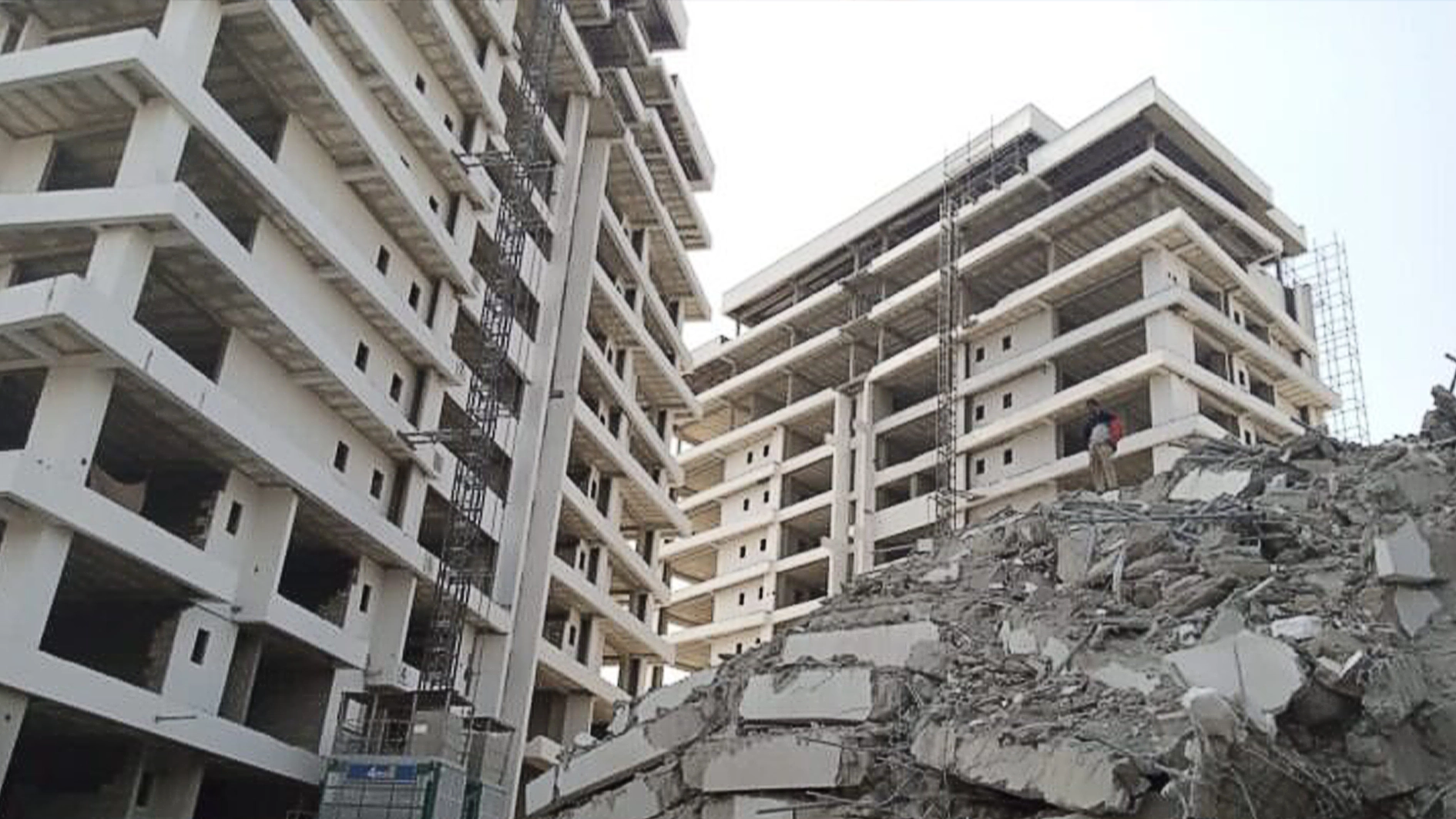
Vice Chairman of Lagos branch of the Nigerian Bar Association (NBA), James Sonde, led the call at a webinar to mark the fifth memorial of the collapse of tallest building at Gerrard Road, Ikoyi organised by Building Collapse Prevention Guild (BCPG) Ikoyi-Obalende Cell, Lagos state.
He said the federal government should establish a clear statutory framework for the National Building Code while encouraging state governments and Houses of Assembly to domesticate and effectively implement its provisions.
Sonde said building safety should be treated as a national priority and an essential component of the protection of human life.
Speaking on the theme: “Making national building code enforceable to enhance safety in Nigerian built environment” he argued Nigeria needs uniform minimum building safety standards, although implementation should take into consideration the peculiarities of individual states.

He cited Lagos State’s building control structure, particularly the Lagos State Building Control Agency (LASBCA), as an example of how effective institutions could strengthen building inspection, certification and the identification and removal of distressed structures. He warned that having a building code without enforceable laws and adequately resourced regulatory institutions would achieve little, adding that continuous inspection must replace the practice of waiting for buildings to collapse before intervention.
He added that Nigeria must move from having a building code to ensuring compliance, enforcement and accountability, stressing that no building should become a death trap because safety standards are treated as optional.
Third Vice President of the Nigerian Institute of Architects (NIA), David Majekodunmi, called for the modernisation of Nigeria’s building control system through digital technology, stronger legislation and improved institutional coordination to prevent building collapse.
He lamented that the National Building Code had remained without the necessary legislative backing for nearly 39 years, urging the Federal Government and the National Assembly to expedite its enactment into law.
He identified weak enforcement, inconsistent adoption of building regulations by states, use of unqualified practitioners, substandard materials, poor workmanship, inadequate site supervision, corruption and poor maintenance culture as factors undermining building safety.
Majekodunmi stressed the need for the introduction of a digital building safety passport for every building, containing records of approved designs, inspections, certifications, alterations and periodic safety assessments as well as advocated digital building approval systems, Building Information Modelling (BIM), Geographic Information Systems (GIS), drones, remote sensing and artificial intelligence to improve transparency, monitoring and regulatory compliance.
Member, Lagos state Regional Investigation Panel, Council for the Regulation of Engineering in Nigeria (COREN), Elias Agbabiaka, warned engineers, contractors and other construction professionals against compromising safety standards under pressure from developers, cost-cutting measures and project deadlines.
Agbabiaka said no building project was worth the avoidable loss of human life, urging professionals to prioritise competence, ethical procurement, proper documentation and accountability at every stage of construction.
He identified bid manipulation, kickbacks, conflicts of interest, unrealistic low bids and the use of substandard materials as procurement practices that expose construction projects to serious safety risks.
Agbabiaka maintained that construction safety must begin from the design stage, adding that competence, integrity and accountability must guide every decision throughout a building’s lifecycle.
President of the Nigerian Institution of Structural Engineers (NIStructE), Dr Taiwo Elegba, said building safety does not happen by accident but results from deliberate technical decisions, professional competence, quality construction and effective supervision.
He emphasised that soil investigation must be mandatory before construction begins, while all architectural, structural, mechanical and electrical designs must be prepared and certified by appropriately registered professionals. He called for clear sanctions for non-compliance and protection for professionals who report unsafe construction practices through whistleblowing mechanisms.
Former Second Vice President Nigeria Bar Association, Dr Monday Ubani, said the time has come for Nigeria to move beyond repeated expressions of grief whenever buildings collapse. He said the federal government must provide national leadership while state governments and the FCT administration must strengthen their laws and enforcement institutions and legislatures must close legal gaps.
“Regulatory agencies must act independently. We do not lack the expertise to construct safe buildings. We do not lack technical standards. What we lack is a dependable system that converts those standards into binding obligations and ensures that violations are detected and addressed before lives are lost. Professionals must uphold their ethical obligations, and developers must place human safety above excessive profit. The National Building Code must not remain a document admired at conferences but disregarded at construction sites,” Ubani said.
Earlier, the President of BCPG, Yusuf Sulaimon, called for sustained collaborative efforts to mitigate building collapse across the country.