 Get Guardian on Google
Children need to understand how value is created long before they choose a path. Our schools should begin building that capability from the first year.
In 2046, ask a school principal in Lagos why her pupils no longer choose their futures by the subjects they failed, and she will find the question faintly odd. So will her colleagues in Kisumu, Oran and Bulawayo. By then, their schools will have spent two decades developing business reasoning from Grade 1, as deliberately as literacy and numeracy. The idea that a child once spent twelve years in school without learning why one business thrives while the one next door closes will sound the way a school without mathematics sounds to us today.
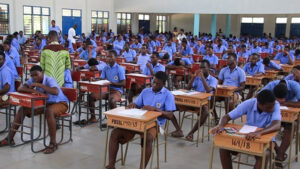
That school does not exist yet. Financial literacy and entrepreneurship programmes can be found across the continent, but they tend to arrive late, sit at the edges of the timetable or end when the funding does. I have yet to find an education system that builds a child’s ability to reason about value, cost, risk and exchange from the first year of school. Instead, we teach children whatever the examinations will test, and let the results, together with the hopes their families have pressed on them, decide who they become.
I know this sorting from the inside. In the holiday classes after junior WAEC, a weak D7 in Physics and an A1 in Chemistry settled a question nobody had properly asked me. The commercial subjects came naturally, so I chose the commercial class for the plainest of reasons: it was where I was most likely to keep passing. That choice set me dreaming of becoming a chartered accountant and later carried me to actuarial science at the University of Lagos, for no grander reason than that it was easier to get into than accounting. The path has served me well, but it was chosen by elimination, not by any understanding of my strengths, my weaknesses or the possibilities ahead of me. My schooling measured what I could score and never once asked how I reasoned. In every industry I have worked in since, I have met very few professionals who arrived any other way.
This might matter less if the economy waiting for our children resembled the one their schooling imagines. In Nigeria, micro, small and medium enterprises accounted for 87.9 per cent of employment and 46.3 per cent of GDP in the 2021 NBS–SMEDAN survey. Across the continent, the African Development Bank estimates that 10 to 12 million young people enter the labour market each year, against roughly three million new formal jobs. We are, in effect, schooling Africa’s children for three million jobs a year, when most of those children will have to make their own. Not all of them will start businesses, but whatever they become, they will spend their lives inside decisions about value, cost and risk.
Nigeria is not starting from nothing. Business Studies has been taught in junior secondary school since 1982, and from the 2025–2026 session every JSS1 student must also take a trade. Both matter, but neither is the same as reasoning through a decision. A child can pass both and still be unable to price a job, weigh the risk of selling on credit or work out why a customer never came back.

I am not, however, asking for one more subject on a timetable; that is already crowded. I am asking education systems to recognise business reasoning as a capability, as they already recognise literacy and numeracy, and then to decide how best to build it: as a subject of its own, as a thread running through mathematics and social studies, or in the enrichment periods many schools already run.
Business reasoning is the habit of thinking through value, cost, risk and exchange before making a choice: what something is worth and to whom, what it takes to produce, what could go wrong, and what each side gives and gets. Ask a class of eight-year-olds why the pepper seller at the end of the street charges more at certain times of the year, and whether he is right to. To answer, they must think about what it costs to bring his pepper to market, how much spoils before it sells, what his customers can afford and what he stands to lose if he prices it wrong. Nobody is teaching them to sell pepper. They are learning to investigate a real problem, weigh evidence, defend a judgement and change their minds when the facts do.
Waiting for secondary school is waiting too long. A review for the UK’s Money Advice Service by David Whitebread and Sue Bingham of the University of Cambridge concluded that habits linked to later financial behaviour, among them planning ahead and delaying gratification, begin to take shape by around the age of seven. We already accept that young children can be taught to reason; it is why so many of our primary schools teach quantitative and verbal reasoning.
Our markets have always been our oldest business school. Through the Igba Boi apprenticeship and the ajo savings circle, generations have learned pricing, trust, credit and obligation by practice rather than by examination. In a 1979 study in Côte d’Ivoire, Dioula children from a trading community who had never been to school understood a key number concept as well as those who had; for those children, growing up around trade had done the work of the classroom. What children absorb from the market can be incomplete, and it reaches only those who grow up beside a stall. A school can make that learning deliberate, and offer it to every child.
The obvious objection is that childhood should not be turned into a marketplace, and that a six-year-old has no business thinking about profit. I agree with the first half. Business reasoning asks no child to sell anything or to become an entrepreneur. As for the second half, children already weigh cost and worth every time they spend pocket money or watch adults bargain; the question is whether anyone helps them think it through. Nor does business reasoning compete with reading and arithmetic, which too many of our children still struggle with. Working out the pepper seller’s price is a reading and numeracy exercise with a reason to care about the answer.
Taking business reasoning seriously would also mean measuring something new. A report card tells a child what they scored; it says almost nothing about how they approached a problem, weighed their options or changed their mind. Making that reasoning visible as it grows, without turning it into another examination, is central to the curriculum I am designing for children aged six to fourteen.
What we need now is evidence from our own classrooms. I urge the Nigerian Educational Research and Development Council to consider business reasoning in its next review of the basic education curriculum, and state education boards, beginning with Lagos, to support a year-long pilot in a small number of public primary schools. It should be taught by teachers trained for it rather than merely handed a new syllabus, evaluated with researchers and teacher-training colleges, and reported honestly. It need not be expensive: its materials are the markets, shops and prices already around every school. Development partners can ensure that children in under-resourced schools are not the last to benefit, and ministries elsewhere in Africa can run trials of their own.
Parents can ask their children’s schools a simple question: where is my child learning to reason about the economy they will one day live in?
A child who starts Grade 1 next year will be twenty-five in 2046, an adult in the Africa we have promised ourselves. The African Union’s Agenda 2063 imagines a continent whose development is driven by its own people, especially its women and youth. That Africa will need citizens who learned to reason about value long before they were asked to create it, and the principal’s school will exist by then only if we begin building it now.
Every education system is, in the end, a statement about what a society believes its children will need. For decades, ours has told them they need to pass. They will need far more: the ability to see value where others see none, to count the true cost of a choice, to weigh a risk before taking it and to understand what they owe and are owed in every exchange. Most of us learned it by chance, if we learned it at all. Will our children learn it by chance, or by design?
Ómòlèyé Hauwa Onifade writes from Lagos, Nigeria.