
 Get Guardian on Google
Nigeria’s security crisis extends beyond the traditional conflict hotspots, with a new threat assessment identifying 31 states and the Federal Capital Territory as facing elevated, high or critical risks, while no state falls into the low-risk category.
Nigeria’s security crisis is no longer adequately described as a conflict concentrated in the North-East or a collection of isolated attacks in different parts of the country.
A new assessment of the country’s security landscape suggests a more complicated picture: a nationwide network of interconnected threats in which insurgency, organised criminal activities, communal violence, separatist pressure and weak institutional capacity reinforce one another.
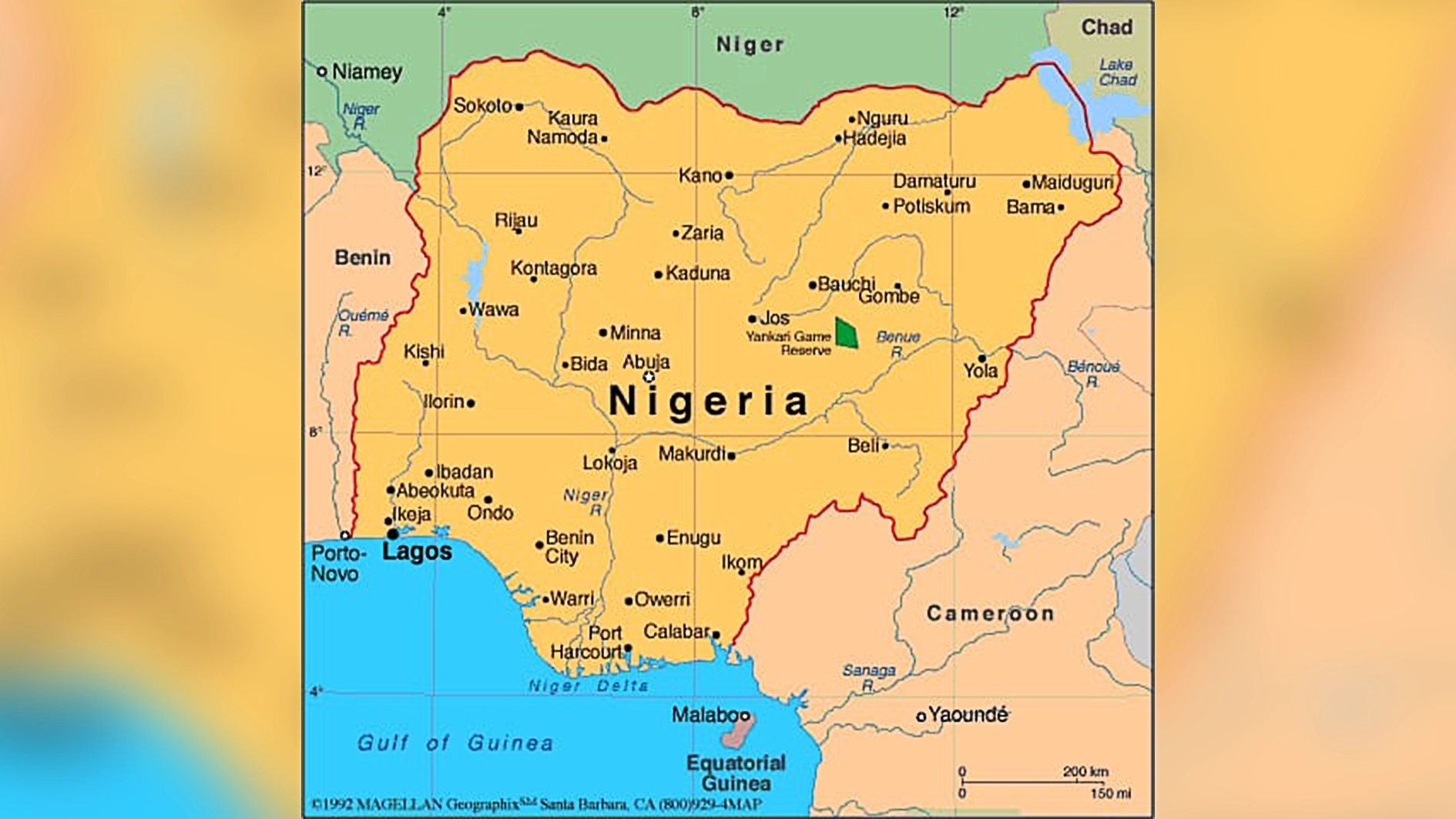
The Nigeria Threat Assessment 2026, in its state-by-state risk heat map, identifies seven states as facing critical security risks, 11 as high-risk, 13 as elevated-risk and six as moderate-risk. No state or territory received a low-risk rating.
The findings, based on analytical ratings as of March 2026, place Nigeria’s overall national threat level at HIGH, with critical conditions concentrated in Borno and parts of the North-West and Middle Belt.
The figures suggest that the country’s security challenges are considerably more widespread than a geographical assessment of individual attacks might indicate.

Out of the 37 states and the Federal Capital Territory assessed, 31 have elevated or worse risk ratings. This represents approximately 84 per cent of the country’s federating units.
More strikingly, 18 states and the FCT fall within the high and critical categories, meaning nearly half of the assessed territories face serious or extremely serious security concerns.
The assessment’s central argument is that Nigeria is dealing with multiple security threats that increasingly overlap rather than operate independently.
Seven states in the critical category
Seven states occupy the highest-risk category: Borno, Zamfara, Katsina, Kaduna, Benue, Plateau and Niger.
Their geographical distribution illustrates the different dimensions of Nigeria’s security crisis.
Borno remains a major centre of the country’s insurgency challenge in the North-East. Its critical rating places it alongside six other states experiencing different forms of serious security pressure.
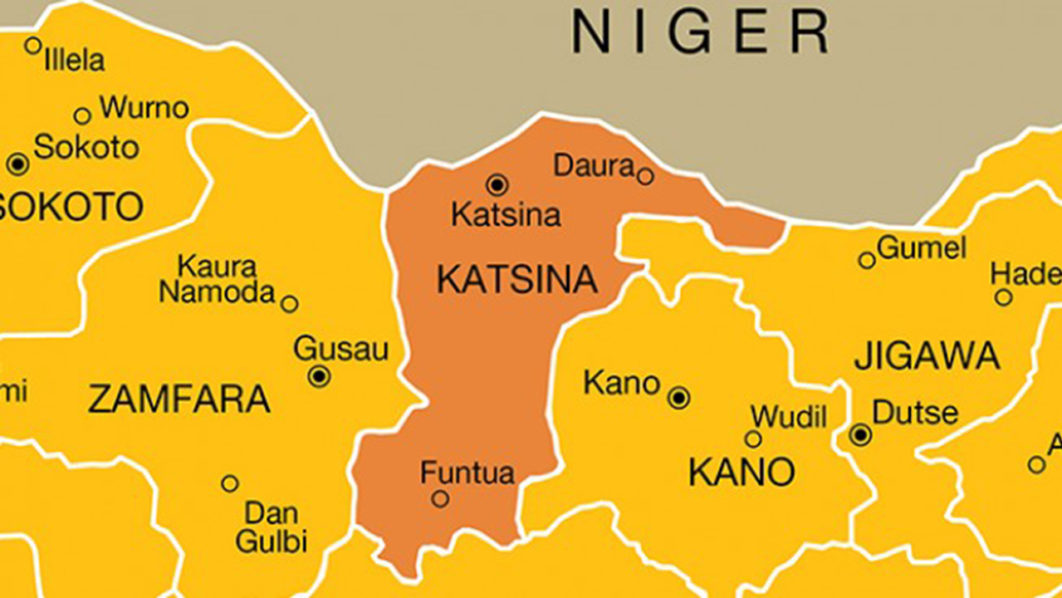
In the North-West, Zamfara, Katsina and Kaduna are classified as critical, highlighting the extent to which insecurity has expanded beyond the insurgency that initially dominated national security discussions.
The concentration of three North-Western states in the critical category is particularly significant because it demonstrates that the region’s security challenges cannot be treated as isolated incidents or confined to individual communities.
The Middle Belt also features prominently, with Benue, Plateau and Niger classified as critical.
The inclusion of these three states points to the geographical spread of serious security threats beyond the North-East and North-West.
It also highlights the importance of examining different forms of violence when assessing national security. Nigeria’s threat environment includes not only insurgency but also communal violence, organised predation and other forms of armed activity.
The seven critical states therefore represent different dimensions of a broader national security problem rather than a single conflict spreading uniformly across the country.
High-risk states extend the security belt
Beyond the seven critical states, another 11 states and territories are classified as high-risk.
They are Adamawa, Anambra, Delta, the Federal Capital Territory, Imo, Kebbi, Nasarawa, Rivers, Sokoto, Taraba and Yobe.
Their distribution is noteworthy because it cuts across several geopolitical zones.
In the South-East, Anambra and Imo fall within the high-risk category, while Abia, Ebonyi and Enugu are rated elevated.
This means that all five states in the South-East appear within the elevated-or-higher categories, with two facing high risk.
The pattern is also visible in the South-South, where Delta and Rivers are rated high, while Akwa Ibom, Bayelsa and Edo are classified as elevated. Cross River is the only state in the zone rated moderate.
In the North-East, Adamawa, Taraba and Yobe are high-risk, while Bauchi and Gombe are elevated. Borno remains the zone’s critical-risk state.
The North-Central also presents a concerning picture. The Federal Capital Territory and Nasarawa are high-risk, while Kogi is elevated. Benue, Niger and Plateau are classified as critical, with only Kwara receiving a moderate rating.
These classifications demonstrate that security concerns are not limited to states that frequently dominate national headlines.
The presence of the Federal Capital Territory in the high-risk category is particularly important because Abuja serves as the country’s political and administrative centre.
Although the assessment does not provide incident-by-incident explanations for individual state ratings, the classification underscores the need to consider the security environment beyond the locations traditionally associated with armed conflict.
Lagos and the South-West: Not a low-risk zone
The South-West presents a different picture from the North-East and parts of the North-West, but the assessment does not classify the region as free from significant security concerns.
Lagos and Ogun are rated elevated, while Oyo is also elevated.
Ondo, Osun and Ekiti are classified as moderate.
The figures mean that none of the six South-Western states falls into the low-risk category.
Lagos, Nigeria’s commercial capital and one of its most important economic centres, is therefore not exempt from the security concerns identified in the assessment.
Its elevated rating is a reminder that national security cannot be measured exclusively through insurgency or the presence of large armed groups.
The assessment’s broader framework considers a connected system of threats, including organised predation, illicit financial activities, communal violence and institutional overstretch.
For a state with significant commercial activity and a large population, the implications of insecurity extend beyond direct physical attacks to the safety of economic activities, public confidence and the ability of institutions to respond to emerging threats.
Ogun’s elevated rating also places it within the same risk category as Lagos, while neighbouring Oyo shares that classification.
However, the moderate ratings for Ondo, Osun and Ekiti indicate that the South-West does not experience an identical level of security pressure across its states.
The South-South and South-East face different levels of exposure
The South-South has no state in the critical category, but four of its six states are classified as high or elevated.
Delta and Rivers are high-risk, while Akwa Ibom, Bayelsa and Edo are elevated. Cross River is rated moderate.
In the South-East, the situation is more concentrated, with Anambra and Imo classified as high-risk and Abia, Ebonyi and Enugu rated elevated.
The distinction is important because it shows that the absence of a critical rating does not necessarily translate into a low-threat environment.
Indeed, the assessment places every state in both regions within the elevated-or-higher categories, except Cross River, which is moderate.
The findings also reinforce the need to avoid treating the country’s southern geopolitical zones as uniformly secure simply because they are not experiencing the same scale or form of conflict associated with parts of the North.
Why the national picture is more complicated
Perhaps the most significant observation in the assessment is not the number of states in each category but the explanation it offers for the relationship between Nigeria’s different security threats.
The report argues that the country’s problem is not a single conflict but a connected system of insurgency, organised predation, communal violence, separatist pressure, illicit finance and institutional overstretch.
Its central concern is convergence.
According to the assessment, armed groups operating under different motivations and structures can exploit the same weakly governed spaces, informal markets, smuggling routes, displaced populations and public distrust.
This suggests that security threats should not always be understood as independent developments.
For instance, areas affected by displacement, weak governance and limited institutional presence may become vulnerable to several forms of criminal or armed activity.
Similarly, informal economic networks and smuggling routes can provide opportunities for groups seeking to move resources, evade security operations or sustain their activities.
Public distrust and institutional overstretch can further complicate responses, particularly where communities have limited confidence in the ability of authorities to protect them.
The assessment therefore presents a security environment in which different threats can reinforce one another, making it more difficult to address individual conflicts without considering their wider connections.
This is a significant departure from an approach that measures national security principally by the number of attacks recorded in particular states.
It also explains why states without a critical rating remain part of the wider national threat picture.
No state escapes the risk assessment
The absence of a low-risk state is perhaps the most striking statistic in the heat map.
While six states are classified as moderate, none is considered to have a low residual threat level.
The six moderate-risk states are Cross River, Ekiti, Jigawa, Kwara, Ondo and Osun.
Their classification places them at the lowest end of the assessment’s risk scale, but not outside the national security environment.
The distinction between moderate and low is important. A moderate rating indicates a comparatively lower level of assessed risk than the other categories, not the complete absence of security threats.
Likewise, elevated does not mean that every community in a state faces the same degree of danger.
The heat map provides an overall state-level assessment. It does not establish that every local government area, community or neighbourhood within a state experiences identical security conditions.
Consequently, the ratings should be understood as an overview of broader state-level exposure rather than a direct prediction of where or when attacks will occur.
What the figures mean for Nigeria
The assessment raises important questions about how Nigeria approaches national security.
If insecurity operates through interconnected networks, responses focused exclusively on individual attacks or particular armed groups may not adequately address the conditions sustaining the wider threat environment.
The geographical spread of high and critical ratings also underscores the importance of coordination across states and geopolitical zones.
Security challenges do not necessarily respect state boundaries, particularly where armed groups, criminal networks, smuggling routes and displaced populations are involved.
The findings also place renewed importance on institutional capacity and public confidence.
Where security institutions are overstretched and communities distrust authorities, efforts to prevent violence, obtain reliable information and sustain public cooperation may become more difficult.
For policymakers, the implication is that national security requires more than military operations. It also involves addressing weak governance, organised criminal networks, illicit financial activities and the conditions that allow armed groups to operate.
The figures further suggest that security planning should recognise differences in the threats confronting individual states rather than apply a uniform response across the country.
Borno’s critical rating, for example, should not automatically be interpreted through the same security lens as Benue, Plateau, Zamfara or Kaduna. The assessment identifies all seven as critical, but its broader argument is that Nigeria’s security threats involve different dominant actors and overlapping conditions.
The March 2026 heat map ultimately presents a country with no state or territory rated low-risk, seven facing critical threats and 31 operating within elevated, high or critical security environments.
Its most important warning is that Nigeria’s security crisis is not confined to a single red zone surrounded by relative calm.
Instead, it is a multi-zonal threat environment in which different forms of insecurity coexist, overlap and potentially reinforce one another.