
 Get Guardian on Google
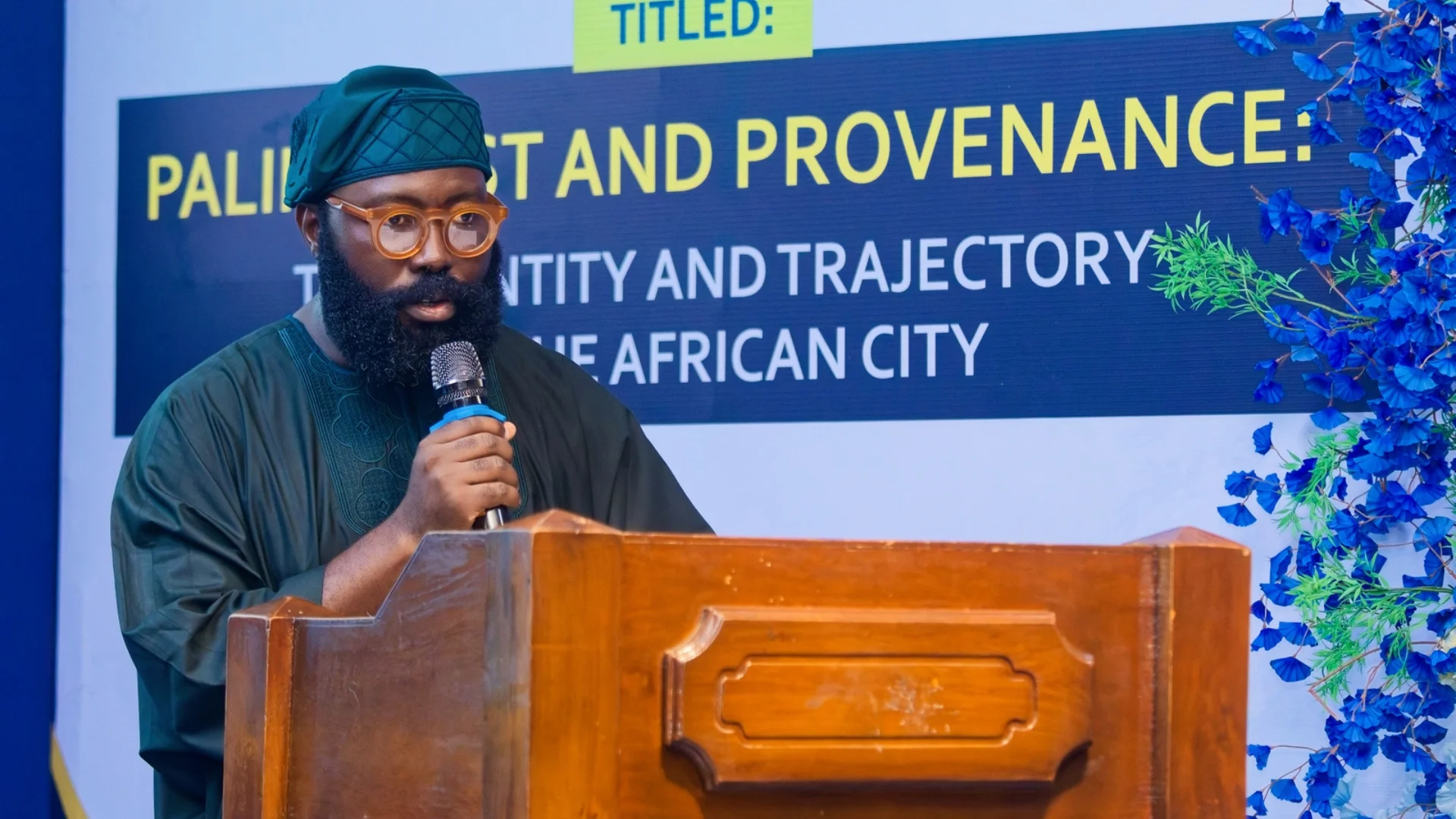
The Cambridge-trained Architect and urban designer Dr Stephen Ajadi has proposed siting police stations by state-specific vulnerability maps and redesigning markets to withstand attacks and reduce casualties.
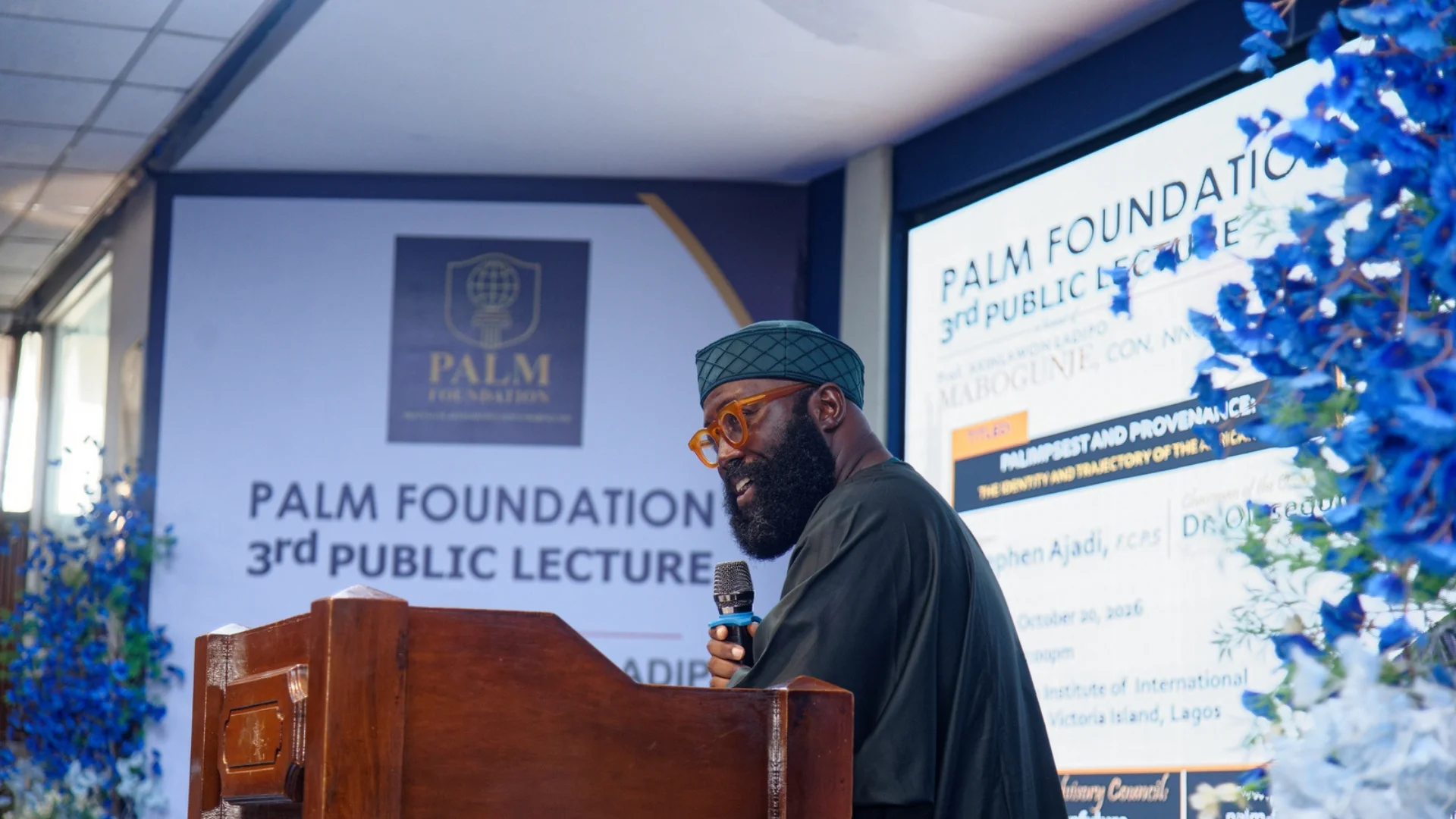
Ajadi, Founding Principal of Ruban Architecture Office and Director of the African Contemporary Institute of Design, holds a Cambridge PhD in Land Economy and heads Spacethograph, a security think tank advising governments on urban vulnerability. He made the proposals while delivering the third public lecture of the Professor Akinlawon Ladipo Mabogunje (PALM) Foundation at the Nigerian Institute of International Affairs (NIIA), Victoria Island, Lagos, on Tuesday, October 20, 2026.
The lecture, titled “Palimpsest and Provenance: The Identity and Trajectory of the African City”, argued that African cities have been written over by others since the Berlin Conference and that security is a matter of how space is organised. Ajadi named Mabogunje’s spatial thought a school, “Mabogunjeism”, and presented two projects built on it: Kanem Creative City, designed by his practice outside Maiduguri, and a conflict-resilient market for the north.
The event brought together academics, statesmen and traditional rulers, and former Governor of Ondo State, Dr Olusegun Mimiko, who chaired the occasion. It was hosted by the PALM Foundation, chaired by the Vice-Chancellor of the University of Lagos, Professor Folasade Ogunsola, and by members of the Mabogunje family, led by Justice Titilola Mabogunje (rtd.).
Ajadi said security infrastructure should follow the vulnerability of communities rather than concentrate around major urban centres.
Citing Borno State, he noted that Maiduguri occupies less than one per cent of the state’s land mass, leaving communities outside the capital exposed to attacks and delayed responses.

The argument rests on his theory of interstitiality, drawn from his fieldwork in Abuja’s markets and physical interviews of over 5000 Maiduguri residents. He found that the spaces between communities and institutions decide where violence and trade settle, and reorganising them reduces vulnerability. “The centre cannot hold most of the time, so people far away from that centre are more vulnerable,” he said.
Drawing on his research into police station locations in Ogun and Ondo states, he urged state governments to map vulnerable areas and let the findings guide police siting.
“Sometimes we shouldn’t just let the Federal Government come and just choose where to put police stations. We have to tell them that these are our areas of vulnerability. This is how our cities work. These are the places we want you to put police stations,” he said.
He also advocated redesigning markets to resist attacks, arguing that traditional markets hold lessons for security-conscious planning.
Describing a market-mapping project in Jigawa State, he said his team had developed a digital tool that learns how a market lives from day to day, so that what is out of place can be promptly seen. “We know how people’s day-to-day activities are,” he said.
“Instead of trying to formalise it, why not lean into that chaos? Why not lean into that way of thinking and create more spaces?” he asked.
His market design, developed from his Cambridge research, uses local materials and a layout that lets traders move freely while denying an attacker easy entry, and in simulations it sharply reduced casualties from an explosion compared with a typical market.
In Kanem Creative City, which he designed, security is one layer of the plan rather than its organising principle, so that residents never feel under siege.
He also recounted a Maiduguri intervention in which his team drew people involved in local conflicts into a development initiative. “We didn’t go to them and say you are the problem. Instead of attacking them, they became the protectors,” he said.
Nigeria, he maintained, needs security solutions that reflect its own cities rather than imported models.
Gov. Mimiko commended the ideas, in particular the place Ajadi gave the Nigerian market at the centre of the security debate, a cause he said he had pressed during his own years as governor of Ondo State.
The lecture also reflected on the contributions of Professor Akinlawon Ladipo Mabogunje, CON, NNOM, one of Africa’s most influential geographers.
Born in Kano on October 18, 1931, Mabogunje became the first African professor of geography on his appointment at the University of Ibadan in 1965. His scholarship transformed the understanding of urbanisation, migration, settlement systems and regional development.
He was President of the International Geographical Union from 1980 to 1984, the first African to hold the office, and an international member of the United States National Academy of Sciences. Beyond academia, he shaped policy on housing, local government reform, land reform and the development of Abuja.
Mimiko recalled that his relationship with Mabogunje began when he was appointed Minister of Housing and Urban Development, and that the professor offered to teach him urban development through masterclasses that broadened his understanding.
Ajadi acknowledged Mabogunje’s influence on his Cambridge doctoral studies and said the lecture, delivered in the week of what would have been the professor’s 95th birthday, argued for teaching his ideas as a school.
The PALM Foundation, established to preserve and advance his legacy, provides a platform for conversations on geography, spatial development and the future of African cities. Mabogunje died on August 4, 2022, aged 90.