
 Get Guardian on Google
By Abdullahi Aliyu
As we approach the 2027 general elections, the noise of politics seems to be drowning out the quiet sound of real progress. Nigeria is in such a moment now. While many are busy arguing, blaming and predicting doom and gloom, a lot of progress is being made in the oil and gas sector, and it deserves to be celebrated, or at least acknowledged.
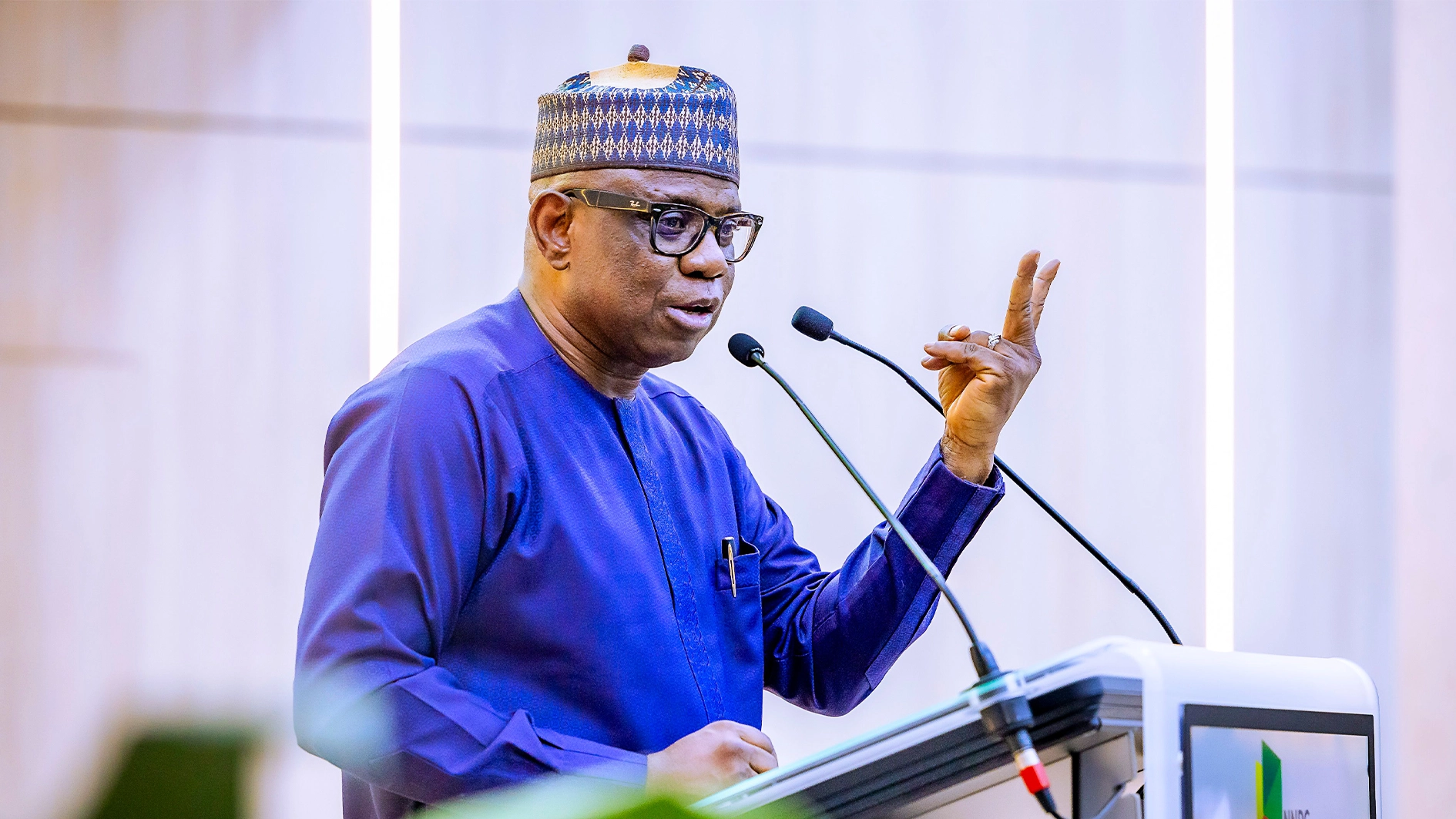
At the just concluded Abu Dhabi International Petroleum Exhibition and Conference, ADIPEC 2026, the Group Chief Executive Officer of the Nigerian National Petroleum Company Limited, Engr. Bashir Bayo Ojulari, stood before the world and told the Nigerian story with facts, not propaganda. And the facts were impressive.
Nigeria’s crude oil production has risen from about 1.2 million barrels per day to 1.8 million barrels per day. That is an addition of 600,000 barrels per day. In the complex, difficult world of oil production, where a drop of 50,000 barrels can cause panic in government circles, an increase of 600,000 barrels is one achievement that is truly impactful.
For years, Nigerians watched helplessly as production fell, as oil theft crippled the economy, as pipelines were vandalised, and as investors took their money to other countries. We became used to excuses, to hearing why Nigeria could not meet its OPEC quota. We became used to the embarrassment of being an oil-producing country that could not produce oil.
Ojulari has changed that narrative because he is doing the basics well. At ADIPEC, he was clear about how the implementation of the Petroleum Industry Act of 2021, an improved investment climate, better investment decisions, and closer collaboration between NNPC and its partners are translating into the much needed progress in the sector.

For decades, the PIA was debated, delayed and diluted. When it was finally passed, many doubted it would be implemented. Ojulari and his team have shown that with political will and professional management, the law can work. Investors are returning because they now see a country that respects contracts, protects investments and provides clarity to the minutest of the details.
The result is that Nigeria is once again competing for energy capital on the global stage. At ADIPEC, Ojulari did not go to beg, but to present a case. He told investors that Nigeria is ready, that production is rising, and that the country is on a journey to 2 million barrels per day by 2027.
That target is not a wishful thinking. It is built on a clear strategy through the maintenance of existing infrastructure, protection of base production, improvement of output from producing assets, and advancement of new projects scheduled to raise production. This is the language of a man who understands the industry, not a politician making empty promises.
But Ojulari’s achievements go beyond crude oil. Anyone who has followed the gas sector knows that gas is Nigeria’s future. Indeed, it is now becoming real that Nigeria is more of a gas nation than just crude oil. We have some of the largest gas reserves in the world, yet for years we flared it, wasted it, and failed to use it to power our homes and industries. Under Ojulari, that is changing.
The Obiafu-Obrikom-Oben, OB3, gas pipeline was completed in August 2026. For those who do not follow the fine and technical details, OB3 is a critical artery that connects gas from the East to the West, unlocking supply for power plants and industries. It had been delayed for years, becoming a symbol of abandoned projects. Its completion is proof that this administration means business.
Even more ambitious is the Ajaokuta-Kaduna-Kano, AKK, pipeline, which is expected to deliver gas to Abuja before the end of 2026 for power generation, data centres and industrial hubs. When that happens, it will transform the economic landscape of Northern Nigeria. It will mean cheaper power for industries, jobs for young people, and a new foundation for manufacturing in Abuja, Kaduna and Kano.
Ojulari has set a national gas production target of 10 billion standard cubic feet per day by 2027 and 12 billion standard cubic feet per day by 2030. These are bold targets, but they are supported by real projects and real investments. At ADIPEC, he disclosed that commercial agreements covering about 20 billion US dollars in investment have been concluded, including TotalEnergies’ Ubeta, Shell’s Bonga South-West and Eni’s Zabazaba developments.
Think about what 20 billion dollars means. That amount brought the Dangote Refinery to reality. So it means jobs, it means more foreign exchange, and it means technology transfer. It means that international oil companies, who had almost given up on Nigeria, are now betting billions of dollars on our future. They are betting because they trust the leadership at NNPC.
Equally important is what Ojulari is doing at home to ease the burden on ordinary Nigerians. The removal of petrol subsidy was painful, and no one should pretend otherwise. Ojulari is working hard to support the government in pushing a major Compressed Natural Gas, CNG, programme, with over 400 CNG conversion centres established across the country and more than 1,000 trucks that move petroleum products now running on CNG.
Without doubt, CNG is cheaper, cleaner and more sustainable than petrol and diesel. For transporters, it means lower operating costs. For ordinary citizens, it means the possibility of lower transport fares in the future. For the environment, it means less pollution. This is the kind of practical, forward-thinking policy that Nigeria needs and is already benefiting from.
Yet, despite these achievements, some would rather distract Ojulari, for political or selfish reasons. They spread rumours. But the reality is that Nigerians need to support him. Leadership in the oil and gas sector is one of the most difficult jobs in Nigeria. The NNPC boss is under pressure from all sides, ranging from politicians who want patronage, from oil thieves who want to continue stealing, from vested interests who benefited from the old opaque system, and from a public that is rightly impatient for results.
To succeed in that environment requires courage, integrity and focus. Ojulari has shown all three. He has shown that he is not there to enrich himself or his friends, but to rebuild an institution that was once synonymous with corruption and inefficiency. He has shown that he is willing to make tough decisions, to cut costs, to enforce discipline, and to demand accountability from partners and staff.
Nigerians must understand that the success of NNPC is the success of Nigeria. When NNPC produces more oil, the Federation Account gets more money for roads, schools, hospitals and security. When NNPC completes gas pipelines, industries get power and young people get jobs. When NNPC attracts foreign investment, the naira becomes stronger and inflation comes down.
We should therefore rally behind Ojulari. We should support the reforms at NNPC. We should demand that the National Assembly, the media, civil society and the general public give him the space to work. Criticism is healthy, but it must be constructive and based on facts. The media, instead of amplifying unverified rumours, should focus on the fact that production is up, gas pipelines are being completed, investments are coming in, and CNG is expanding. These are verifiable facts, not press releases. President Bola Tinubu gave Ojulari a mandate to reform NNPC and make it a world-class energy company. Ojulari is delivering on that mandate.
The journey to 2 million barrels per day by 2027 is not Ojulari’s journey alone. It is Nigeria’s journey. The journey to 10 billion cubic feet of gas per day is not just an NNPC target. It is a national target that will determine whether our children will have electricity, jobs and a future.
At ADIPEC, Ojulari spoke with confidence because he had results to show. He spoke like a man leading a company that is back on its feet and ready to compete. Nigerians should be proud of that. We should be proud that for the first time in a long time, our national oil company is being led by a professional who is respected internationally and who is delivering locally.
Aliyu is based in Abuja