GDN SIDEBAR
Between Nigeria and the UK, rapper Tobiloba Olusunle is exploring the relationship between hip-hop’s traditions and contemporary African sounds. His EP, “Playing With Fire,” offers an early indication of an artistic identity still finding its definition.
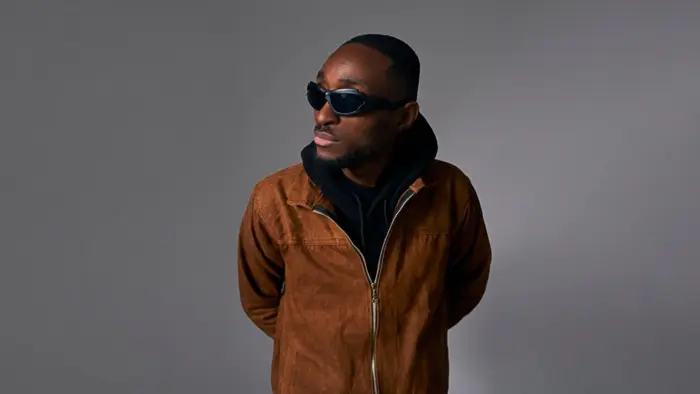
Finding an original voice in music is rarely a straightforward process. For emerging artists, the challenge is not simply identifying the influences that inspire them but transforming those influences into something that feels individual. Nigerian rapper Tobiloba Olusunle, professionally known as ALAN1 and also recognised as T.O.D SZN, is navigating that challenge as he develops his place within contemporary Nigerian hip-hop.
His musical direction emerges at an interesting moment for Nigerian music. Afrobeats have become an increasingly prominent feature of the international music landscape, but the country’s hip-hop scene continues to offer a different space for lyrical experimentation, individual expression, and engagement with rap culture. ALAN1’s interest lies in exploring that space while drawing on the contemporary African sounds shaping the wider industry.
His experiences between Nigeria and the United Kingdom provide another dimension to his creative perspective. Exposure to different cultural environments has informed his musical interests, although translating those influences into a distinctive sound remains an important part of his artistic development. The challenge for ALAN1 is to ensure that this range of influences becomes more than a collection of references: it must develop into a coherent musical identity.
His six-track EP, Playing With Fire, provides an opportunity to examine that process. Featuring SVG on FILA and Eeskay on VET, the project explores different expressions of his relationship with hip-hop and contemporary African music. Its relatively concise format gives listeners an introduction to his creative direction, although it also leaves questions about the full extent of his musical range and the consistency of his artistic voice.
On VET, ALAN1 engages with hip-hop’s competitive tradition, drawing on the confidence and self-assertion associated with rap performance. The track reflects his connection to the culture and its emphasis on individual presence. However, confidence alone is not what distinguishes a compelling MC. The lasting test is whether lyrical perspective, technical delivery, and originality combine to create a voice that listeners can identify independently of the influences behind it.
The collaboration on FILA with SVG introduces another dimension to the EP. Collaborative work can broaden an artist’s musical vocabulary, but it also raises questions about artistic distinction: what does ALAN1 bring to a track that would be absent without his contribution? Developing a recognisable signature across collaborative and solo material will be important as he continues to establish himself.
These are not necessarily shortcomings unique to ALAN1. They are among the defining challenges facing emerging rappers working within an increasingly competitive and internationally connected music industry. The ability to draw on familiar genre conventions is a starting point; the more demanding task is to reinterpret those conventions in a way that feels personal and artistically compelling.
There is, nevertheless, an interesting foundation in his approach. Rather than positioning himself exclusively within one musical category, ALAN1 is exploring the possibilities of bringing hip-hop’s lyrical traditions into conversation with contemporary African influences. This willingness to experiment, alongside his engagement with the culture of rap, gives his development a direction worth following.
His decision to build his career independently adds another layer to the story. Through collaborations, distribution partnerships, and continued creative development, he is taking an active role in shaping his professional trajectory. Independence offers creative control, but it also demands consistency, strategic thinking, and the ability to build an audience without the established infrastructure available to more commercially recognised acts.
Ultimately, “Playing With Fire” is best understood as an early statement of intent rather than a definitive artistic arrival. It introduces an emerging rapper with a clear interest in hip-hop’s traditions and an ambition to explore the possibilities of contemporary African music. The next stage will require greater definition, a more unmistakable lyrical identity and a body of work that demonstrates how his influences can become something uniquely his own.
Nigerian hip-hop has developed through successive generations of artists who have interpreted the genre through their own experiences, perspectives, and creative ambitions. Its future will depend in part on emerging musicians willing to question established formulas rather than simply reproduce them.
ALAN1 is still working towards that distinction. His journey between Nigeria and the UK, his commitment to independent development, and the creative direction introduced on Playing With Fire provide a foundation. Whether that foundation develops into a genuinely distinctive contribution to Nigerian hip-hop will ultimately be determined by the music he makes next.