
 Get Guardian on Google
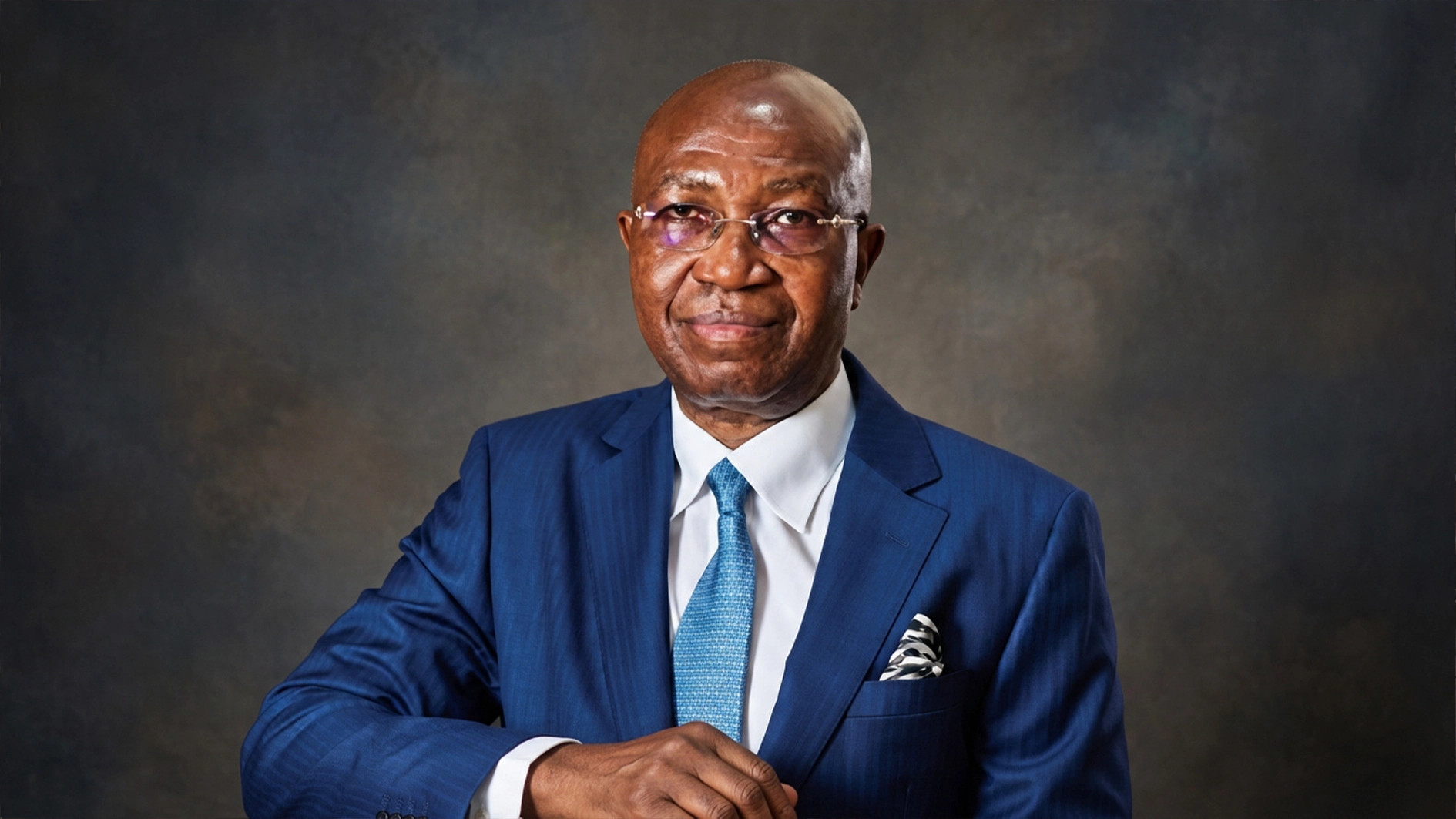
Wole Olanipekun (SAN), former Attorney-General and Commissioner for Justice of old Ondo State, former President of the Nigerian Bar Association (NBA) and former Chairman of the Body of Benchers, has been involved in landmark cases spanning constitutional interpretation, commercial law, electoral disputes and the protection of democratic institutions. Following his public presentation of a six-volume compendium, “Wole Olanipekun Through the Cases”, he spoke on the defining moments of his career, the state of the legal profession, judicial independence, mentorship and the responsibility of lawyers to society in this interview with JOSEPH ONYEKWERE. He also reflected on the cases that tested his convictions, the lessons of nearly five decades in practice and the legacy he hopes to leave behind.
Some of the cases you have handled have had far-reaching implications for Nigeria’s constitutional and democratic development. Which of your interventions do you consider particularly consequential?
To isolate a single case from over five decades of active and uninterrupted legal practice and identify it as the most consequential would be both difficult and, perhaps, a disservice to the richness of a journey shaped by many defining encounters. Constitutional development, much like nation-building itself, is rarely the product of one event. It is the cumulative consequence of many interventions, each contributing in its own way to the strengthening of institutions, the preservation of democratic ideals, and the advancement of the rule of law.
If, however, one were to speak of interventions whose impact on Nigeria’s constitutional and democratic landscape has been particularly enduring, Inakoju v. Adeleke (2007) 4 NWLR (Pt. 1025) 423 must occupy a prominent place.
The case arose from the purported impeachment of Governor Rashidi Ladoja of Oyo State by a faction of legislators who convened outside the constitutional precincts of the House of Assembly. At the time, many considered the matter foreclosed by Section 188(10) of the Constitution, which purported to oust the jurisdiction of the courts in impeachment proceedings. Yet the fundamental issue before us was whether constitutional safeguards could simply be ignored and then shielded by the very Constitution that had been violated.
Following a request by the then Governor of Lagos State, Asiwaju Bola Ahmed Tinubu, I assembled and led a distinguished team of advocates, including the late Rotimi Akeredolu (SAN), Kola Awodein (SAN), Chief Adeniyi Akintola (SAN), Prof Taiwo Osipitan (SAN), Femi Falana (SAN), and Dele Adesina (SAN). We painstakingly examined the constitutional architecture of impeachment and advanced the argument that Section 188(10) could not be interpreted in isolation from the procedural safeguards embedded in Section 188(1)-(9). The Court of Appeal accepted our arguments and the Supreme Court subsequently affirmed them.
The decision became a constitutional watershed. It effectively halted the era in which elected Governors and Deputy Governors could be removed through political contrivance masquerading as constitutional process. More fundamentally, it reaffirmed that constitutional power must always be exercised constitutionally.
I would place alongside it a number of landmark electoral cases which strengthened public confidence in democratic governance. In Agagu v. Mimiko (2009) 7 NWLR (Pt. 1140) 342, after protracted proceedings at both the Election Tribunal and the Court of Appeal, the lawful mandate of Dr Olusegun Mimiko was restored, thereby reinforcing the principle that electoral victory belongs not to the declared winner but to the candidate whom the electorate truly chose. Similarly, in Osunbor v. Oshiomhole (2007) 18 NWLR (Pt. 1065) 32, where I led the legal team at the Court of Appeal, the mandate of Comrade Adams Oshiomhole was judicially vindicated. Both cases powerfully demonstrated that the judiciary remains the ultimate guardian of electoral legitimacy and that democratic mandates cannot be permanently suppressed by administrative declarations.
Equally noteworthy was Fayemi v. Oni (2009) 7 NWLR (Pt. 1140) 223. Although I deliberately chose not to make a physical appearance in court, I was deeply involved in preparing the processes filed for Dr Kayode Fayemi at both the Tribunal and Court of Appeal levels, and in assembling the legal team that prosecuted the matter. An enormous amount of research, strategic planning and constitutional analysis went into that case. Together, the Mimiko, Oshiomhole and Fayemi litigations helped shape modern Nigerian election jurisprudence by reinforcing the proposition that electoral disputes must ultimately be resolved based on lawful votes rather than political convenience.
Another intervention that readily comes to mind is the successful challenge to the purported removal of Vice-President Atiku Abubakar in 2007. At the height of the disagreement between the President and his Vice-President, the nation was confronted with an unprecedented constitutional situation. There was no impeachment, no resignation, no allegation of permanent incapacity, and none of the constitutional procedures stipulated under Sections 143, 144 or 146 of the Constitution had been followed. Nevertheless, an attempt was made to remove the Vice-President from office through executive action.
The legal team I led successfully challenged that constitutional aberration. From the Court of Appeal to the Supreme Court, we maintained that no public officer, including the President, possesses powers beyond those expressly conferred by the Constitution. The Supreme Court agreed, affirming that the Vice-President could only vacate office through the means prescribed by the Constitution and not by executive whim or political disagreement. The Court further accepted the distinction we drew between constitutional executive offices and legislative seats with respect to party affiliation. That decision remains one of the clearest judicial affirmations of the supremacy of the Constitution over executive power. Around the same period, we also successfully challenged attempts to subject the sitting Vice-President to criminal proceedings notwithstanding the immunity guaranteed by Section 308 of the Constitution, resulting in another significant constitutional pronouncement in A.-G. Federation v. Abubakar (2007) 8 NWLR (Pt. 1035) 117.
These cases have strengthened constitutionalism, preserved democratic order, protected the sanctity of the ballot, restrained arbitrariness in the exercise of power, and reinforced public confidence in the rule of law; and if there is a common thread running through them, it is the enduring principle that in a constitutional democracy, power is never above the Constitution, and legitimacy can only be derived from fidelity to its provisions. That, in my respectful view, is the most consequential lesson of the causes in which Providence afforded me the privilege to participate.
You have repeatedly emphasised the importance of constitutionalism and institutional independence. how would you assess the state of the rule of law and the independence of the judiciary in Nigeria?
Justice, democracy and development cannot thrive without respect for the rule of law. The Constitution must remain supreme, and every institution, irrespective of the individuals occupying positions of authority, must operate within its provisions. The Judiciary must be allowed to discharge its responsibilities without fear, favour or undue influence. Judicial independence is not merely a constitutional declaration; it must be reflected in the financial, administrative and institutional autonomy of the courts. Equally important is compliance with court orders. No government or public institution should consider itself above the law. Once a court of competent jurisdiction makes an order, it must be obeyed unless it is set aside through the appropriate legal process. The legal profession also has a responsibility to defend these principles. Lawyers must not remain indifferent when constitutional provisions are threatened or public institutions are subjected to improper interference.
You have also expressed concerns about the quality of legal education and professional conduct. what fundamental reforms would you like to see in the profession?
Legal education in Nigeria requires improvement, but I do not subscribe to the proposition that law should become a second-degree course. The study of law is fundamentally about orientation, focus, passion and an appreciation of its role in society. Making another degree a prerequisite could unnecessarily restrict access, particularly for children from less privileged backgrounds. What we need is a stronger culture of continuous legal education and professional development. Learning does not end when a lawyer leaves the university or law school. The profession demands constant reading, research and intellectual engagement. I am also concerned about the growing tendency of lawyers to comment publicly on cases and judicial decisions they have not properly studied.
A lawyer should not pronounce on court processes or judgments without first reading and understanding them. Professional disagreement is legitimate, but it must be expressed with civility and restraint.
Lawyers should not abuse colleagues, disparage judges or use public platforms to undermine the integrity of the profession. I have consistently advocated a stronger and more balanced process for appointment to the Bench, drawing from the best available experience in legal practice, academia and the Judiciary. The Bar and the Bench are interconnected parts of one profession. The quality and character of its members ultimately determines the strength of our justice system.
Several young lawyers you mentored have become Senior Advocates of Nigeria, judges and accomplished professionals. What philosophy underpins your approach to mentorship?
Mentorship is built on example, not instruction alone. You cannot simply tell people what to do; you must demonstrate through your conduct what you expect them to become. When I entered the profession, I deliberately identified senior lawyers whose careers I admired, more particularly, the likes of Chief F.R.A. Williams, SAN; Chief R.O.A. Akinjide, SAN; Chief G.O.K. Ajayi, SAN; Chief Obafemi Awolowo, SAN; Chief R. A. Fani-Kayode, SAN; Kehinde Sofola, SAN; Chief Olisa Chukwura, SAN; Dr. Mudiaga Odje, SAN; Dr. Augustine Nnamani, SAN; G.C.M. Onyiuke, SAN; Prof. A. B. Kasumu, SAN; Chief F. O. Akinrele, SAN; J. B. Majiyagbe, SAN; Chief (Mrs) Folake Solanke, SAN; Chief Afe Babalola, SAN; Chief Gani Fawehinmi, SAN, Chief T. O. S. Benson, SAN; Clement O. Akpamgbo, SAN; Prince Bola Ajibola, SAN, among others. These eminent figures served as my compass and point of aspiration, telling myself that God willing, I too shall walk their path. I have had the privilege of appearing alongside some of these legal juggernauts, whether appearing with them for the same side or, at other times on opposing divides; that is, representing different clients or interests, and I must confess that my goal at all times was not just to learn from them but to be where they were/are. When Ebun Sofunde, SAN and Lious N. Mbanefo, SAN were both announced and sworn – in as Senior Advocates of Nigeria in 1988, I was transfixed before my television set when I noticed that they were not old men but relatively young counsel; and I said to myself with quiet resolve, if these young lawyers can become Senior Advocates of Nigeria, I too would be one, pretty soon.
Without indulging in self-adulation, I have always emulated senior counsel, and I have never been envious of them. Even when I felt that any of them had been unfair to me, I was never rude or nasty, neither have I made any effort to pull any of them down, for I know what it means to attempt to pull an elder down. For young lawyers, the virtues I consider indispensable include integrity, discipline, humility, patience, diligence, intelligence, research, respect for others and, above all, the fear of God. A lawyer must also understand the importance of client confidence.
You must never compromise your client’s legitimate interests. Equally, you must respect the court, your colleagues and the dignity of the profession, even when proceedings become difficult. Since Wole Olanipekun & Co. was established in 1980, more than 250 lawyers have passed through the chambers. Many have become Senior Advocates of Nigeria, judges and accomplished professionals. I find particular satisfaction when I encounter former associates who acknowledge the role the chambers played in their development. But mentorship extends beyond the legal profession. It includes supporting young people through scholarships, guiding clients, influencing one’s community and demonstrating responsible leadership. Ultimately, I believe that a person’s success should be measured by the people they have influenced and the opportunities they have created for others. When you leave this world, what matters is not simply what you accumulated, but who can confidently say they became better because they encountered you.
You just presented a six-volume publication, “Wole Olanipekun through the cases”. What informed the decision to document your legal practice in this manner, and what distinguishes the publication?
In his foreword to the publication titled “F. R. A. Williams Through The Cases”, that great Jurist of our time, the quintessential Kayode Eso, JSC, posited thus: “It is normal to have biographies of great judges ‘through the cases’, and equally normal to have biographies of great advocates through the cases… There have been Patrick Hastings’ ‘Cases in Court’, biographies of Carson, illuminating his matchless cross-examination of Oscar Wilde, one of the greatest wits of his age; of the Edwardian trombone, Edward Clarke; of Marshall Hall, …the studies of the life of Sir Hartley Shawcross.
There have even been scintillating stories of the Nigerian elite advocates and one of our own ‘Cock’ of the Bar, Eusebius James Alexander Taylor.” Let me confess that the title of the work is not credited to me. It was through one of my mentees, a lawyer from my Ikere nativity, Taiwo Olukoyede (Fakoyede), who at a point in time worked as an Associate Counsel in the Law Office of the late Doyen and indefatigable potentate of the Bar, Chief F.R.A. Williams, who introduced the idea to me, after which he handed me a copy of the publication titled “F.R.A. Williams Through The Cases”, which, incidentally, was edited by him. I would eventually beckon to Mr Olukoyede to play a major role in the project. The ‘fruits’ of that profound suggestion is the six-volume publication which was unveiled to the public by President Bola Ahmed Tinubu, GCFR, on November 19, 2026. To this amiable gentleman and prodigious legal practitioner, I express my boundless gratitude.
What central message do you hope the legal profession and the wider society will take away from the six volumes?
Without being immodest, it has always been my practice to acknowledge every colleague who appeared with me in any matter, during and immediately after the proceedings. Most humbly, I have never been a leader who leads from the rear. Thus, the volumes contain just a fraction of the cases I have had the privilege of handling over the past 50 odd years; these works are not an exhaustive record of my practice. Indeed, the Supreme Court volume contains a substantial proportion of the cases we considered suitable for inclusion, while the Court of Appeal and High Court volumes represent a much smaller selection of the matters handled at those levels. What makes the publication particularly valuable is that it goes beyond reproducing judgments and legal arguments. Each case is accompanied by commentaries, critiques and observations from different contributors, who examine its implications, strengths, weaknesses, related authorities and possible areas for legal reform. The intention is to encourage deeper intellectual engagement with the cases and their contribution to Nigerian jurisprudence. I regard the publication as both a watershed and a blueprint. It is my humble contribution to legal scholarship and to the development of the profession.
I also hope it will provide a foundation for a second edition and, ultimately, the compilation of my memoirs. I hope readers will recognise that the law is not an abstract collection of rules. It is an instrument for protecting people, strengthening institutions, preserving democracy and ensuring that those entrusted with public authority remain accountable to the Constitution. As they study the cases, I would like them to consider what might have happened if certain legal interventions had not taken place.
What would have become of the constitutional safeguards governing the impeachment of elected executives if the relevant judicial interventions in Inakoju v. Adeleke had not been made? What would have happened to the office of the Vice-President if the constitutional questions surrounding its protection, as in Abubakar v. Attorney General of the Federation, had not been properly addressed? What would have happened to the independence of the legal profession if the provisions regulating lawyers’ fees, the subject of Central Bank of Nigeria v. Registered Trustees of the Nigerian Bar Association, had remained in force? These questions demonstrate that legal practice has consequences far beyond the courtroom.
For young lawyers, my message is straightforward: take your profession seriously. Read widely, research thoroughly, cultivate integrity and never sacrifice your principles for immediate recognition or financial reward. For the wider society, I hope the volumes reinforce the importance of strong institutions, for a country is sustained not simply by the individuals who occupy positions of authority, but by the institutions that outlive them.
Having spent nearly five decades in legal practice, what experiences have tested you most, and what lessons have remained with you?
The experience that tested me most came on my very first day in court. After my National Youth Service year in Kwara State, I joined the Chambers of Alhaji Akanbi Oniyangi & Co. at No. 107, Emir Road, Ilorin, as its first junior counsel. My Principal, the late Alhaji Oniyangi, treated me like a nephew, and I regarded him as an uncle. That first day, we appeared before the Justice Gilbert Obayan in a divorce matter, Okin v. Okin. The Court sat at 9:00am and stood the case down to 12:00 noon for definite hearing.
Alhaji Oniyangi drove back to the office, promising to return by noon, but exigencies took him out of Ilorin, and he sent word that I should plead for an adjournment. I did, but the Judge insisted that I proceed, and counsel to the respondent was ready. I had never appeared in any court, not even a Magistrate Court. I was nervous and had the shakes. I told His Lordship I was a greenhorn, just called to the Bar, but he held that the case had been on the cause list for too long. He graciously granted me a 45-minute stand-down, which I used to study the file and hold a pre-trial session with our client. When the Court resumed at 12:45pm, I led our client in evidence-in-chief; he was cross-examined, and I closed our case. Respondent’s counsel called his sole witness and closed his. The Judge then directed us to address the Court, with another 45 minutes to prepare.
In those days, oral advocacy was in primacy, unlike now, when written addresses are simply adopted. I fell back on my notes from the Nigerian Law School and extracted some relevant decisions. By the time the Court resumed, I had built enough confidence to present our address, and respondent’s counsel did the same. Before adjourning for judgment, the Judge commended my performance and encouraged me to keep it up. That was the tonic I needed to dive into active practice without further trepidation.
As someone who has occupied prominent positions in the legal profession, including the presidency of the NBA and chairmanship of the Body of Benchers, how do you assess your personal journey and what would you like your legacy to be?
I do not consider myself a self-made man. Whatever I have achieved has been through God’s grace, the support of my family, the confidence of my clients, the guidance of mentors and the opportunities I have received throughout my career. I am grateful to every client who trusted me with their affairs. Without clients, there would be no legal practice. They have been an indispensable part of this journey. But I also believe that the ultimate measure of a person’s life is the impact they have made on humanity. It is not the houses they built, the wealth they accumulated or the positions they occupied. It is the people they mentored, the institutions they strengthened, the knowledge they contributed and the generations they helped prepare for the future.
I have learnt, particularly in recent years, the importance of forgiveness, humility and forbearance. One must not allow professional disagreements or personal grievances to define one’s life. My ambition is to continue contributing in whatever capacity God enables me to, while remaining conscious of the responsibility that comes with whatever position I occupy. If the next generation can build on what we have done, improve it and make a greater contribution to society, then that would be a legacy worth celebrating.