
 Get Guardian on Google
Medical doctor and entrepreneur, Dr Tunji Olowolafe, has pledged to annual financial rewards for outstanding students and lecturers of the institution as part of efforts to promote academic excellence and strengthen teacher education.
He also disclosed plans to establish a solar-powered Information and Communication Technology (ICT) centre at the Sikiru Adetona College of Education, Science and Technology (SACOETEC), Omu-Ajose, Ogun State.
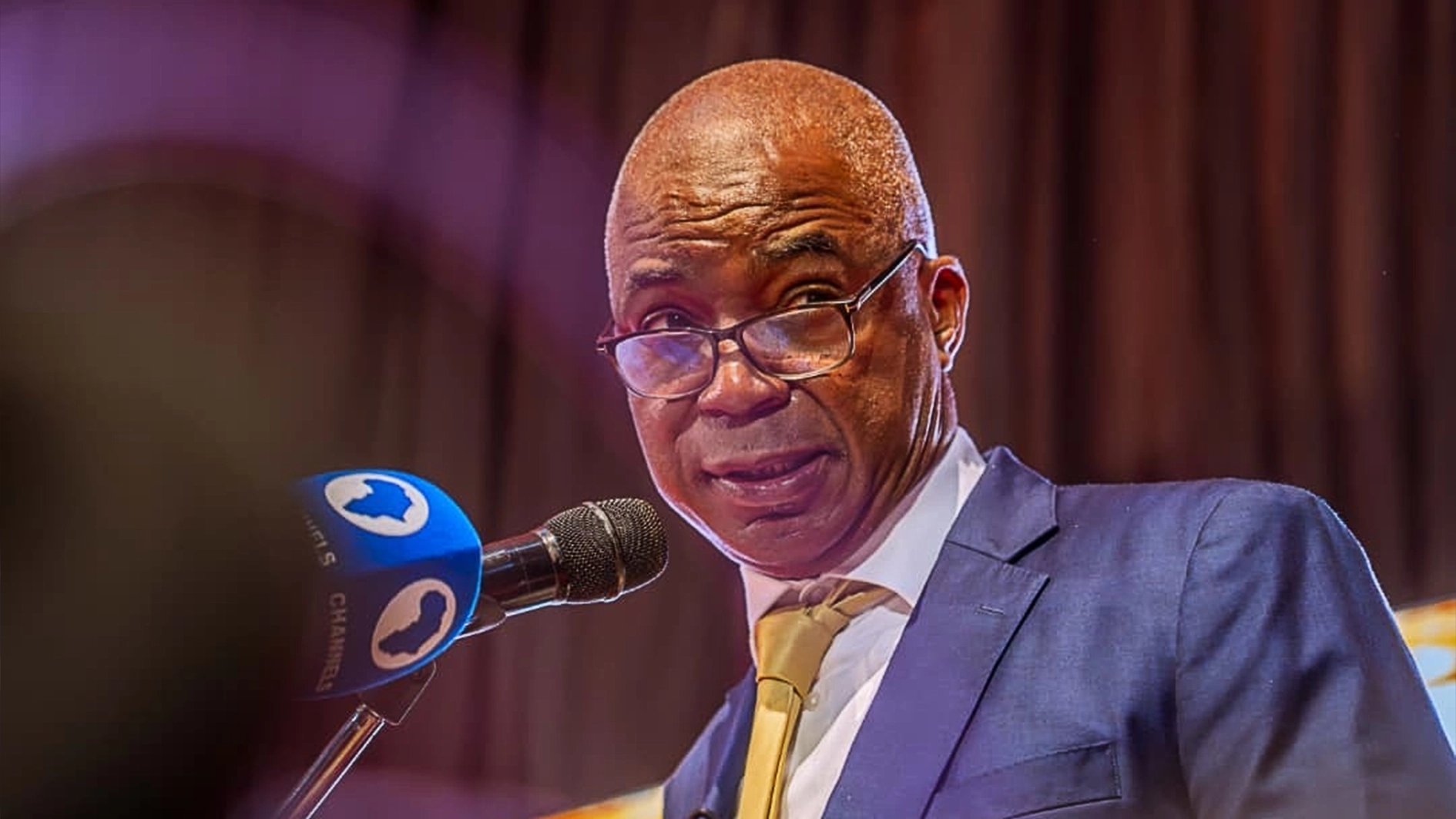
Olowolafe made the announcements while delivering the 2026 convocation lecture of the college, titled, “The Dual-Mandate NCE-Degree Programme: Prospects, Challenges and the Future of Teacher Education in Nigeria.”
He said the Tunji Olowolafe Foundation would construct and equip the ICT centre with solar power and Starlink internet connectivity, adding that the foundation would fund, power and co-manage the facility with the college.
He explained that the initiative was aimed at exposing students, lecturers and other beneficiaries to digital skills and emerging technologies, including artificial intelligence (AI).
Olowolafe also announced that the foundation would reward outstanding graduates annually, with N2.5m each for the overall best NCE graduate and the overall best degree graduate.
He said every first-class graduate across the bachelor’s degree programmes and every NCE graduate who obtained a distinction would receive N500,000 each.
According to him, the foundation will also recognise the three lecturers rated highest by students annually.
Speaking on the Dual-Mandate programme, Olowolafe described it as a major structural reform in Nigeria’s teacher education system, following the signing of the Federal Colleges of Education Act 2023 by President Bola Tinubu.
He said Section 9 of the Act empowered colleges of education to award degrees independently, ending their long-standing dependence on universities for degree certification.
He noted that the Federal Ministry of Education operationalised the programme in May 2025, enabling eligible colleges to award both the Nigeria Certificate in Education (NCE) and Bachelor of Education degrees.
According to him, the five-year programme allows students to complete three years of NCE training and proceed to an additional two years to obtain a bachelor’s degree.
He explained that while the NCE equips students with practical teaching skills, the degree programme provides deeper subject knowledge and a better understanding of how children learn.
Olowolafe said combining both qualifications would produce teachers equipped to teach across basic and post-basic education levels.
He, however, urged the government and relevant stakeholders to address the shortage of teachers in the country’s basic education system, which he estimated at about one million.
He said Nigeria’s growing population made the need for qualified teachers more urgent, noting that nearly eight million babies were expected to be born in the country in 2026.
On funding, Olowolafe said the Nigeria Tax Act 2025 provides for a four per cent development levy on assessable company profits, with 50 per cent allocated to the Tertiary Education Trust Fund (TETFund) for infrastructure and capacity development in higher institutions.
He added that 15 per cent of the levy goes to the Nigerian Education Loan Fund (NELFUND), which he said had disbursed more than N372bn to over one million students for tuition and upkeep.
He urged the college management to guide eligible students in accessing the education loan scheme.
The entrepreneur also called for a review of Nigeria’s educational curriculum to incorporate vocational training, practical skills and technology from an early age.
He said vocational education should be integrated into the mainstream curriculum rather than treated as an alternative for students who do not attend universities.
On technology and artificial intelligence, Olowolafe urged students and lecturers to embrace emerging technologies, stressing that AI could support teaching and learning but could not replace the human values and empathy provided by educators.
He said teachers remained central to instilling honesty, fairness, civic responsibility, empathy and respect for others.
Drawing lessons from the life of renowned Nigerian potter, Dr Ladi Kwali, Olowolafe urged educators to recognise indigenous knowledge and combine traditional skills with modern scientific methods.
He said Kwali’s achievements demonstrated that valuable knowledge could be acquired outside formal educational institutions.
Olowolafe also urged graduating students to see their education qualifications as a foundation for broader opportunities, noting that teachers could contribute to leadership and national development beyond the classroom.
He cited Nigeria’s first Prime Minister, Sir Abubakar Tafawa Balewa, former President Shehu Shagari and the first Premier of the Western Region, Chief Obafemi Awolowo, as examples of national leaders who had backgrounds in teaching.
He encouraged the graduands to maintain ties with the institution through its alumni association and contribute to its development through mentorship, books and other forms of support.