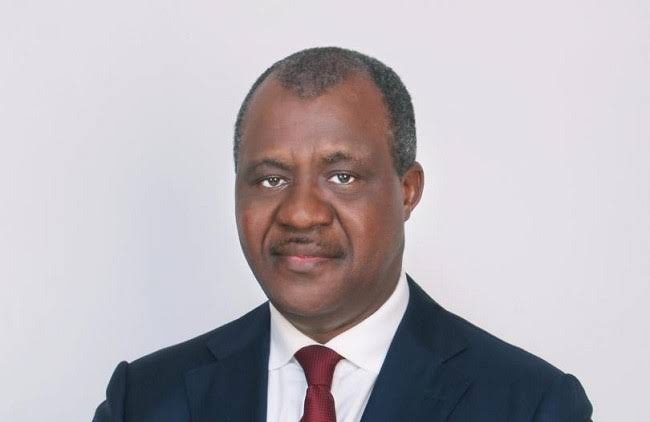
The new President of the Nigeria Employers’ Consultative Association (NECA), Dr Ifeanyi Okoye in this interview with GLORIA NWAFOR, warned that the speed at which Nigeria is racing toward debt overhang would deter serious investors from bringing capital into the country. He called on the government to moderate the cost of governance to reduce borrowing and also review policies that support businesses.
Looking at the increase in fuel pump price and its attendant effect on businesses and the economy, what is NECA’s plan for businesses and members, and what does the economy look like in the next five years?
It is really unfortunate. Nobody expected the fuel increase and I don’t also blame labour for claiming that they were treated too poorly, because we expected that with the new salary presented to labour that things would start getting better. But unfortunately, this has come up and I don’t think it is good for the Nigerian workers, including the employers.
The government has been tricking us into letting us know that the Port Harcourt Refinery will soon be ready and we have all taken that as already done. But today, we have not seen the Port Harcourt Refinery do anything, and our only hope, the Dangote Refinery is seen dancing front and back with the government, which is also a problem. So, I think for Nigerian employers, and of course the labour unions, it is not something palatable and I don’t think it is very much acceptable. But we hope that something will be done by the government about it. I am looking forward to seeing something positive happen.
The government before now mentioned that the subsidy was gone but recently stated that it was paying for subsidies, and Nigerians thought that with Dangote Refinery, fuel prices would drop; but as it is, the government is now dictating the price of fuel. What is your take?
I don’t think the government has made it clear that they will be dictating the price because we know that having, according to the government, deregulating the price of oil made it free for all. They don’t have the right again to start talking about dictating the price to Nigerians.
If there is a need, or if they have any reason to start interfering again with the cost of fuel, that means the fuel has not been deregulated, and with the way it is going, I don’t think that the fuel price is fully deregulated according to what the government said. But we believe that there are steps to get this fuel price to relax and maybe direct and monitor the dealers, especially as Dangote Refinery has just come up to be able to monitor and ensure they don’t rip off Nigerians. I would want to believe that is what the government is looking at. But for the government to say they have not deregulated, I don’t think it is acceptable because we have spoken to the people, and they have accepted it, but the way things are going, it means a joke.
You know as well as I do that this issue of subsidy has been creating a lot of corruption in the petroleum business in Nigeria, and the best I would advise or I think is acceptable would be total removal of subsidy and allowing individuals to come and play in the field, just like the way Dangote has done. The government has a lot of other areas they need to subsidise. I was very excited when I got the information about the government subsidising electricity in government hospitals and schools. That is a type of subsidy. But the issue of subsidising fuel has been creating a lot of corruption in the petroleum sector. So, the best thing would be to remove subsidy completely from fuel and possibly subsidise other aspects of the economy, so that the subsidy would be very clear and of course acceptable to the people.
In the space of four years, about 15 manufacturing giants shut down operations, which led to loss of over 30,000 jobs, largely due to the country’s harsh operating environment. As a manufacturer and employer operating in the pharmaceutical sector, what is your take and how could this be tackled?
I think these are some of the things that the government needs to look into. There are lots of issues that are bothering manufacturers in this country. One of the major economic problems faced by manufacturers has been poor infrastructure or lack of it. When you are a manufacturer in Nigeria, you are paying a lot to provide your infrastructure. You buy your generator, provide security for your organisation and yourself, and you battle with the issue of forex fluctuating and the instability of policies from the government. In all these things, the roads are not there to evacuate products from manufacturers. These things are major reasons why most of these companies are leaving, and of course, to get them back and encourage them to stay, the government must seriously sort out these things one by one.
Nobody wants to stay where he is losing; no investor goes where he will not make his money back. So the only thing is for the government to look into the essential infrastructure provided within the country and make it acceptable for any business to operate.
Currently, there are more policies stifling businesses and pushing more, especially SMEs into extinction. Are the Federal Government’s ongoing reforms not creating a positive impact in the private sector?
I don’t think the Federal Government is doing enough. What they are doing is not the best as they have not risen to the occasion to solve these problems. When you are making changes and the people you claim you are making the changes for are not having a feel of the changes, of course, nothing is happening. So, I want to believe that the people receiving the changes from the government are not yet comfortable.
What is your take on the N650 billion facility to support youth-owned led businesses, MSMEs, and manufacturers nationwide?
At the recent yearly general meeting of the Manufacturers Association of Nigeria (MAN), it was mentioned that no key manufacturer has benefited from the fund and we are still hoping that something will be done. It was also recommended that the people to benefit must be recognised manufacturers, possibly members of MAN or at least through NECA because most of the members of the MAN are all members of NECA. So, if that is done, it will be very easy to know that something has been given out and who receives it, not tomorrow you bring out names and say these are beneficiaries of this fund when it is clear that no manufacturer benefited.
The manufacturing sector is beset by inadequate and expensive credit supply. No doubt, therefore, the N650 billion short-term facilities will go a long way to support the sector, provided the final interest rate is liberal and is enjoyed by bona fide manufacturing companies. We await the full implementation. As earlier pointed out, the manufacturing sector has credit challenges across all categories – MSMEs and large companies. The commercial bank’s short-term lending rate is about 30 per cent, therefore, a long-term facility with an interest rate between 9.0 and 11 per cent will no doubt create investment expansion and boost manufacturing activities in the country, particularly when complemented with sound infrastructure development, including electricity. However, to achieve the objective of the facility, the manufacturing sector must be thoroughly consulted to identify bonafide manufacturers accompanied with proper implementation.
What would you recommend as the best approach by the government to address the forex crisis in the country and the level of borrowing by the current administration?
You see, we have talked that the government has taken a very bold step when they had to stop the issue of having different exchange rates for different people. That, if well managed, should be one of the best ways of stabilising the economy so that the Naira will take its rightful position. Forcing Naira to occupy a wrong position can never last, and the best way to do it, I believe, is the way the president has started it, by allowing Naira to take its position. Don’t give out different exchange rates so that whoever is coming in comes in at the same rate and suffers the same. If that is kept religious, I believe Naira will take its rightful position and stabilise. And then whoever is going for any business, will know what he is going for, not that you buy a dollar at N1,600, someone else gets a dollar at N1,200. I mean, that does not make for stability.
The country is fast reaching debt overhang, and no serious investor will bring capital to a debt-ridden economy. It is, therefore, important that the government should moderate the cost of governance to reduce borrowing, particularly if it cannot improve revenue at this point. The 2024 supplementary budget would lead to increased borrowing by the Federal Government from overseas lenders and local facilities, but whichever way, it will be detrimental to both foreign and domestic investments.
The country’s debt-to-GDP ratio is standing at 52.9 per cent, which is above the 50 per cent World Bank/IMF benchmark for developing countries. Also, debt-service-to-revenue reached 73.5 per cent in 2023 and may even be more now. These indices present serious warnings for the country. The exits of multinational manufacturing firms would have tragic implications for the country’s economic growth and employment sustenance. What is going on is called capital flight in economics, which is tragic for economic growth and employment sustenance. The trend is not a good trajectory for the country. I am not surprised that the pharmaceutical sector is most affected as the sector utilises a significant proportion of foreign raw materials and other inputs, say 50 per cent, notwithstanding the persistent shortage of forex.
For years, capacity utilisation in the pharmaceutical sector has been one of the lowest among other sectors as it averaged a sub-optimal 56.8 per cent from 2021 to 2023. Unfortunately, the recent implementation of the total floating exchange rate regime was the last straw that broke the camel’s back. It is, therefore, important that the government review its foreign exchange policy and implement a regime that is proven to support businesses.
As the new President of NECA, what should employers expect from your administration?
NECA is the voice of employers in Nigeria, and what I am expected to do is to move this action for which NECA is known and make it better for Nigerian employers. So, that is exactly why I am here, and I need to do better; that is what I pledged.