
 Get Guardian on Google
Yinka Bernie’s Moving Parts at ART X Lagos reflects a growing convergence between music, visual art and other creative disciplines
The boundaries between Nigeria’s creative industries are becoming increasingly difficult to maintain.
Music is moving into visual art. Film is entering gallery spaces. Designers are becoming artists. Artists are working with technology, sound and performance. At ART X Lagos 2026, Yinka Bernie’s Moving Parts offered a particularly clear example of this convergence.
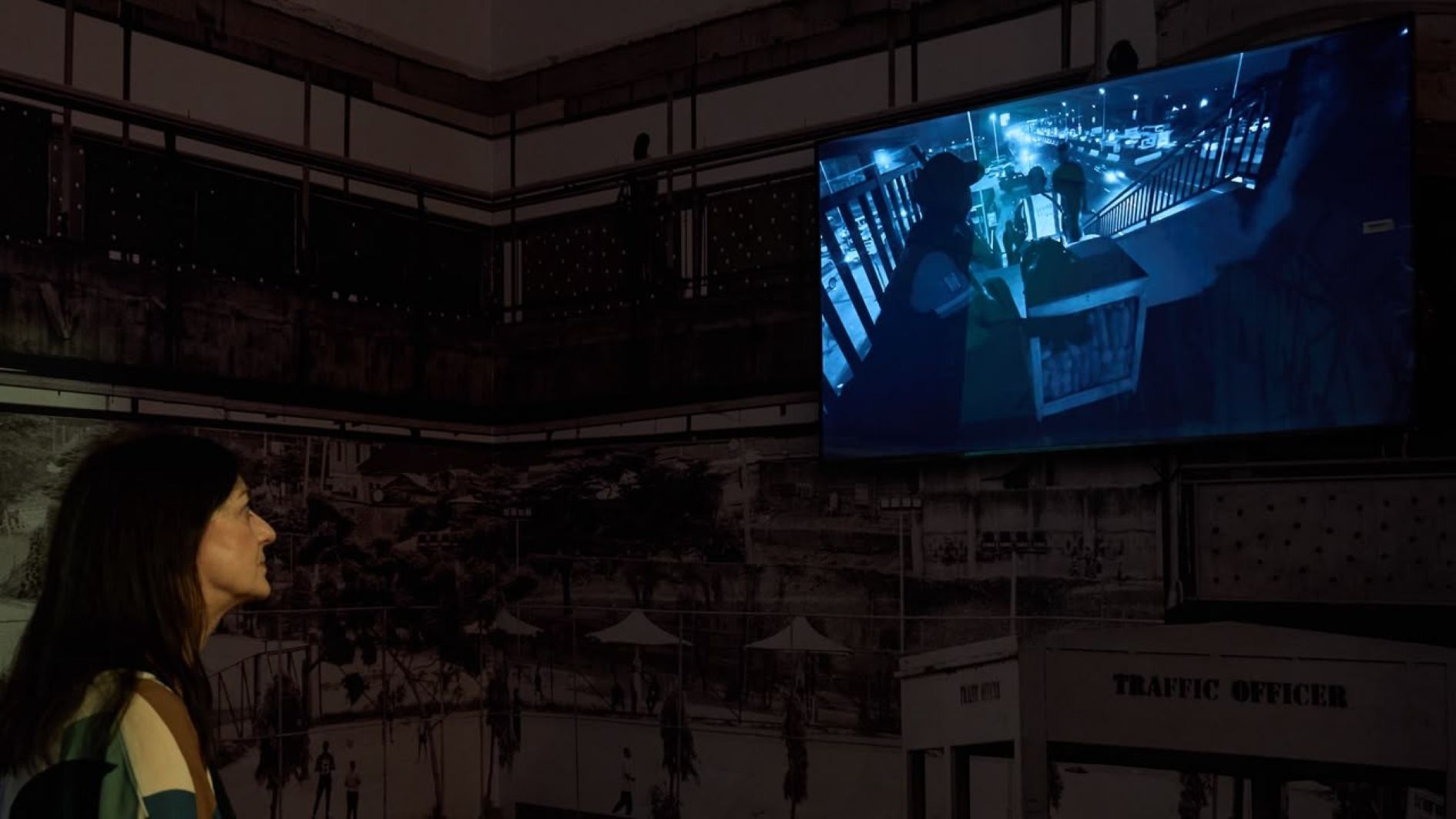
Presented at Speakers’ Corner, Moving Parts is an immersive sound-and-image installation inspired by Lagos’ pedestrian bridges. Co-curated by Papa Omotayo and Fikayo Adebajo, the project combines large-scale projections with an evolving soundscape, while visitors can contribute their own voices to the work.
The project is significant not only as an artistic experiment but as an indication of where the contemporary creative economy is heading.
ART X Lagos entered its second decade in 2026 with a programme explicitly designed around connections between disciplines. Its offerings span visual art, cinema, live music, talks, education, residencies and participatory installations.

That diversification mirrors a broader reality across Nigeria’s creative sector.
The old divisions between music, art, film, fashion and design increasingly make little commercial or cultural sense. Artists and creative businesses are building audiences across multiple formats, while institutions are creating platforms capable of accommodating work that does not fit neatly into a single category.
Moving Parts sits directly within that transition.
Bernie’s background as a producer and artist gives him a different route into contemporary art.
Instead of beginning with a traditional visual medium and introducing sound as an additional layer, he begins with sound and uses image, architecture and audience participation to expand the work.
Lagos provides the material.
The city’s pedestrian bridges become sites of observation: spaces where strangers briefly share the same route, where thousands of individual movements combine into a collective rhythm.
Bernie translates that rhythm into an artistic experience.
There is also an economic implication.
As cultural institutions broaden the definition of creative practice, the potential market for multidisciplinary artists expands with them. An artist no longer needs to exist exclusively within the traditional gallery economy. Their work can move between exhibitions, music, film, installations, festivals, technology and commercial collaborations.
ART X Lagos has increasingly positioned itself at that intersection.
Its ART X Live! programme, for example, explicitly brings musicians and visual artists together, while ART X Cinema integrates moving-image work into the wider fair rather than treating film as a separate cultural category.
Moving Parts extends that model into sound.
Its presence at the fair suggests that the next stage of contemporary African art may not be defined by the medium an artist chooses, but by the number of disciplines they can connect.
For Lagos, this is particularly relevant.
The city already has one of Africa’s most developed music ecosystems and an increasingly international contemporary art market. The intersection between those two industries remains relatively underdeveloped compared with the creative output taking place around them.
Projects such as Moving Parts demonstrate what that intersection can look like.
Bernie takes a sonic language associated with music and places it within the institutional context of contemporary art. ART X Lagos provides the platform and audience to encounter that work differently.
The result is not simply another installation at an art fair.
It is a signal of how the boundaries of Nigeria’s creative economy are changing.
The next generation of African cultural production may be less interested in deciding whether something belongs to music, art, film or design and more interested in what becomes possible when it belongs to all of them at once.