 Follow Us on Google News
 Follow Us on Google Discover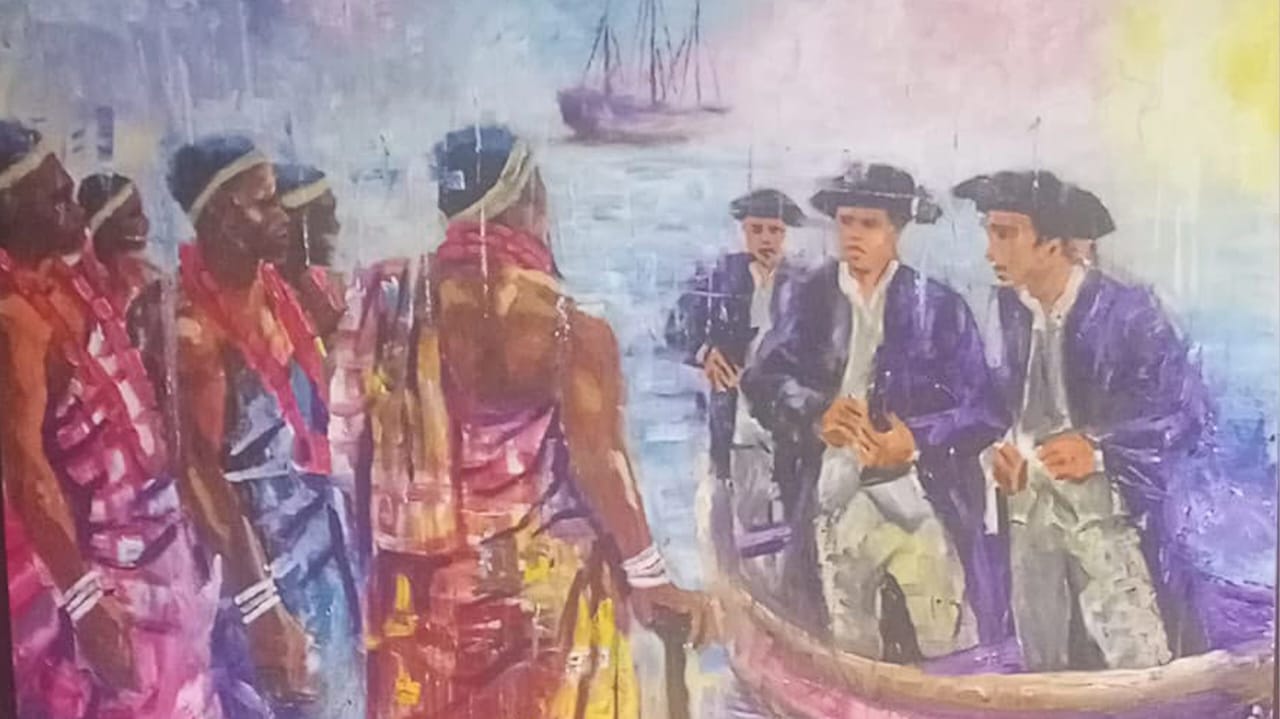
Sixty-six years after Nigeria gained independence, the question of what binds its people together remains unsettled. In Lagos, a new art exhibition is returning to one of the country’s defining historical moments — the 1914 amalgamation of Nigeria’s Northern and Southern Protectorates, to explore that question through visual and performing arts.
The exhibition, titled “The Amalgamation: Woven by Diversity,” will run from October 1 to 30 at the Art Hotel in Oniru, Victoria Island, Lagos. It is organised by Mind of the Masters Creative Art Gallery, a movement that promotes African and Nigerian master artists, and is curated by Dr Mudiare Onobrakpeya, an artist and son of veteran painter Prof. Bruce Onobrakpeya.
Founder of Mind of the Masters and president of the West African Specialty Coffee Association (WASCA), Larry Segun-Lean, said the exhibition traces Nigeria’s path from the amalgamation, carried out under British colonial administrator Lord Frederick Lugard, to the present day.
Describing the concept behind the show, he said: “The journey of amalgamation is woven by diversity, with different cultures and ethnic groups.” He added that the exhibition is meant to promote the strength inherent in that diversity as a foundation for national continuity.
According to Segun-Lean, the October 1 opening date was chosen deliberately to coincide with reflections on independence and on the consequences of bringing two protectorates with different histories and cultures into a single nation. The exhibition would feature visual art, spoken-word poetry, performing arts and fashion, and would showcase 36 acrylic paintings by Lenrie Preks, a first-class graduate of Auchi Polytechnic.
He was also emphatic that Nigerians should resist calls for division. In his words, disagreement is inevitable in any relationship or society, but that should not translate into a belief that any region would have fared better on its own. He described such thinking as based on flawed human assumptions rather than reality, stressing that one person’s welfare is tied to another’s.

Segun-Lean further pointed to the Federal Unity Schools, the National Youth Service Corps and the 1977 Second World Black and African Festival of Arts and Culture (FESTAC ’77) as deliberate historical tools built to bind Nigerians together, and said citizens carry a responsibility to protect that unity from those seeking to undermine it.
The exhibition includes an oil painting titled “The Debate: Post-Amalgamation Meeting,” portraying deliberations that fed into Nigeria’s independence movement, including the role of nationalist leader Chief Anthony Enahoro. Another piece, “1914 Amalgamation,” depicts two figures representing the union of the protectorates despite their differing social and cultural backgrounds. Fashion pieces drawn from Fulani, Yoruba, Igbo and Ibibio traditions will also be displayed.
That same cultural lens will extend to Abuja in November when WASCA, in partnership with Mind of the Masters, stages Spirit of Coffee 2.0 at the Abuja Cultural Centre on November 18 and 19, an event exploring the economic potential of Nigeria’s coffee industry.
Segun-Lean who is also an ambassador of WASCA, linked the coffee festival directly to the amalgamation’s legacy, arguing that colonial rule imposed a European culture of tea drinking that displaced Nigeria’s own coffee heritage. He said coffee carries significant health and economic benefits that the country has yet to fully exploit, noting that cultivation spans 15 states but remains commercially underdeveloped.
The Abuja festival will bring together players from the arts community, government and the private sector to discuss production and export opportunities, alongside artworks inspired by coffee.
The organisers described the two events, though different in focus, as complementary attempts to draw attention to aspects of Nigerian life that have received limited public examination, one revisiting the historical roots of national identity, the other pointing to an overlooked agricultural resource.

