 Follow Us on Google News
 Follow Us on Google Discover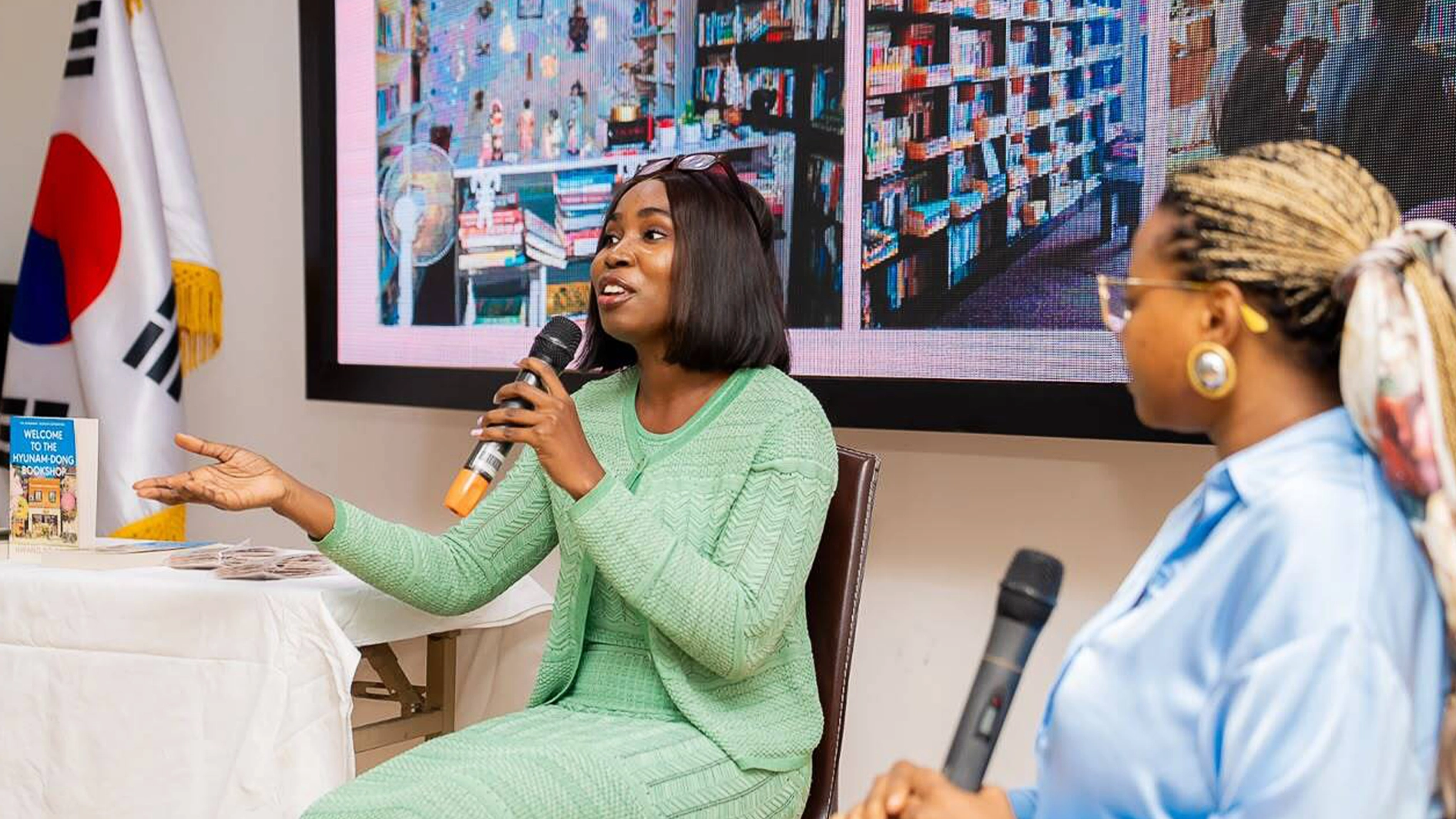
At a time when concerns over Nigeria’s declining reading culture continue to grow, a monthly literary gathering in Abuja is offering a different route back to books through stories from Korea and conversations that often lead back home.
For Sharon Habiba, Culture Event Assistant and Administrator at the Korean Cultural Centre Nigeria (KCCN), the journey began with a personal challenge: to read 200 books between December 2025 and December 2026.
Her first choice, Han Kang’s The Vegetarian, soon became more than an entry on a reading list. Its exploration of family, identity, womanhood and social expectations drew Habiba into Korean literature and made her curious about the culture behind the stories.
“The more I read, the more I wanted to understand the world behind the stories,” she said.
That curiosity has since evolved into the KCCN Korean Literature Book Discussion, a monthly forum that uses literature to introduce Nigerians to Korean culture while creating room to compare Korean experiences with Nigerian realities.
The programme has featured Han Kang’s The Vegetarian, Choi Eun-young’s Shoko’s Smile, Cho Nam-joo’s Kim Jiyoung, Born 1982 and Hwang Bo-reum’s Welcome to the Hyunam-dong Bookshop. But the conversations have rarely remained confined to the books.

The discussion of Kim Jiyoung, Born 1982, for instance, opened questions around harassment, gender expectations, relationships, boundaries and parenting. For one participant, Deborah, the experiences portrayed in the novel were uncomfortably familiar.
“Women experience this same molestation in public spaces everywhere,” she said.
Similarly, Welcome to the Hyunam-dong Bookshop sparked conversations about reading, community and abandoned childhood dreams, with Victoria Okudem, founder of FantasyBook Café, bringing the Nigerian experience of building a book community into the discussion.
Okudem challenged the familiar claim that Nigerians no longer read, arguing that the desire exists but needs to be nurtured.
“The more we read, the more your horizon widens. It starts from home. It starts from you,” she explained.
Okwuiden, a literature enthusiast, said access to books remains a major challenge, particularly for Nigerians who cannot afford to buy them.
“Every local government needs a library,” she said, arguing that functional public libraries would give children and adults greater access to books and knowledge.
“In promoting literature, we are promoting the country. That’s how we grow as a nation, through education. And how do we get educated? Through books.”
She also praised the KCCN for extending its cultural programming beyond K-pop, K-dramas and food to literature.
“It’s great that the Korean Cultural Centre, aside from promoting its drama, its food and some other aspects of its culture, has decided that it’s time to promote Korean literature,” she said.
One of the participants, Miracle Eze also stressed the need for individuals to play their part, arguing that rebuilding Nigeria’s reading culture should not be left entirely to government.
The call for individual action, however, came alongside demands for stronger public investment in reading infrastructure.
The next KCCN literary discussion, scheduled for October 29, will focus on Shin Kyung-sook’s Please Look After Mom, a novel about a mother’s disappearance and the family’s subsequent confrontation with memory, motherhood and the things left unsaid.

