 Follow Us on Google News
 Follow Us on Google Discover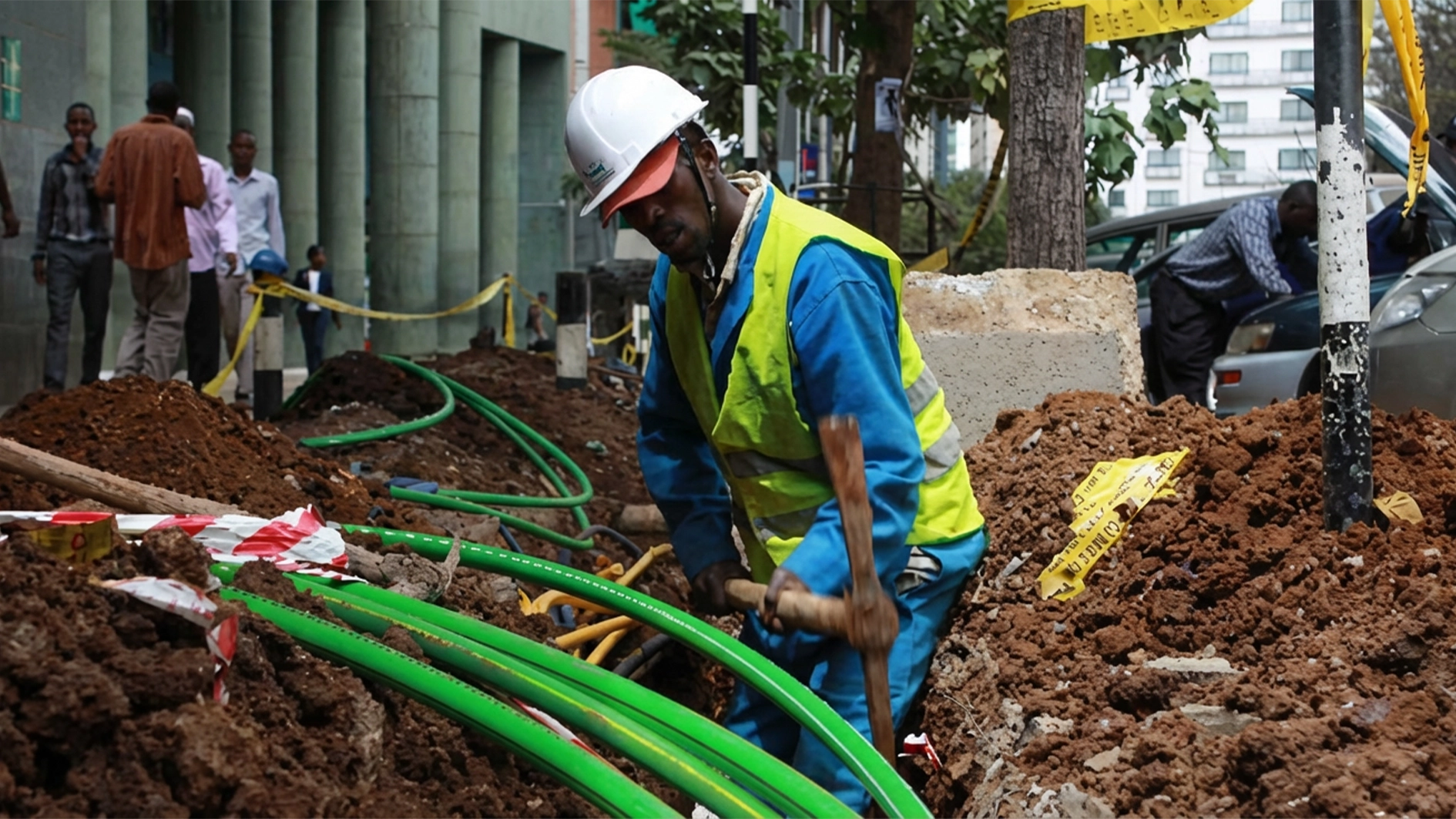
• Nigerians consumed 1.53m terabytes of data in June
The telecommunications sector continues to expand at a remarkable pace, with the country now connecting over 192 million active telephone users.
The milestone underscores the country’s position as Africa’s largest telecom market, driven by widespread mobile adoption and increasing demand for digital services.
The growth, which is still urban-led with traces of rural penetration, showed that mobile connectivity has become a critical tool for communication, commerce, and access to information.
Latest subscription statistics, the June edition, from the Nigerian Communications Commission (NCC), showed telecom operators unwrapped 2.55 million new Subscriber Identity Module (SIM) cards in June as the number rose from 189.6 million in May to 192.2 million a month later.
Further analysis of the data by The Guardian showed that alongside this surge in mobile subscriptions, fibre-to-the-home (FTTH) deployment has reached 319,735 connections nationwide from 241,750 users in Q1.

While modest compared to mobile figures, this development signals a significant step toward high-speed broadband adoption in households. Fibre connectivity offers faster, more reliable Internet access, enabling streaming, remote work, online education, and digital innovation to thrive in Nigeria’s growing tech ecosystem.
The dual expansion of mobile and fibre networks highlighted the country’s ongoing digital transformation. With mobile phones serving as the primary gateway to connectivity for millions, and fibre networks laying the foundation for advanced digital services, Nigeria is steadily building the infrastructure needed to support a modern digital economy. This progress not only enhances everyday communication but also strengthens opportunities for business growth, innovation, and global competitiveness.
The NCC data showed data consumption on the upward swing in June, with usage hitting 1.532 million terabytes as against 1,504 million in May. In January, consumption was 1.385 million terabytes; in February, 1.260 million terabytes; in March, 1.422 million terabytes, and in April, consumption was 1.414 million terabytes.
Subsequently, it means Nigerians consumed 8.51 million terabytes of data in the first half of 2026.
This surge might also have impacted broadband connections in the country, with users, largely enterprises, rising from 121.6 million in May to 123.1 million in June, resulting in 56.79 per cent penetration, though still below the 70 per cent target for 2025, six months after.
Findings showed that Nigeria’s surging data consumption is being driven primarily by video streaming (TikTok, YouTube, Netflix), social media engagement, fintech adoption, remote working, and the expansion of 4G/5G broadband infrastructure. In 2025 alone, Nigerians consumed over 13.2 million terabytes of data, a 35 per cent increase from 2024, reflecting how connectivity has become essential for daily life.
From January to June 2026, Nigerians have consumed 8.51 million terabytes of data. Data from the half-year financial report of MTN and Airtel showed the contribution of data consumption to their earnings.
For instance, subscribers consumed an average of 14.8GB per month, up 15.2 per cent YoY on the MTN network. Total network traffic surged 25.8 per cent, driven by 66.4 per cent smartphone penetration. Data revenue of N1.70 trillion accounted for well over half of MTN’s total service revenue, eclipsing voice (N993.5 billion).
On the Airtel network, average monthly usage per customer rose to 14.9 GB, up from 11.8 GB last year.
Data customer base expanded to 32.5 million, with smartphone penetration at 56.1 per cent. Data revenue grew 38 per cent YoY, reaching N691 billion, making Nigeria Airtel Africa’s most important market.
The combined data showed that MTN and Airtel together contributed N2.4 trillion in data revenue in H1 2026. This figure highlighted the structural shift from voice to data-led growth in Nigeria’s telecom sector.
Further analysis of the NCC data showed that MTN remained the largest operator in Nigeria with 98.6 million subscribers and 51.38 percentage penetration. Airtel is second with 34.4 per cent reach and 66.1 million users.
Globacom came third with 23.6 million users and 12.36 per cent national spread. T2, formerly 9mobile, maintained fourth position with 3.53 million subscribers and 1.84 per cent penetration.

