 Follow Us on Google News
 Follow Us on Google Discover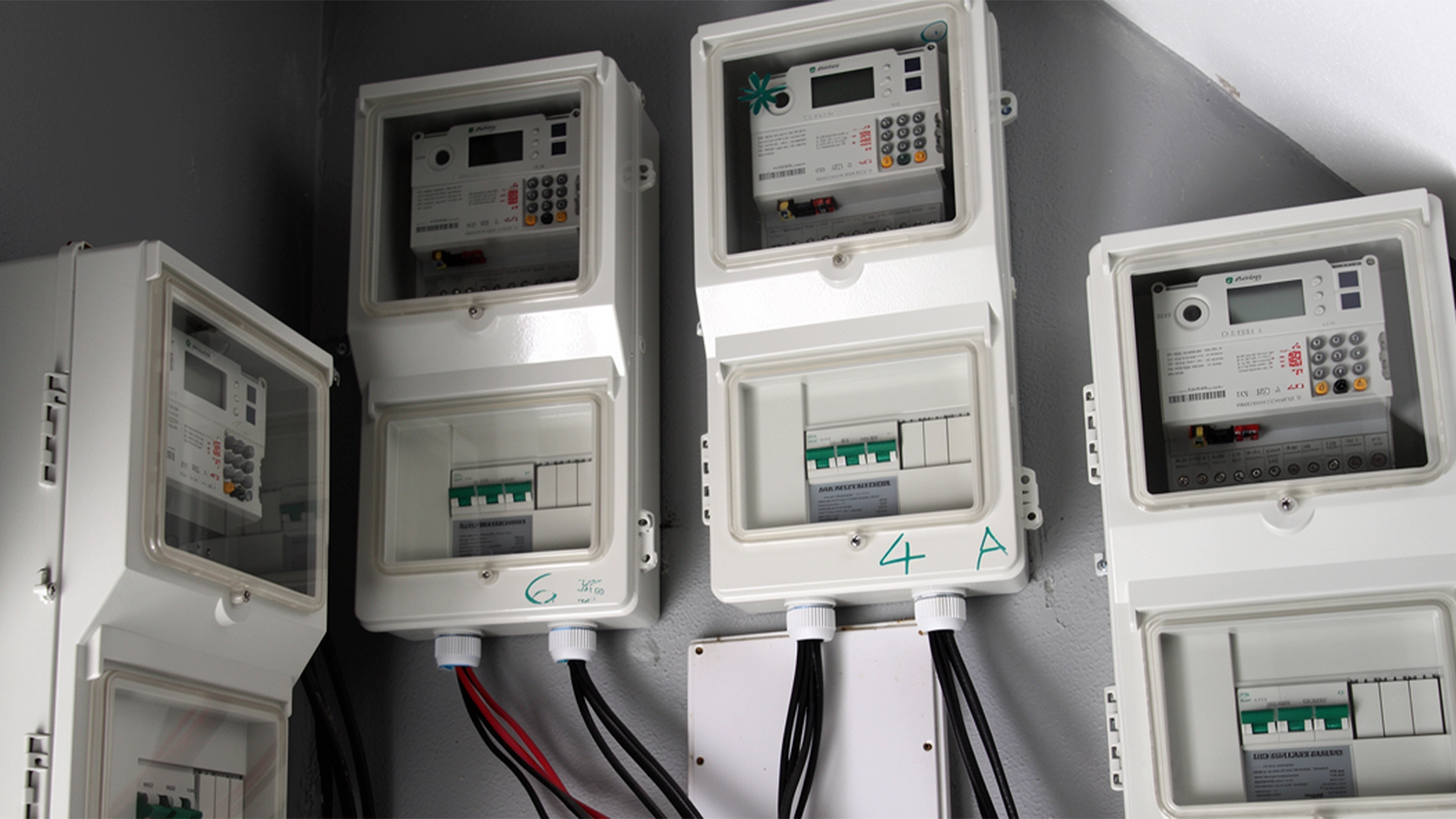
Transformer faults on the 33kV network of IE Energy Lagos Ltd surged by 455.1 per cent in August, worsening supply interruptions even as more than 515,000 customers in Lagos remained without meters.
The development is contained in the August 2026 technical factsheet released by the Lagos State Electricity Regulatory Commission (LASERC).
The report revealed a sharp divergence in the operational performance of the state’s two electricity distribution companies, IE Energy Lagos and Eko Power.
According to the report, IE Energy recorded 223 faults on its 33kV transformers during the month, compared with the previous level, while Eko Power recorded only four such faults.
The high-voltage equipment failures contributed to a sharp deterioration in supply continuity at IE Energy, whose total interruption duration on its 11kV and 33kV lines rose by 4,474.57 per cent month-on-month to 6,746 hours.
In contrast, Eko Power recorded an improvement in network stability, reducing its total interruption duration on 11kV and 33kV lines by 60.19 per cent month-on-month to 173 hours.

However, the commission said Eko Power recorded 7,583 customer interruption incidents, a 4.11 per cent decline, with the incidents involving 802,907 customer connections.
Fault-clearing performance also improved for both utilities. Eko Power recorded improvements of 15.17 per cent on its 33kV lines and 12.93 per cent on its 11kV lines, while IE Energy improved its fault-clearing performance by 5.56 per cent and 31.46 per cent on its 33kV and 11kV lines, respectively.
Network load-management pressures remained high across both franchise areas.
Eko Power recorded 3,145 load-shedding instances during the month, representing a 25.67 per cent increase, while IE Energy recorded 4,096 instances, up by 16.73 per cent.
The factsheet also showed a wide disparity in the metering performance of the two utilities.
IE Energy added only 270 metered customers in August, resulting in its overall metering rate declining by 1.16 per cent, from 86 per cent in July to 85 per cent.
Of its total customer base of 1,120,107, the utility had 955,857 metered customers, leaving 164,250 without meters.
Eko Power, however, added 1,979 newly metered customers during the month, increasing its overall metering rate by 1.4 per cent to 70 per cent.
The utility had 590,256 metered customers out of a total customer population of 841,681, leaving 251,425 customers without meters.
Overall, 515,675 electricity customers across the two franchise areas remained unmetered and therefore exposed to estimated billing.
The customer distribution by service band showed that Band B had the largest concentration of customers under both utilities.
Eko Power had 258,065 Band B customers, compared with 353,890 for IE Energy. Band A accounted for 215,600 customers under Eko Power and 294,791 under IE Energy.
Band C had 136,092 customers under Eko Power and 270,597 under IE Energy, while Band D accounted for 193,041 and 199,555 customers, respectively.
Band E had the smallest customer population, with 38,883 customers under Eko Power and 1,274 under IE Energy.
Despite premium tariffs associated with guaranteed supply hours for Band-A feeders, feeder-level data showed significant compliance failures by both utilities.
Under IE Energy, four designated Band-A feeders — 33-IlupejuTCN-ILUPEJU IGBOBI, 11-OgbaINJ-T1-Isokoko, 11-OgbaINJ-T3-Oba Akran and 11-OworoinJ-T3-GTB — recorded zero days of compliance and zero average supply hours during the month.
The 10 best-performing Band-A feeders under IE Energy averaged 23.7 hours of supply daily, led by 132-EgbinTCN-MARYLAND-OMNIK, which recorded 24 hours.
However, the 10 worst-performing feeders averaged only 12 hours of supply daily, bringing IE Energy’s overall Band-A feeder average to 21.3 hours.
For Eko Power, two Band-A feeders — Akangba Ts_Nrc (Akangba)_Nrc_Print Serve and Akoka Ts Akoka Local T3a_Akoka_Unilag 1 — recorded zero days of compliance.
The utility’s 10 best-performing Band-A feeders averaged 23.9 hours of supply daily, led by the Blue Rail Line feeder, which recorded 23.9 hours across 31 compliant days.
Its 10 worst-performing Band-A feeders averaged 13.1 hours daily, while the utility’s overall Band-A feeder average stood at 21.9 hours.
On infrastructure assets, Eko Power had 13,562 transformers, of which 12,900 were in active use, representing a 0.51 per cent reduction in active assets.
IE Energy had 20,785 transformers, with 15,730 in active service, representing a 0.43 per cent reduction.

