 Follow Us on Google News


 Follow Us on Google Discover
Every day, millions of Nigerians transfer money to loved ones, pay for groceries, buy airtime, settle electricity bills and receive payments for their businesses. The process takes only a few seconds.
Customers tap a button, receive a notification and continue with their day.
What they rarely see is the technology quietly working behind every transaction.
Every successful transfer, merchant payment, cash withdrawal and bill settlement depends on a sophisticated network of systems operating around the clock. These systems process payments, protect customer data, detect fraud, maintain service availability and ensure funds reach the right destination.
It is this largely invisible infrastructure that has transformed how Nigerians interact with money.
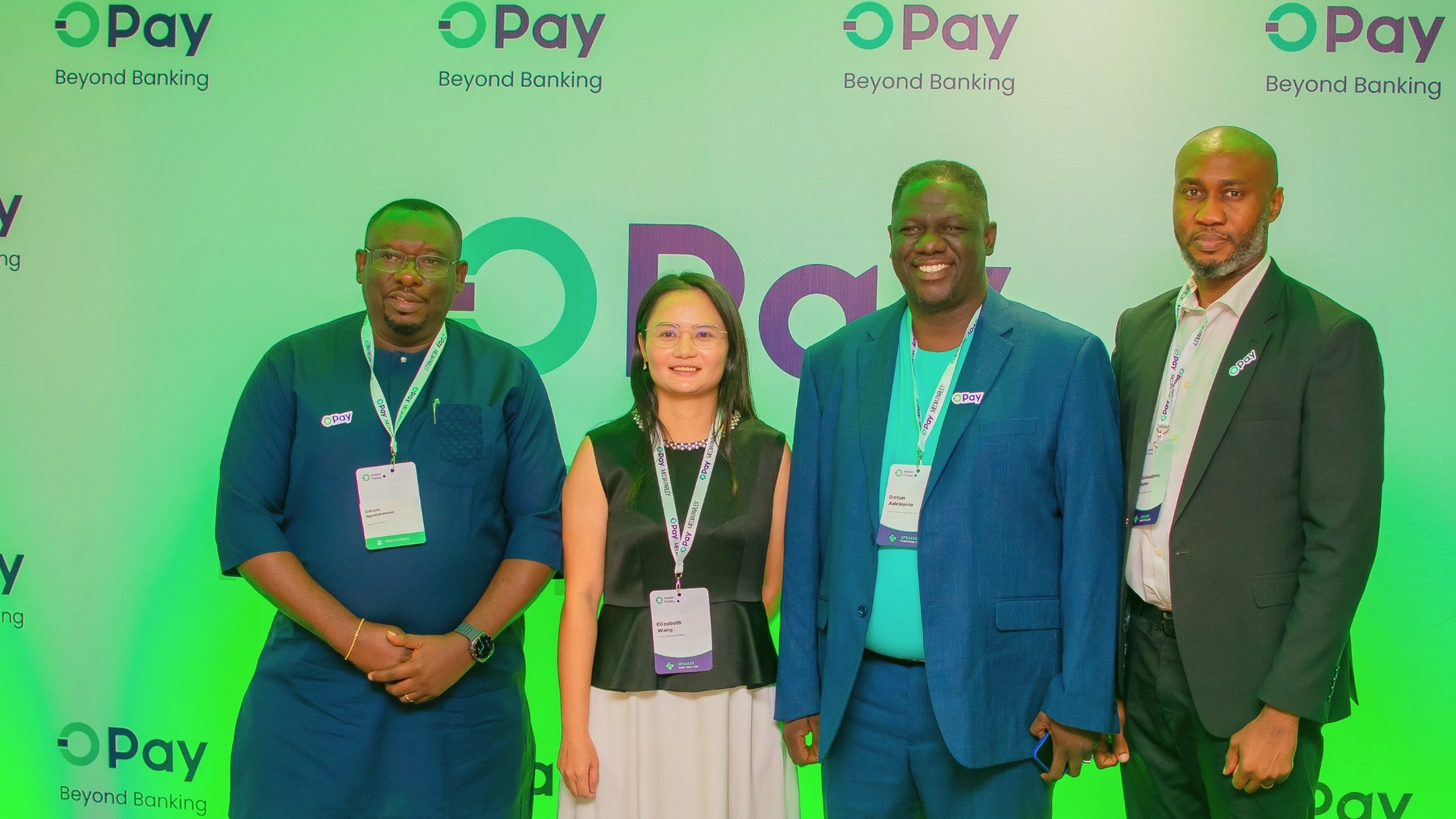
The technology behind that transformation took centre stage at the OPay Media Parley held on July 16, where media executives and industry stakeholders engaged with the company’s leadership on the engineering, security and infrastructure supporting one of Nigeria’s largest digital financial platforms.

Rather than focusing solely on products and services, OPay used the event to explain how years of investment in engineering, infrastructure and cybersecurity have helped build a payment ecosystem trusted by tens of millions of Nigerians.

Elizabeth Wang, Chief Commercial Officer of OPay, said the company’s ambition extends beyond creating another payment application.
According to her, OPay was established to make financial services more inclusive through technology while building a trusted platform that delivers meaningful social value. She said the company’s long-term vision is to serve one billion users, support 10 million merchants and help create one million jobs by making digital financial services safer, simpler and more accessible.
“People may only see a successful transfer or payment notification, but behind that moment are years of investment in technology, infrastructure and innovation. Our goal is to make digital finance so dependable that customers can move money confidently without ever needing to think about the technology making it possible,” Wang said.
Engineering trust behind every transaction
In digital finance, the most important innovation is often not a new feature but reliability. Only a few years ago, failed transfers, delayed payment alerts and prolonged service disruptions were common frustrations for many Nigerians. Restoring confidence in digital payments required far more than redesigning a mobile application. It demanded resilient engineering capable of delivering dependable performance at scale.
OPay’s Chief Operating Officer and Chief Technology Officer, Dotun Adekunle, said every engineering decision begins with understanding the customer’s experience.
“We don’t begin with technology. We begin with the customer’s experience. Every failed transfer, delayed alert or security concern is treated as an engineering challenge. Where others accept these problems as normal, our teams work until the problem disappears from the customer’s experience,” he said.
That philosophy has shaped the company’s payment infrastructure. Rather than relying on a single transaction pathway, OPay has built multiple layers of redundancy. Critical systems are supported by duplicate infrastructure, dedicated connections to payment-switching partners and automated failover mechanisms that instantly reroute transactions whenever disruptions occur.
The process is largely invisible to customers, who simply experience uninterrupted service.
According to the company, these investments have enabled approximately 99.9 per cent of transactions to complete successfully, making digital payments a dependable everyday option for millions of Nigerians.
Speed that builds confidence
Reliability alone is no longer enough. Speed has become equally important in shaping customer confidence.
Whether paying at a supermarket, settling a restaurant bill or transferring funds to family, customers increasingly expect payments to be completed almost instantly.
To reduce delays, OPay said it redesigned its transaction-processing architecture, introducing dedicated network connections and optimised processing systems that minimise congestion and accelerate transaction delivery.
The result is an average transaction processing time of less than one second, allowing both sender and recipient to receive confirmation almost immediately.
“Our job is to make technology almost invisible. Customers should never have to think about servers, networks or system architecture. They should know that when they press ‘Send’, their money gets there quickly, securely and reliably,” Adekunle said.
Security that works quietly
As digital payments continue to grow, cybersecurity has become just as critical as speed and reliability.
Rather than introducing additional checks for every transaction, OPay has adopted a risk-based approach that responds dynamically when unusual activity is detected.
Facial verification may be triggered for high-value transactions, unfamiliar locations or suspicious account activity, while routine transactions continue without unnecessary interruption.
The platform also features an in-house Security Centre with tools including Emergency Lock, Safety PIN, Night Guard, Large Transaction Shield and an AI-powered Anti-Scam Shield, giving customers additional protection while enabling the company’s security teams to respond to evolving fraud patterns.
“The best security is the one customers rarely notice because it appears only when risk changes. We designed our platform to protect customers without interrupting the speed and convenience they expect every day,” Adekunle said.
Infrastructure that never sleeps
Behind every payment lies an extensive technology ecosystem operating continuously.
Each transaction passes through thousands of application programming interfaces (APIs), multiple processing pathways, localised infrastructure and continuous monitoring systems designed to maintain resilience and high performance.
Teams of engineers monitor server clusters, transaction queues and application performance around the clock, while artificial intelligence supports fraud detection, operational efficiency and risk management. Software updates are deployed without scheduled downtime, ensuring services remain available while improvements are introduced.
The result is an infrastructure capable of processing millions of financial decisions every day with remarkable consistency.
Technology creating social value
For OPay, technology extends beyond payment processing.
The company said its broader mission is to expand financial inclusion by providing safer, more reliable and more accessible financial services for individuals, merchants and businesses.

It is also investing in future digital talent through initiatives such as its expanded ₦1.2 billion, 10-year OPay Scholars Programme, which now incorporates the National Innovation Challenge to encourage innovation and prepare young Nigerians for careers in the country’s growing digital economy.
“We believe the true value of technology is measured not only by business success but by the positive impact it creates for society. Every innovation should make financial services more inclusive, strengthen trust and create opportunities for more people to participate in Nigeria’s digital economy,” Wang said.
As Nigeria’s digital economy continues to evolve, the future of financial services will increasingly depend on technology customers rarely notice.
Not technology designed to impress, but technology designed to reassure.
Technology that keeps systems running, protects customer data, detects fraud before it happens and processes millions of transactions every day, enabling Nigerians to move money with confidence.

