 Follow Us on Google News
 Follow Us on Google Discover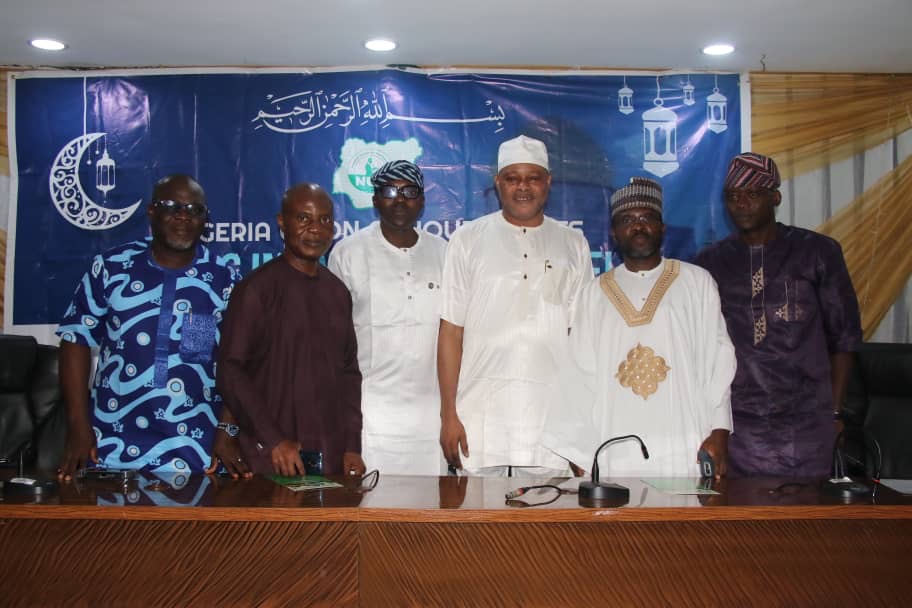
The Nigerian Union of Journalists (NUJ), Lagos Information Chapel, has called for stronger justice, accountability and responsible leadership as Nigeria continues to grapple with rising insecurity across different parts of the country.
The call was made during the annual Ramadan lecture organised by the chapel in collaboration with the Lagos State Ministry of Information and Strategy.
The event, themed “Insecurity, Justice and the Day of Accountability,” brought together journalists, government officials and religious scholars to reflect on the country’s security challenges and the moral responsibilities required to address them.
In his welcome address, Chairman of the NUJ Lagos Information Chapel, Debo Adeniji said the theme of the lecture was particularly relevant given the social and religious challenges currently confronting many communities.
He noted that insecurity had continued to devastate many parts of the country, leaving poverty and helplessness in its wake. Adeniji pointed to the growing cases of violence, kidnapping and banditry that have affected individuals, families and communities, stressing that justice, which should ordinarily serve as a fundamental human right, now appears increasingly difficult for many citizens to access.
According to him, insecurity often thrives in environments where impunity, corruption and weak accountability systems persist. He therefore stressed the need for citizens to demand higher standards from leaders and institutions responsible for governance.

Delivering the main lecture, Islamic scholar Dr Muhammed-Isa Abdulmujeeb Tosin examined the consequences of violence, kidnapping and bloodshed from an Islamic perspective, warning that the continued spread of such crimes poses serious risks to Nigeria’s future.
He explained that laws and governance structures are meant to protect the interests of the people, but observed that many citizens have become discouraged when attempting to seek justice through government institutions.
Bureaucratic obstacles, delays and weak institutional responses, he noted, often push people away from pursuing legal redress.
According to him, such experiences gradually erode public trust in institutions meant to protect citizens, creating frustration and a growing sense of detachment from the system.
The lecturer also explained that Islamic jurisprudence emphasises the protection of key elements necessary for a stable society. These include the protection of religion, life, intellect, property and future generations. Within this framework, he stressed that safeguarding human life remains a central responsibility of any society.
Tosin further examined the evolution of conflicts in Nigeria, noting that the nature of violence in the country has changed over the decades.
He explained that from Nigeria’s independence in 1960 up to around the late 2000s, many conflicts were largely linked to ethnic tensions and political disagreements, often manifesting as communal clashes or political skirmishes.
However, he noted that new dynamics began to emerge around the late 2000s and early 2010s, particularly in northern Nigeria.
Economic hardship and shifting political conditions, he said, began to influence people’s attitudes and behaviour, as the struggle for survival became a dominant factor shaping social realities.
According to him, these conditions have contributed to the growth of criminal activities, with some individuals exploiting insecurity for financial gain.
Tosin also cautioned against the spread of extremism, noting that radical ideologies often thrive in environments where poverty, inequality and weak institutions persist.
Also speaking at the event was Chairman of the Nigeria Union of Journalists, Lagos State Council, Adeyeye Ajayi, who emphasised the need for journalists to continue promoting responsible reporting and public awareness on issues affecting national security and governance.
The lecture was chaired by the Special Adviser to the Lagos State Governor on Islamic Matters, Dr Ahmad Abdullahi Jebe, who also highlighted the importance of moral responsibility, justice and unity in addressing the country’s challenges.

