 Follow Us on Google News
 Follow Us on Google Discover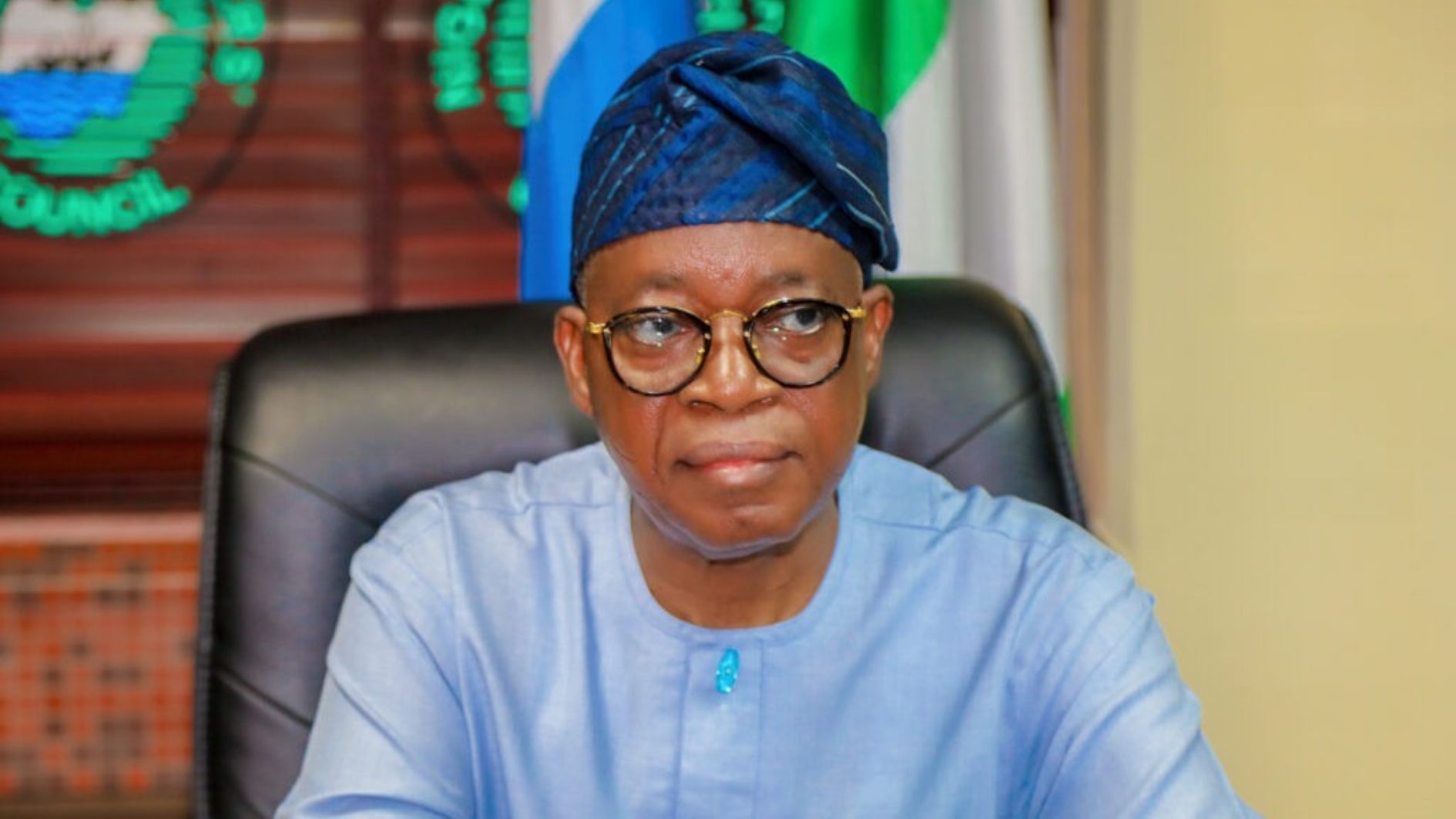
As Nigeria seeks to attract investment to ports, fisheries, offshore renewable energy, aquaculture, marine biotechnology, coastal tourism and seabed resources, investors are increasingly evaluating not only infrastructure and government policies but also the strength of the legal framework, AMEH OCHOJILA reports.
The growing international focus on autonomous vessels, digitalisation of shipping through electronic bills of lading, blockchain-enabled cargo documentation, digital freight contracts, the transition to green maritime transport and artificial intelligence is creating fresh evidentiary, contractual and jurisdictional issues and legal risks for countries, while compounding Nigeria’s historically poor maritime legal framework.
The rapid evolution of maritime technology is also creating unprecedented legal questions around liability, navigational responsibility, insurance, collision regulations and the allocation of responsibility when autonomous vessels or their systems fail.
It is also expected that the growing international focus on maritime decarbonisation and environmental responsibility will generate increasingly complex disputes over environmental liability, pollution damage, regulatory enforcement and compliance with evolving international standards.
These are issues judicial officers may face in the coming years and which they are expected to approach with sound legal reasoning, scientific understanding and awareness of emerging international jurisprudence.
For decades, Nigeria has grappled with complex, high-value maritime disputes arising from inconsistent judicial interpretations, which have led to conflicting court rulings on identical issues, protracted litigation and prolonged cases that deter foreign investment and carry significant financial implications.

Nigerian courts have been inundated with disputes involving international carriage contracts, ship arrests, cargo insurance claims, demurrage liabilities and the enforcement of foreign arbitration awards, even as maritime law remains largely absent from the country’s legal education system.
These maritime disputes carry immediate economic consequences, as delays in rulings trigger high demurrage charges, immobilise vessels worth millions of dollars daily, disrupt national supply chains, drive up consumer prices across the economy and result in significant financial losses for both operators and the government.
Globally, the maritime sector is governed by international conventions, laws and regulations. However, Nigeria faces a growing judicial knowledge gap in admiralty law and shipping disputes, even as maritime litigation increases in its ports.
Nigeria is a party to several international maritime laws and conventions that have been domesticated into its legal framework.
These include the International Convention for the Safety of Life at Sea (SOLAS), the United Nations Convention on the Law of the Sea (UNCLOS), the Merchant Shipping Act, the International Convention for the Prevention of Pollution from Ships (MARPOL), the International Convention on Standards of Training, Certification and Watchkeeping for Seafarers (STCW), the Maritime Labour Convention (MLC), and the Hague-Visby Rules/Hamburg Rules.
Others are the Convention for the Suppression of Unlawful Acts Against the Safety of Maritime Navigation, International Labour Organisation (ILO) Conventions, Tonnage Convention, Load Lines Convention, Limitation of Liability Convention, Facilitation of International Maritime Traffic (FAL), Suppression of Piracy and Other Maritime Offences (SPOMO) Act, among several others.
President Bola Ahmed Tinubu, in 2024, signed instruments of accession for six conventions of the International Maritime Organization (IMO), including the Protocol of 2005 to the 1988 Protocol for the Suppression of Unlawful Acts Against the Safety of Fixed Platforms on the Continental Shelf, International Convention on Standards of Training, Certification and Watchkeeping for Fishing Vessel Personnel, 1995 and the Protocol Relating to Intervention on the High Seas in Cases of Pollution by Substances Other than Oil, 1973, as amended.
Others are the Instrument of Accession to the Protocol of 1996 to Amend the Convention on Limitation of Liability for Maritime Claims (LLMC) 1976, the Protocol to the 1974 Athens Convention Relating to the Carriage of Passengers and Their Luggage by Sea, 2002 and the Hong Kong International Convention for the Safe and Environmentally Sound Recycling of Ships, 2009.
Unfortunately, experts said there are knowledge gaps among judicial officers regarding some of these international laws and conventions, leading to prolonged court cases that place financial losses on operators and the economy.
Maritime dispute losses
Historically, Nigeria has recorded numerous vessel arrest cases at the Federal High Court under its admiralty jurisdiction, with each arrested vessel reportedly generating daily operational losses in the tens of thousands of dollars for shipowners and charterers, while cargo delays disrupt supply chains nationwide.
During the 17th International Maritime Seminar for Judges, Director of Legal Services, Nigerian Navy Headquarters, Andrew Ekokotu, decried the financial implications of conflicting court orders, bureaucracy, and deficient documentation from the judiciary regarding arrested vessels, which cost the agency about $10,000 per day to maintain and secure them.
Ekokotu said the Navy bore the financial strain of maintaining arrested vessels, while stressing that it faced legal action for either releasing or holding vessels based on contradictory mandates from different courts for up to eight months.
Federal High Court Judge, Justice Ayokunle Olayinka Faji, confirmed the conflict between the state and Federal High Court’s jurisdictions over maritime contract disputes, as it relates to the huge amounts spent on maintaining arrested vessels, which he said was taking a toll on shipowners, arrestors and the Navy.
Meanwhile, the former Flag Officer Commanding Western Naval Command, Rear Admiral Gregory Oamen, during a conference held in Lagos, disclosed that the Nigerian Navy arrested 333 vessels in the nation’s waters between 2015 and 2021 for various infractions.
A report by the Sea Empowerment and Research Centre (SEREC) said these arrested vessels may have cost the Nigerian economy as much as N509 billion through lost cargo value, forgone customs revenue and trade disruptions.
SEREC’s economic analysis, signed by its Head of Research, Dr Eugene Nweke, explained that if just 20 per cent of the arrested vessels were commercial ships, estimated losses ranged from a low impact of N10.2 billion in cargo value and N1.2 billion in customs revenue if most of the seizures were small vessels.
In a mid-range impact involving feeder or container vessels, SEREC said the toll could climb to N101.8 billion in lost cargo, N12.2 billion in customs revenue and N8.1 billion in disruption costs.
In the high-impact case, where oil/product tankers or high-value consignments were seized, the losses rose to N509.2 billion in cargo value, N61.1 billion in customs shortfalls and N40.7 billion in trade disruption.
Another case is the battle over container deposit refunds, excessive detention charges, arbitrary terminal fees, cargo damage and pilferage claims.
For years, importers have battled shipping lines over the recovery of container deposits after cargo clearance, with several complaints reaching regulators and court dockets crowded nationwide, creating congestion in dispute resolution processes and tying down business capital.
According to a report from the Nigerian Shippers’ Council, between 2020 and early 2024 alone, it resolved 1,878 disputes.
The Ports Standing Task Team (PSTT) also saved N58.4 billion through interventions in legal cases, out-of-court settlements, vessel demurrage savings and fines between 2021 and 2023.
Senior Partner at Akabogu and Associates, Dr Emeka Akabogu, disclosed that in two cases that went to the Supreme Court, N40 billion was recovered from shipping companies and terminal operators as excess charges on behalf of Nigerian shippers.
This recurring pattern in Nigeria’s maritime dispute history has raised concerns about the need to establish specialised maritime courts or dedicated admiralty divisions within existing courts, especially as the country seeks to position itself as West Africa’s leading maritime and logistics hub.
Partnership for solutions
While billions are being invested in expanding the blue economy, industry leaders say those investments can only deliver expected returns if commercial disputes are resolved swiftly, predictably and in line with international maritime standards.
At the 18th International Maritime Seminar for Judges (IMSJ), organised by the Nigerian Shippers’ Council (NSC) and the National Judicial Institute (NJI) in Abuja, experts highlighted that modern admiralty litigation now extends beyond ship collisions and cargo claims to encompass marine insurance, offshore energy, environmental liability, piracy, ship financing, digital trade documentation, cybersecurity, artificial intelligence, autonomous vessels and international maritime conventions.
The Minister of Marine and Blue Economy, Dr Adegboyega Oyetola, said strengthening the mechanism for prompt and efficient resolution of shipping disputes through litigation and arbitration could successfully position Nigeria as Africa’s premier maritime hub.
The Minister said a predictable and internationally informed judiciary could reduce transaction costs, strengthen commercial confidence and encourage parties to choose Nigerian courts and Nigerian arbitration centres for the resolution of maritime disputes.
He urged the judiciary to prepare for a new generation of maritime disputes arising from autonomous ships, digital shipping and the global transition to cleaner maritime transport.
Oyetola further urged judges to approach such cases with sound legal reasoning, scientific understanding and awareness of emerging international jurisprudence.
Secretary to the Government of the Federation (SGF), George Akume, emphasised the need for the speedy dispensation of admiralty justice and the prompt resolution of maritime-related disputes, noting that delays in the administration of justice could have far-reaching consequences for trade, shipping, investment, port operations and the wider economy.
He stressed that efficient and timely resolution of disputes was essential to maintaining confidence in Nigeria’s maritime sector and enhancing the country’s competitiveness as a regional trade and shipping hub.
The SGF also cautioned government agencies against operating in silos, stressing that the complex nature of the maritime and blue economy sectors required effective coordination and collaboration among relevant institutions.
The Chief Justice of Nigeria, Justice Kudirat Kekere-Ekun, emphasised the importance of effective and prompt dispensation of admiralty justice, noting that maritime disputes often involve complex, time-sensitive and cross-border transactions.
She noted that ships, cargoes, commercial transactions and maritime disputes frequently involve multiple countries and legal systems, making cooperation among courts, judicial officers, regulators, legal practitioners and other stakeholders essential.
Kekere-Ekun stressed that delays in resolving such disputes could disrupt commercial operations, increase costs, undermine investor confidence and affect the smooth functioning of the maritime industry.
According to her, no blue economy can realise its full potential without courts capable of enforcing contractual obligations and resolving disputes fairly, efficiently and in accordance with international legal standards.
She therefore underscored the need for a responsive, efficient and specialised system of admiralty justice capable of resolving maritime disputes in a timely and effective manner.
The Speaker of the House of Representatives, Abbas Tajudeen, represented by the Deputy Chief Whip, Ibrahim Ayokunle Isiaka, also highlighted the strategic importance of the maritime sector to national and global economies, noting that trade disruptions could reverberate across national economies, affecting supply chains, availability and cost of goods, industrial production and economic growth.
President of the Nigerian Maritime Law Association (NMLA), Michael Igbokwe, called for specialised judicial structures to expedite the resolution of maritime disputes, reduce litigation delays, and foster a more predictable legal environment capable of supporting Nigeria’s ambition to become a leading maritime and logistics hub.

