Nigeria’s dependence on sea transport for its international trade has again called for the country to urgently develop a strong indigenous shipping industry.
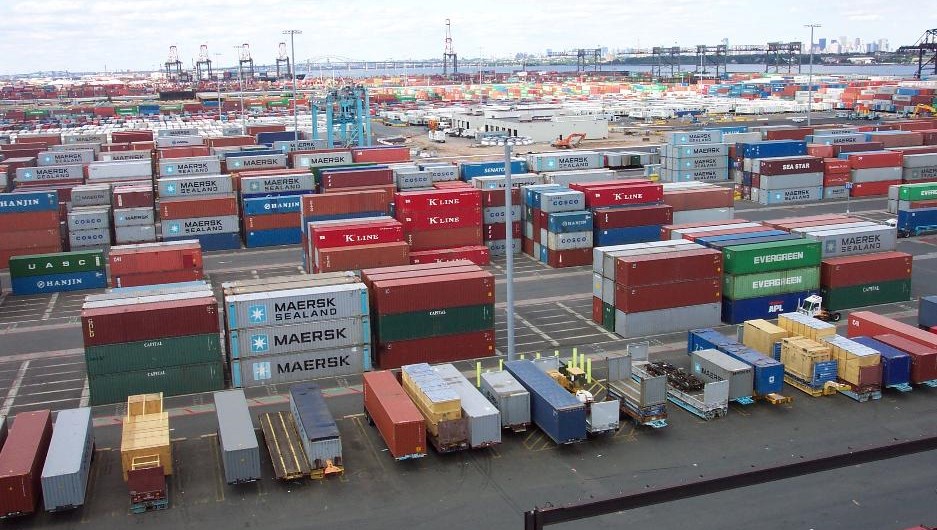
The National Bureau of Statistics (NBS) Foreign Trade in Goods Statistics for the third quarter of 2025 showed that maritime transport dominated the country’s import and export, accounting for N37.59 trillion, a figure that underscores the strategic importance of enhancing shipping to the economy and external trade performance.
According to the report, goods exported from Nigeria in the period under review were transported largely by sea, with maritime transport accounting for N15.13 trillion or 93.84 per cent of the total value of goods imported and N22.46 trillion or 98.45 per cent of total exports.
Air transport recorded N979.21 billion of imports, representing 6.07 per cent and N19.85 billion or 0.53 per cent for exports, while road transport accounted for N13.37 billion or 0.08 per cent of total imports and exports valued at N141.86 billion or 0.62 per cent. Other modes of transport contributed N91 billion, representing 0.4 per cent of total exports.
Maritime industry analysts argued that the figures once again expose Nigeria’s heavy reliance on foreign-owned vessels to move its trade, despite the sector’s central role in driving economic growth, foreign exchange earnings and job creation.
They maintain that a functional indigenous shipping industry, backed by supportive regulation, access to financing and effective enforcement of the cabotage laws, would enable Nigeria to better leverage its dominant seaborne trade and reposition itself as a leading maritime hub in West Africa.
Head of Research, Sea Empowerment and Research Centre (SEREC), Dr Eugene Nweke, stressed that over 90 per cent of Nigeria’s trade moves by sea, yet indigenous fleet participation accounts for less than five per cent, describing the imbalance as a reflection of governance failures and not legislative gaps.
Nweke said the country loses an estimated yearly loss of up to $100 billion, which stems from various sources, including freight earnings, expatriate employment costs, and capital flight within the oil and gas maritime logistics sector.
While the Nigerian Maritime Administration and Safety Agency (NIMASA) has been criticised for non-indigenous participation in the shipping industry, Nweke said the Cabotage Vessel Financing Fund (CVFF), created in 2003 to finance vessel acquisition by Nigerian shipowners, remains dormant after 18 years, with over $350 million collected and no single major disbursement made.
He attributed the paralysis to bureaucratic bottlenecks, weak accountability and political manipulation, noting that the consequence is the absence of a national fleet, diminished investor confidence and entrenched foreign dominance.
According to reports by the Nigerian Ports Consultative Council (NPCC), the country’s estimated freight revenue losses exceed $9 billion yearly, while independent assessments suggest losses could be around $50 billion.
To reverse the trend, SEREC recommended the establishment of a Cabotage Compliance Tribunal to expedite enforcement, with the transparent disbursement of the CVFF to credible indigenous operators.
Nweke, however, called on the Federal Government, the Ministry of Marine and Blue Economy, NIMASA, and industry stakeholders to recommit to the Act’s original vision to reclaim the billions lost yearly, as well as empower indigenous operators, and restore the country’s maritime dignity.
President of African Shipowners Association (ASA), Captain Ladi Olubowale, noted that many developed and developing nations, such as Japan, China and Indonesia, have established export funds for ship development, with banks in these countries actively involved in ship financing.
Olubowale maintained that the CVFF disbursement would transform Nigeria into a hub for qualified, trained, and certified seafarers, with a ripple effect that would benefit the entire African continent.
According to him, the initiative would also create abundant growth opportunities, enhance capacity building, promote local content development, and position Nigeria as a leading maritime nation in Africa.