

 Get Guardian on Google
Nigeria’s National Single Window (NSW) platform has processed 169,211 licences, permits and other regulatory documents since commencing operations on March 27, 2026, as the Federal Government intensifies efforts to digitise trade procedures and reduce administrative bottlenecks affecting importers and exporters.
The platform has also registered 12,465 importers and agents, onboarded 27 airlines and integrated 56 shipping lines, according to its performance report covering operations up to October 2026.
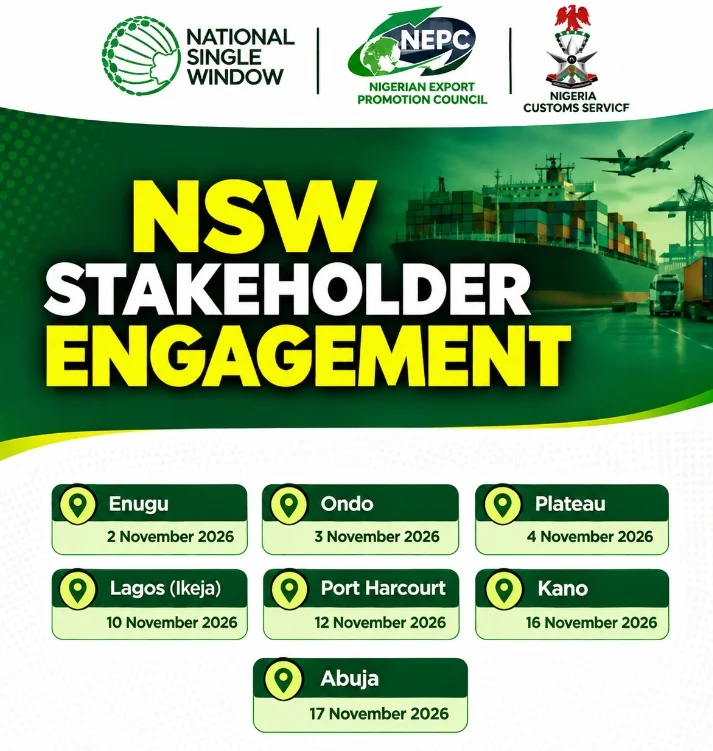
The figures were released as the NSW Project, led by Project Director Tola Fakolade, commenced stakeholder engagement activities across eight locations to review implementation progress, address operational concerns and prepare users for the next phase of the initiative.
The engagements cover Enugu, Akure, Jos, Ikeja, Badagry, Port Harcourt, Kano and Abuja, bringing together government agencies, businesses, freight forwarders and other participants in Nigeria’s international trade sector.
The programme is intended to strengthen coordination among institutions and improve understanding of the digital platform as additional regulatory processes are introduced.
The NSW performance report showed that 27 airlines had been onboarded, with 4,009 air cargo manifests transmitted through the system as of October.

In the maritime sector, 56 shipping lines had joined the platform, while 405 sea manifests had been processed.
The project also reported the digitisation of import licensing, permit and certification procedures involving the Standards Organisation of Nigeria (SON), National Agency for Food and Drug Administration and Control (NAFDAC), National Environmental Standards and Regulations Enforcement Agency (NESREA) and Nigeria Agricultural Quarantine Service (NAQS).
According to the report, the integration allows users to submit applications, process regulatory approvals and make applicable payments through the centralised system.
The NSW Project said previously manual import licence, permit and certificate procedures involving NAQS and NESREA had also been automated.
The development is intended to reduce repeated documentation and the administrative burden associated with processing trade approvals through separate government agencies.
However, the report did not provide comparative figures showing how much processing times or transaction costs had declined since the introduction of the platform.
The project reported an operational uptime of 99.98 per cent, indicating that the platform remained available for most of the period covered by its performance assessment.
System availability is an important consideration for businesses that depend on digital services to submit documents and obtain regulatory approvals.
Nevertheless, uptime alone does not establish the speed or effectiveness of individual transactions.
Other measures, including average approval times, failed submissions, user complaints and the number of applications completed without manual intervention, would provide a fuller assessment of the platform’s performance.
The project has also commenced work on harmonising Harmonised System (HS) codes across participating regulatory agencies and the Nigeria Customs Service.
HS codes are used internationally to classify traded goods for customs and regulatory purposes.
Differences in how products are classified can create complications for businesses seeking permits, calculating duties or obtaining regulatory clearance.
The harmonisation exercise is intended to improve consistency and reduce discrepancies in the classification of imported and exported products.
The National Single Window initiative was inaugurated by President Bola Tinubu on April 16, 2024, as part of the Federal Government’s efforts to modernise trade administration.
It is designed to provide a central electronic entry point through which businesses can submit standardised information and regulatory documents required for international trade.
Under the proposed framework, relevant information submitted through the platform is shared with participating government agencies according to their regulatory responsibilities.
The objective is to reduce the need for importers and exporters to provide similar information repeatedly through separate systems.
For businesses, the expected benefits include more predictable procedures, fewer administrative delays and improved visibility into the status of regulatory applications.
For government agencies, the platform is intended to strengthen information sharing, regulatory oversight and the monitoring of trade transactions.
The system could also support revenue administration by improving the traceability of transactions and reducing opportunities for discrepancies in documentation.
However, the extent to which these objectives are achieved will depend on the effectiveness of agency integration, system reliability and the adoption of the platform by businesses.
Following the rollout of its initial services, the NSW Project is preparing for the next stage of implementation.
Phase 2 is scheduled for progressive delivery between the fourth quarter of 2026 and the first quarter of 2027.
The planned expansion will introduce additional trade-related procedures, including export licences, certificates and permits.
It will also cover Forms NXP and NCX, export manifests, Import Duty Exemption Certificates (IDEC), and import and export permits relating to Free Trade Zones.
Payment processing for export licences, permits and certificates is also included in the proposed expansion.
These additions are intended to extend the platform’s coverage beyond the import-related procedures already available.
Exporters currently required to interact with multiple institutions for regulatory documentation could benefit from a more integrated application process once the relevant services become operational.
The project said it had commenced the first cycles of User Acceptance Testing (UAT) for Phase 2.
The testing process is intended to assess whether the proposed functions meet operational requirements before deployment.
Further technical work will include system configuration, customisation and validation with participating stakeholders.
The NSW Project has not provided a specific date for the completion of all Phase 2 services.
The project also identified the Nigerian Ports Authority (NPA) and Nigerian Maritime Administration and Safety Agency (NIMASA) as institutions expected to be onboarded as part of its next Phase 1 milestone.
Their proposed integration would expand the maritime component of the platform.
Maritime trade involves several regulatory and operational processes, making coordination among relevant agencies important to cargo movement and documentation.
The inclusion of additional maritime institutions could improve information sharing across participating organisations.
However, the effectiveness of the integration will depend on how well the different systems exchange information and whether existing administrative processes are adjusted to support the digital framework.
The NSW Project has not disclosed a confirmed completion date for the planned onboarding of NPA and NIMASA.
As implementation progresses, the project has begun a nationwide engagement programme involving government institutions and private-sector participants.
The sessions are taking place in Enugu, Akure, Jos, Ikeja, Badagry, Port Harcourt, Kano and Abuja.
Participants include representatives of regulatory agencies, importers, exporters, manufacturers, freight forwarders, licensed customs agents, airlines, shipping companies, financial institutions and trade associations.
The engagements are intended to provide updates on the platform’s performance and planned expansion while allowing users to raise concerns about implementation.
They also offer an opportunity to identify difficulties businesses may encounter when moving from existing documentation procedures to the centralised system.
Such feedback could be particularly relevant where users face challenges involving registration, payment processing, document submission or interaction with participating agencies.
The project said stakeholder consultation would remain part of its implementation strategy as additional services are introduced.
The NSW Project’s governance and implementation arrangements involve several government institutions with responsibilities across customs, taxation, aviation, maritime operations and product regulation.
These include the Nigeria Customs Service, Nigeria Revenue Service, Federal Airports Authority of Nigeria, Central Bank of Nigeria, SON, NAFDAC, NAQS, Nigerian Shippers’ Council and other relevant agencies.
The project is being coordinated under Fakolade’s leadership, with emphasis on institutional cooperation and the progressive integration of trade-related procedures.
The participation of multiple agencies is necessary because international trade documentation often involves different regulatory approvals.
A centralised platform can simplify access to those processes, but the underlying responsibilities of participating institutions remain important.
Effective implementation will therefore require agreement on data standards, processing procedures and the responsibilities of individual agencies.
The project has also identified user education as a priority, recognising that businesses and government personnel must understand how to operate the system.
Nigeria’s National Single Window forms part of a wider effort to modernise trade infrastructure and improve the country’s participation in regional and international commerce.
Other African countries, including Nigeria’s next-door neighbour Benin, and the East African nations of Djibouti and Kenya, have introduced single-window arrangements as part of efforts to streamline customs and trade procedures.
For Nigeria, the success of the initiative will ultimately be assessed by its effect on businesses using the platform.
The number of documents processed and users registered provides an indication of adoption, but additional evidence will be required to establish whether the system has reduced the time and cost of completing trade transactions.
Importers and exporters will also be concerned about the reliability of approvals, transparency of procedures and consistency of requirements across government agencies.
The NSW Project’s reported operational figures suggest that the platform is handling a growing volume of trade-related activity.
With Phase 2 under preparation and stakeholder consultations taking place across the country, attention is shifting towards expanding the system’s coverage and improving the experience of users.
The next stage will test whether the centralised platform can deliver measurable improvements in regulatory processing, particularly as export documentation and additional maritime services are introduced.
For businesses, the critical question is whether the technology will translate into faster approvals, fewer administrative obstacles and more predictable trade procedures.
The official platform is available at nsw.gov.ng.