 Follow Us on Google News
 Follow Us on Google Discover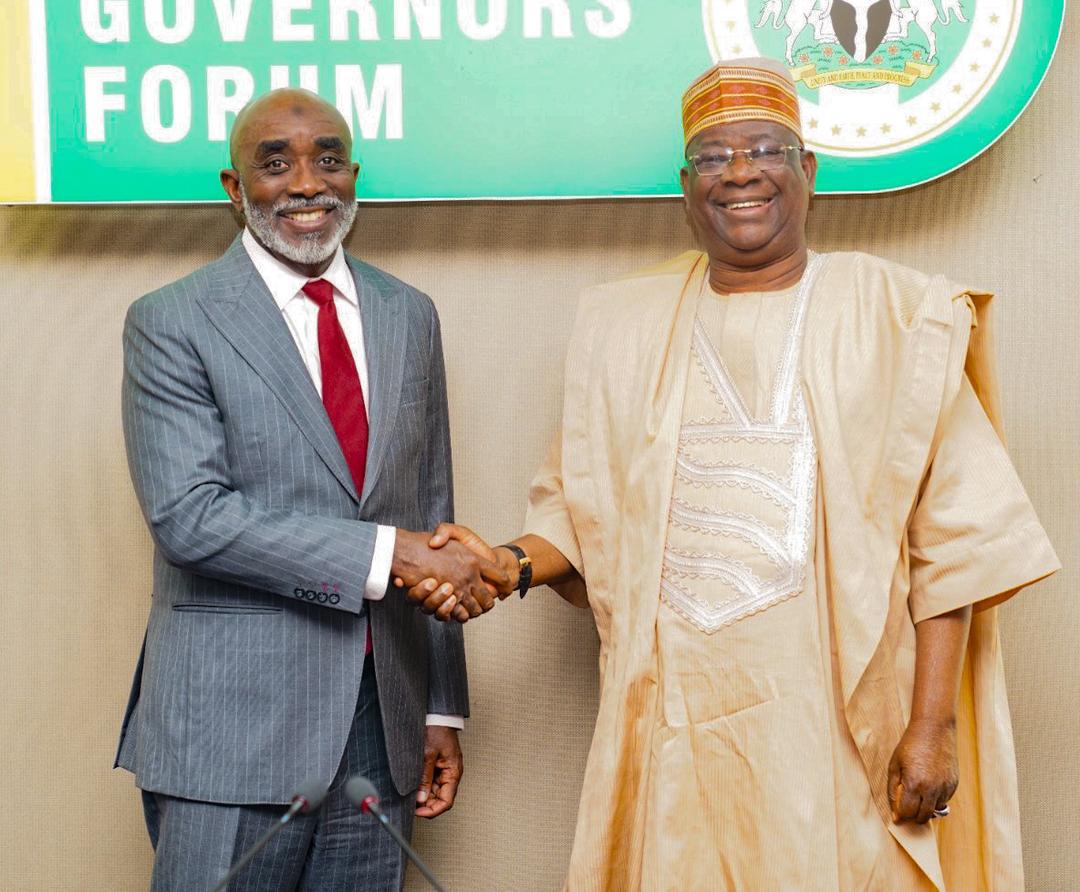
•Leverage 1.2m hectares of suitable land to tap AfCFTA’s $7b market
The Nigeria Governors’ Forum (NGF) secretariat has agreed to prioritise sugar as a key product for the acceleration of industrial development in different states.
The NGF also agreed to include sugar projects as a priority beneficiary in
It’s engagement with development partners within and outside the country.
The decisions were made following a National Sugar Development Council (NSDC) in the pursuit of its mandate to develop the sugar sector, stop importation of raw sugar, create jobs and pursue self-sufficiency in sugar production.
The forum, according to the statement, agreed to a partnership with the NSDC to prepare and position investor-ready sugar projects, facilitating structured engagement between state governments, investors and industry operators, as well as improving coordination around key enablers.
The Executive Secretary/CEO of NSDC, Kamar Bakrin, who requested a meeting with the NGF leadership, pitched the huge investment opportunities in the sugar sector to the officials, calling on governors, through the NGF, to embrace sugar project development with open arms.
He listed states with proven, suitable lands for profitable sugar production to include Oyo, Kwara, Niger, Nasarawa, Kaduna, Kano, Bauchi, Gombe, Jigawa, Adamawa and Taraba.

Bakrin noted that recent macroeconomic developments have improved the competitiveness and profitability of local sugar production.
“While global sugar prices have remained relatively stable in dollar terms, exchange rate movements have made imports significantly more expensive, thereby enhancing the commercial viability of domestically produced sugar, whose inputs are largely naira-denominated,” he said.
The NSDC boss emphasised that Nigeria has strong operational fundamentals for sugar production.
According to him, comprehensive assessments have identified approximately 1.2 million hectares of prime land suitable for large-scale sugarcane cultivation nationwide, even though the country only needs 200,000 hectares of land to achieve self-sufficiency in sugar production.
“The availability of suitable land, water resources, labour and policy incentives positions Nigeria favourably for large-scale sugar investments,” he said.
He informed the gathering that the above critical factors have created an opportunity to invest in Nigeria’s sugarcane growing and processing industry, adding that the sector is now worth $2 billion.
With the advantage of the African Continental Free Trade Agreement (AfCFTA), he said, it is worth $7 billion.
The NSDC boss added that the market for sugar by-products alone is worth $10 billion in Nigeria.
Talking about community interest, the NSDC boss said: “The Nigerian sugar industry does not displace communities; instead, it integrates them into the value chain as partners, workers, and stakeholders through outgrower schemes and employment opportunities.”
Director-General of the NGF, Dr Abdulateef Shittu, noted that many state governments are already engaged, or are keen to engage, in sugar-related investments spanning land development, agricultural schemes, and agro-industrial initiatives. He, however, added that unlocking these opportunities requires effective coordination, credible investment frameworks, and strong alignment between federal policy objectives and state-level development priorities.
He pledged the commitment of the NGF secretariat to ensure that such state-level development priorities begin to focus on sugar project investments based on their capacity for rural development and job creation.

