Food prices in Nigeria have maintained a steady decline even as the Christmas season sets in.
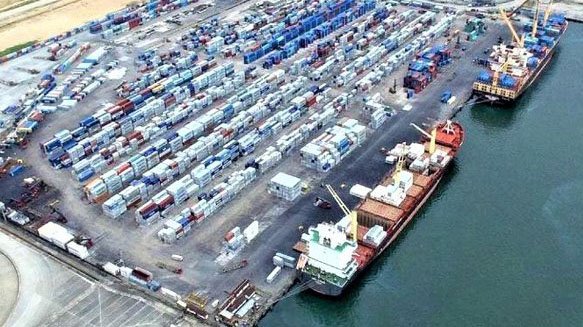
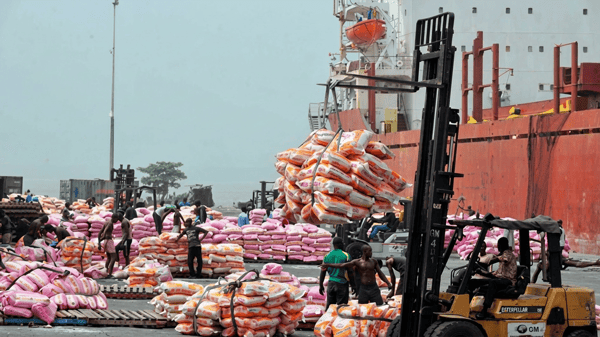
The decline, which is mainly driven by huge food imports to cushion the impact of high food inflation and the cost of living crisis, has also left local farmers with little or no profit from their farms.
The third quarter foreign trade in goods report by the National Bureau of Statistics (NBS) put the value of agricultural goods imported in Q3 at N1.1 trillion, representing a 25.03 per cent increase compared to N882.24 billion recorded in Q3.
The NBS in its October 2025 selected food price watch report indicated that the average price of 1kg of local rice was N1,913.78, representing a 2.01 per cent decline year-on-year from N1,944.64 recorded in October 2024.
The price of the commodity also showed a 1.59 per cent decrease compared to the price in September 2025.
Similarly, the average price of Beans Brown (1kg) stood at N1,760.53 in October 2025, reflecting a 37.09 per cent year-on-year decline from N2,798.50 recorded in October 2024 and a further 3.04 per cent month-on-month decrease.
In the same vein, the average price of Garri White (1kg) dropped by 29.33 per cent year-on-year, from N1,198.05 in October 2024 to N846.69 in October 2025. On a month-on-month basis, the price also fell by 2.88 per cent compared to N871.78 recorded in September 2025.
In addition, the average price of tomatoes (1kg, sold loose) declined to N1,269.17 in October 2025 from N1,465.99 recorded in October 2024, representing a year-on-year decrease of 13.43 per cent.
On a month-on-month basis, the price also fell by 0.83 per cent.
The NBS reports that the October 2025 state profile analysis shows that Ogun recorded the highest average price for rice local at N2,163.23 per kilogramme, while Yobe had the lowest at N1,523.47.
For beans, Imo reported the highest average price at N2,174.09 per kilogramme, with Yobe state recording the lowest at N1,263.68.
Analysts have argued that, beyond the effect of the government reform programmes, the citizens’ weak purchasing power is also a major driver of the declining inflation. They hinge their argument on the fact that most of the variables that are driving up inflation in the country, such as insecurity, high exchange rate, high cost of energy and poor infrastructure, are still very much active.