 Follow Us on Google News


 Follow Us on Google Discover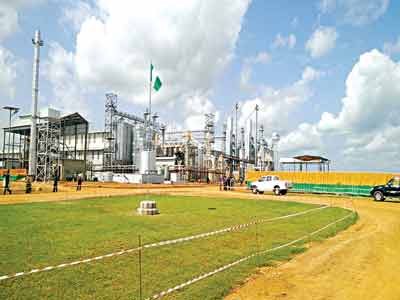

Say Investment In Rice Value Chain In Danger
SEVERAL billions of Naira investment in the country’s rice value chain may be endangered with plans by the government to open land borders for the importation of rice. The number one Customs officer, Colonel Hameed Ibrahim Ali (rtd), gave indications to this last week.
But the policy twist is giving local rice producers sleepless nights as they fear it might jeopardise their investments in rice value chain. They argue that the policy twist would promote smuggling of the commodity, which will eventually make the market uncompetitive.
Rice millers say it would act as a clog in the wheel of progress in the country’s backward integration programme on rice.
The Chairman of Rice Millers Association of Nigeria (RMAN), Alhaji Mohammed Abubakar, who is also the Managing Director and Chief Executive Officer of Amza Rice Company in Kano, said the reversed policy on rice is in bad fate, adding that the government is misguided by the Nigerian Customs Service into taking such “retrogressive” policy.
“The new policy on rice importation is going to change everything. It is a bad policy and we were not carried along in the formulation of this policy. We know that the Nigerian Customs Service has no constitutional power to announce this kind of policy. The service is meant to implement policies. The ban on rice importation was done six years ago because of abuse associated with rice importation. The new policy will open our borders again for smugglers and we cannot compete with them. The new Customs Board needs to go on familiarisation tour of the borders to see how porous they are. We have sent our protest letter on this issue to the appropriate quarters and they have not responded. We have 18 integrated rice millers in the country and we have invested several billions of Naira into the programme. So if we now produce and nobody is ready to buy from us, what will happen? We will retrench our workers and close shop,” he said.

Abubakar, who described the new policy as “retrogressive,” said it came at the time when more Nigerians were being attracted into rice farming and milling, adding that Nigeria would have become self sufficient in rice production in the next three years if the backward integration programme was allowed to stay.
“If we want to develop our country, we have to start from somewhere. We have to continue to encourage rice farmers and millers. Now, if we produce and nobody is buying because of importation, we will have to retrench workers and close our mills. We have created awareness and this has generated more rice mills, more rice farmers have also come on board. The previous policy is the best, if they allow it to stay, in the next three years, we should be self sufficient in rice production in this country,” he assured.
Former Minister of Commerce and Industry, Charles Ugwuh, said importation of the commodity is allowed, provided government is able to put in place stiff and high import tariff regime, as a measure of protection for local rice producers and processors.
He said majority of Rice Value Chain stakeholders are worried by the lifting of restriction on importation through the land borders, adding that the action could endanger the huge investment in the sector, as the commodity will definitely stream into the country uncontrollably.
According to him; “There is no ban on import of Rice. Import of Rice is allowed and permitted, provided appropriate import duty is paid. The government is using tariff measures to regulate imports; it also uses high import tariffs to reduce rice imports and thereby protects local producers. High levels of Customs Tariff, currently 70 per cent i.e. 10percent duty and 70 percent levy, is aimed at reducing imports by making imports higher in cost. Those with approved quota can import rice at 30 per cent, 10 per cent duty and 20 percent levy.”
Ugwuh, who was also the former President, Manufacturers Association of Nigeria (MAN) said till now “no import of rice was allowed via the land borders. Therefore no provision for import duty collection arrangements were made or set up at the land borders. Consequently, no official Customs duties were collected.”
Continuing, he said; “In spite of this restriction, huge quantities of rice still come into the country through land borders with no provision for the official collection of import tariffs on rice at the land borders; the Customs authorities used their ‘discretion’. Consequently, huge volume of rice comes in through the land borders, up to two million tons in 2012|2013; leading to loss of over one billion United States Dollars (USD) in that year alone. Against the reality of this huge loss, the new Comptroller General of Customs (CGC) is seeking to bring all rice imports into the Customs Tariff net in order to save these losses and increase Government Revenue.”
The former Minister, who is now the Managing Director of Ebony Rice Company in Abakeliki, Ebonyi State, urged the Customs under the current dispensation to ensure the collection of appropriate tariff from rice importers.
“The real problem or challenge is how to ensure the collection of appropriate import duties at the land borders, particularly how to count the quantities, since there are no authentic documents, or accurate records of quantities, and verifiable documentation on which to base the import duty assessment. There is an established benchmark price for rice, reviewed every quarter by the Ministry of Finance, but the quantities are impossible to capture accurately due to the obvious methods of product transportation. Therefore, the anxiety of stakeholders is that import duty estimation and collection at the land borders will revert to ‘discretionary assessment’, which are usually influenced by gratification or other corruption factors and private negotiation with the Customs officers.”
According to him the fear now is on how the customs will ensure the integrity in the process of duty collection from imported rice product to guarantee the protection for the local rice producers and processors.
“How will the CGC ensure the integrity of the process on a continuing basis after the first few weeks or maintain ‘tight control and monitoring? Surely, the situation will be watered down into ‘business as usual’ leading to massive undervaluation/under assessment of imports through the land borders.
“There would be little protection for local rice producers and processors, who are supposed to be protected by the imposition of stiff and high import tariff regime. The action of the new CGC is favourable to those who normally smuggle rice through the land borders, by diverting their shipments into neighbouring ports and transporting their cargoes through the border controls. These people are favoured by the CGC’s ‘innocent/patriotic’ action.”
The Nigeria Customs Service had two months ago sealed the premises of rice importers over claims of indebtedness of over N34b, even with the denial by the importers. Their warehouses were sealed for days as Customs insisted they pay a total duty of over N34b. One of the companies had gone to the court to seek redress on the matter.
The importers were alleged to have abused the privilege to import rice into the country at concessionary duty rate of 30 per cent, against the 70 percent official rate.
NCS said concession was given them to close the gap between demand and supply, as many of them claimed they would not be able to meet local demand with their local production.
According to the service, the rice producers, who were allowed to import so as to close the shortfall in supply, used the opportunity of the quota given them to flood the market and stockpiled their warehouses with the imported commodity.
“They were given allocation at concessionary duty rate of 30 percent, against the official 70 percent because of the supply chain deficiency. But they allegedly exceeded the quota and they are going to sell in the same market with others, who paid 70 percent duty to bring in the commodity,” NCS said.
On May 26th, 2014, a new rice policy was approved by former President Jonathan to encourage investments in local rice milling and production through the introduction of an import duty differential on rice (brown or polished)
The policy was meant to turn importers into investors, so as to commence local production and become part of the drivers of the local content in the rice industry. This is to contribute in part to the expectation of increased rice paddy production in Nigeria, leading to the achievement of rice self-sufficiency.
To encourage greater domestic investments in rice, the rice policy was designed to encourage expanded cultivation of commercial rice farms and establishment of new integrated rice mills. To ensure this, existing rice millers and new investors in rice milling and paddy production with verified Domestic Rice Production Plans (DRPP) were granted import duty concession of 10 percent and levy 20 percent, while other importers without local production capacity were to import at 70 percent duty rate.
It was clearly stated that any beneficiary who imported rice above these approved quantities would have to pay to treasury the higher levy of 60 percent and duty of 10 percent for the excess quantity of import.
The last administration introduced import quota, which gave existing rice millers the lion share of 52 percent of the total 1,300,000 MT available quota of rice import at the preferential 10 per cent levy and 20per cent duty.
To qualify for the import quota, companies must be a registered company in Nigeria and a member of either the Rice Processors Association of Nigeria (RIPAN), or Rice Importers and Distributors Association of Nigeria (RIMIDAN), and must have a minimum existing or planned investment in rice production and processing of $10million.
This cost represents an average investment requirement for a medium scale integrated rice processing facility (36,000 MT) and nucleus commercial farming operations (2,000 ha).
“To guarantee that these DRPPs are met to achieve the Federal Government’s goal of rice self-sufficiency, the Federal Ministry of Agriculture and Rural Development issued these quotas on a conditional basis. Basically, in order to qualify for a final quota allocation, all qualifying companies had to deposit a Domestic Rice Production Performance Bond (“the Bond”) as a means of demonstrating a clear commitment to domestic investments in rice production and processing. For each investor, the Bond value will be equivalent to 30per cent of the value of the quota received.

