 Get Guardian on Google
…Says President’s ambition is to build a prosperous Nigeria, assures private sector of government commitment to economic reforms
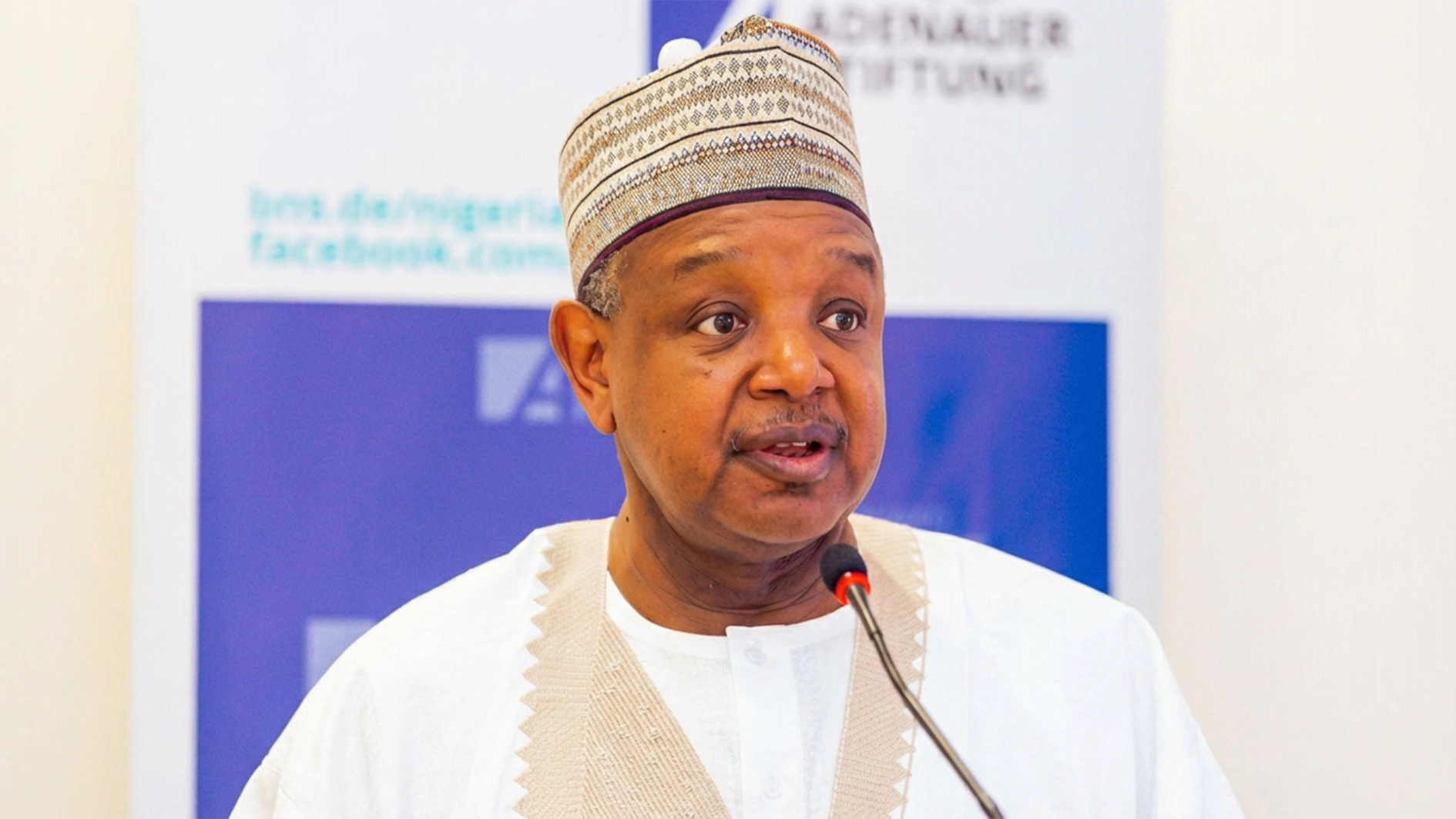
Minister of Budget and Economic Planning, Senator Atiku Bagudu, has said President Bola Tinubu is working towards transforming Nigeria into a $2 trillion economy, insisting that the country has the potential to achieve an economic feat comparable to, or greater than, that of Brazil.
Bagudu made this known on Tuesday at the launch of the All Progressives Congress (APC) manifesto for the presidential election titled: “From Reform To Prosperity” agenda 2027 – 2031 highlighted the President’s economic vision.
The Minister maintained that President Tinubu is driven by the conviction that Nigeria should not place limitations on its economic ambitions when countries such as Brazil had been able to build economies valued at about $2 trillion.
According to him, the President’s thinking is anchored on the belief that Nigeria has the human and material resources to attain a much higher level of economic prosperity if the right policies are implemented.
He said: “For Mr President, if Brazil can be a $2 trillion economy, why not Nigeria? Let me repeat, maybe the journalists may not care. This is how profound his thinking: why not Nigeria?”

The minister said Tinubu had demonstrated the political courage to take difficult decisions aimed at addressing the country’s economic challenges, even when such measures attracted criticism and imposed temporary hardship on Nigerians.
He recalled his experience as governor in 2015, when, at a National Economic Summit meeting chaired by former Vice President Yemi Osinbajo, 27 governors admitted that they could not meet their states’ salary obligations despite Nigeria having enjoyed relatively high international oil prices in the preceding years.
Bagudu said the experience reinforced the need for Nigeria to confront its economic realities rather than postpone difficult decisions for political convenience.
He explained that Tinubu’s approach was informed by the conviction that sustainable prosperity required bold reforms, adding that the President was more concerned about putting the country on a sound economic footing than the immediate political consequences of his decisions.
The minister, however, acknowledged that the government still had considerable work to do in ensuring that the benefits of the reforms translated into improved living conditions for ordinary Nigerians, particularly hardworking citizens, young people and vulnerable groups.
To illustrate Tinubu’s concern for ordinary Nigerians, Bagudu recalled an incident during the President’s campaign in Zamfara State, when he noticed a carrot seller following his convoy after 5 p.m.
According to him, Tinubu was concerned that the trader had made considerable efforts to earn a living but had not received commensurate returns from his labour.
Bagudu said the President subsequently reminded him of the incident, stressing that the ultimate objective of economic reforms should be to ensure that hardworking Nigerians could earn better rewards for their efforts.
On the government’s engagement with the private sector, the minister said the presentation of elements of the administration’s manifesto at a town hall meeting in Lagos had helped civil society organisations, business leaders and other stakeholders develop a sense of ownership of the government’s economic agenda.
He also said the recent Nigerian Economic Summit Group meeting provided an opportunity for the private sector to assess the administration’s performance, adding that business leaders had acknowledged progress in meeting commitments made by the President.
Bagudu noted that Tinubu had strengthened the relationship between government and the private sector, recalling that the President visited the Nigerian Economic Summit Group‘s office in Lagos in 2020, where he presented his vision and invited business leaders to participate in shaping the country’s economic direction.
He further cited the defection of three opposition governors to the All Progressives Congress, saying their decisions were influenced by the economic and developmental support their states had received from the Federal Government.
According to him, the governors of Zamfara, Kano and another state had publicly explained that the results they were seeking to achieve in their states were being delivered under the Tinubu administration.
Bagudu said the states were receiving substantially increased monthly allocations, while the governors were being treated equitably by the President, irrespective of their previous political affiliations.
He maintained that the administration’s ultimate objective was to build an economy capable of creating opportunities, attracting investments and improving the welfare of Nigerians, stressing that the ambition to match Brazil’s economic scale reflected the President’s broader vision of Nigeria’s economic potential.