 Follow Us on Google News
 Follow Us on Google Discover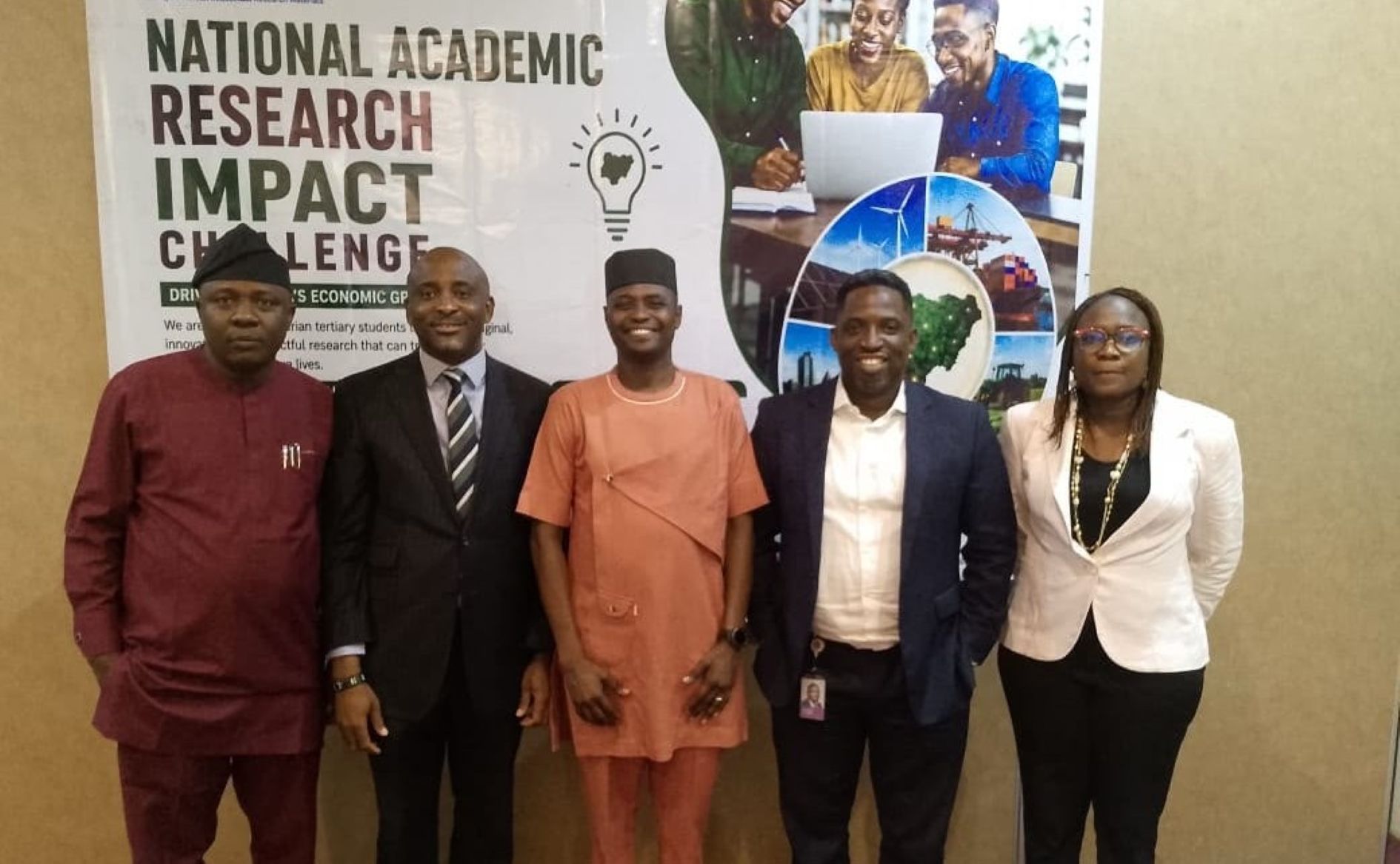
The Retail Development and Investment Company (RDIC) has unveiled Nigeria’s first indigenous, private-sector-driven research repository database, a platform designed to improve the visibility, accessibility, and utilisation of locally generated research outputs and to connect academic work to industry needs.
Speaking at a media briefing for the project launch in Lagos, the Chief Executive Officer of RDIC, Mr Ejimofor Akah, said the initiative, called the ‘Iwemi National Academic Research Innovation Challenge (INARIC), is expected to positively transform how research is produced, shared and applied across the country.
Akah said the project, in collaboration with Wema Bank, will focus on 10 strategic sectors considered critical to Nigeria’s development.
These include fintech, agriculture, healthcare, economic diversification, particularly small and medium enterprise development, renewable energy, manufacturing, education technology, infrastructure and digital innovation.
He added that the platform will offer a N25 million prize to the top 10 research submissions for 2026, with winners selected based on originality, relevance to national challenges, and potential for commercialisation or policy impact.
He noted that the platform was created to bridge the longstanding gap between academic research and industry application; while also enhancing Nigeria’s global research ranking.

For years, research produced in Nigerian universities and research institutes has struggled to reach policymakers, businesses and the wider public, often remaining confined to libraries, departmental archives or personal hard drives.
“We are proud to launch Nigeria’s first indigenous, private sector-driven research repository database, designed to elevate the country’s global standing in research and innovation,” Akah said.
He explained that the online portal, which opened for submissions on June 1, 2026, provides students, graduates, lecturers and independent researchers across the country with an opportunity to upload their research works and gain global visibility within minutes.
“If you have a research paper that can impact the Nigerian economy, simply visit the portal and upload it. Within about 15 minutes, your work can become visible to the world,” he added.
Akah said the platform is indexed on major search engines and academic databases, which means researchers and information seekers from countries including China, India and the United Kingdom are already being attracted to materials hosted on the repository.
According to him, the N25 million prize for this year’s top 10 winners is only the starting point.
Beyond cash rewards, Akah noted that contributors will benefit from global exposure, royalty earnings, career and collaboration opportunities, and unrestricted access to their uploaded works.
He also said owners of older research projects can submit hard copies for digitisation and inclusion on the platform.
He called on government agencies, regulatory bodies, universities and other stakeholders to support the initiative.
While the platform is currently privately- driven, he said collaboration with government would help maximise the impact of research in solving national challenges and driving economic growth.
Speaking on the need for originality in research output, Prof. Olatokunbo Okiki, the University of Lagos (UNILAG) Librarian, said research gate must move beyond recycling existing ideas to generating new knowledge that advances scholarship and national development.
Okiki noted that originality is the foundation of knowledge advancement, creating new insights that expand understanding, solve problems, and contribute meaningfully to development.
He explained that originality is the defining element of quality research, noting that every thesis is assessed on its contribution to knowledge, such as extending the frontiers of learning and innovation. “Every thesis faces one critical question: what is its contribution to knowledge?
That contribution reflects originality, introducing fresh perspectives, extending research frontiers, and supporting national progress,” he said.
Drawing comparisons with other countries, Okiki observed that research attracts greater funding and support where it is linked to national priorities.
He urged Nigerian researchers to prioritise studies that address pressing societal challenges such as insecurity, food security, healthcare delivery, energy access and unemployment. “In countries like South Africa, research attracts funding because it addresses national challenges. Nigerian researchers must prioritise original studies that generate practical solutions to insecurity and development,” he added.
He commended INARIC’s efforts to establish a national research repository, saying that greater visibility and accessibility of scholarly works would improve research uptake and ensure that valuable findings contribute to national growth.
Similarly, Head of Department, European Languages and Integration Studies, (UNILAG), Prof. John Faloju, who spoke on bridging the gap between research and industry, noted that universities generate vast research outputs yearly, hence require strong partnerships and cooperation to transform such into practical solutions.
In his remarks, Executive Director of the Iwemi project, Mr Iheukwumere Amadi, called on institutional stakeholders, corporate organisations and education-focused foundations to identify with and support the initiative.
He said collaboration and funding are key to sustaining the platform and expanding its reach. According to him, with the right partnerships, Iwemi can help rewrite the narrative around Nigerian research, drive job creation, inspire aspirations among young researchers, support wealth creation and contribute to broader economic development in Nigeria.

