 Follow Us on Google News


 Follow Us on Google Discover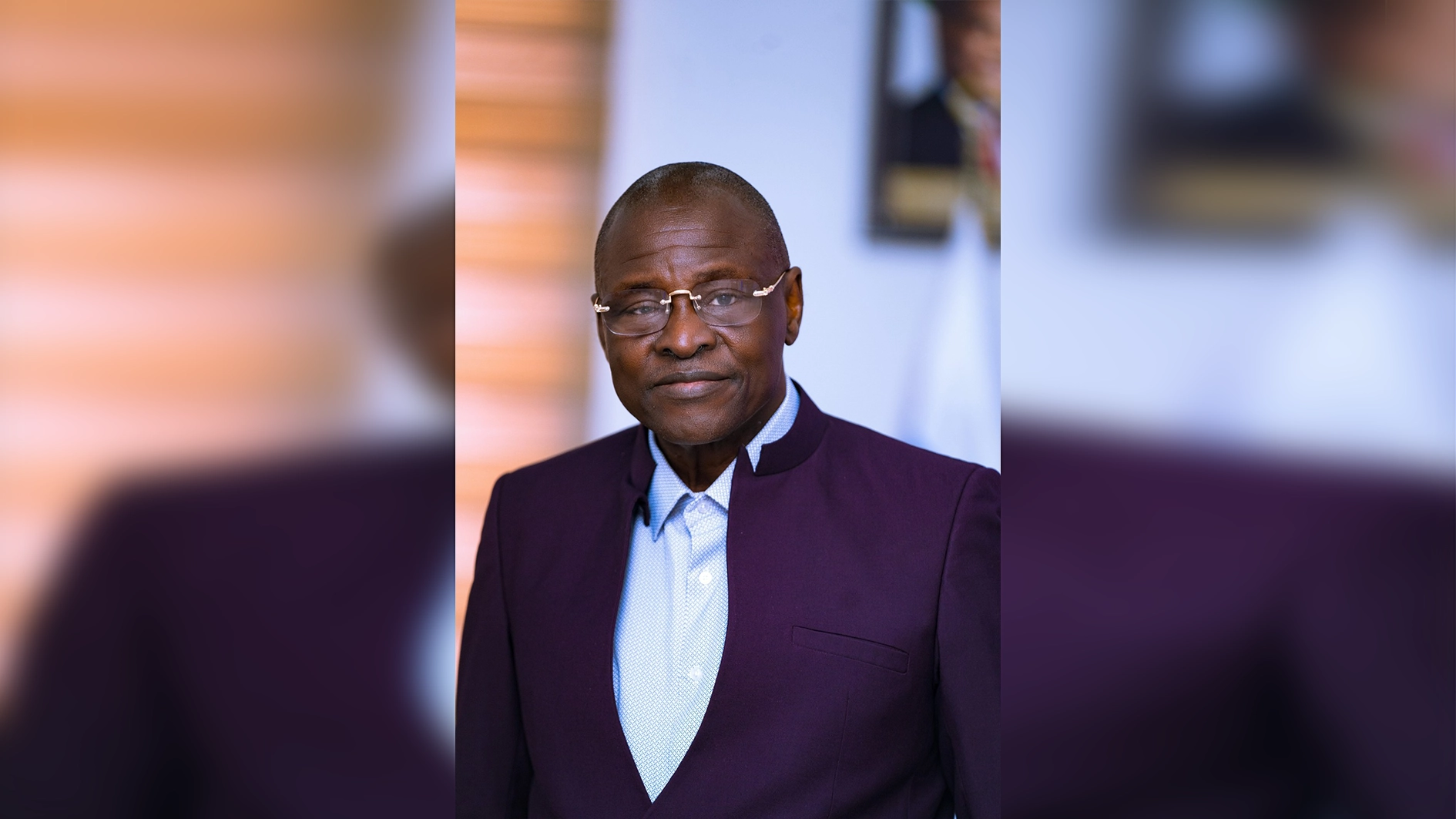
Professor Dilli Dogo has just marked four years as the Vice-Chancellor of Nile University of Nigeria. Prof.Dilli Dogo reflects on his journey so far, the strategies for maintaining quality amid rapid expansion, the institution’s growing impact on Nigeria’s education landscape, and the legacy he hopes to leave behind, among other issues…..
When you assumed office four years ago, what excited you most about the potential of Nile University of Nigeria?
The interesting thing is that I came to Nile University to solve a problem, not to look for a position. I joined Nile University to help set up a world-class College of Health Sciences that delivers top-notch medical education to Nigerians. Within a few months as Provost of the College, we were able to impress the regulators and secure accreditation. And I am happy to tell you that today, Nile University has one of the largest approved admission quota for Medicine. We recently graduated our fourth set of medical doctors and all our graduates are already marketable across the world because General Medical Council (GMC), United Kingdom has already recognized them as well-trained and well-skilled to deliver health services there. Also, our College of Health Sciences has been listed in the World Directory of Medical Schools (WDMS), making our medical graduates eligible for certification by the Educational Commission for Foreign Medical Graduates (ECFMG) in the United States and Canada. So we successfully created a product in this university that can be marketed anywhere in the world, and that is what we try to do with all our offerings.
Unfortunately, in organizations and in life, problems never end. When one problem ends, another one arises. This is why problem-solving is one of the most critical skills of the 21st century and why entrepreneurs, big businesses, and equity companies look for problem solvers; talent that can deliver and propagate whatever they have to sell.
When Honoris United Universities (the first and largest Pan-African private higher education network with 16 institutions in 10 countries) aquired Nile University, we faced a new challenge. At the time, the university was predominantly a municipal institution with students mostly from Abuja and surrounding cities. The challenge was to transform it into a bonafide national and international university.
So, when I was tasked with bringing this ambitious vision to life, I welcomed the challenge. I found it exciting despite the enormous amount of work it would undoubtedly require. From the day I assumed that duty, I must tell you the truth, God has been wonderful and I am grateful to Him.

I have received tremendous support from the Nile University and Honoris leadership teams and community. And the exponential growth and successes we have accomplished since have reflected this.
At the 2025 JAMB policy meeting, Nile University was recognized by JAMB as the third overall best-performing university in Nigeria in the 5th National Tertiary Admissions Performance Merit Awards. We came first in the category of National Spread, as the institution with students from all 36 states of the country and the FCT in both the 2023/2024 and 2024/2025 academic sessions.
Our international profile has also grown remarkably. In 2024, I received over 40 universities from the United States coming to visit Nile University. They were on an African tour. They went to the University of Cape Town, they went to University of Nairobi, and came to Nile University. We were the only university they visited in Nigeria. In the same year, I also received representatives of more than 20 universities from France here on campus.
Every week, I receive requests from universities and companies all over the world seeking partnerships.
For instance, we have partnered with VEGA IT, a human resource provider from Serbia, which has established a centre and runs paid internship programmes here on campus where our students gain practical industry experience and, in some cases, secure employment before graduation.
All of these show that we are delivering on our promise of creating an institution that provides world-class education on par with the best in other parts of the world.
Which of your achievements best represents the direction you envisioned for Nile?
The vision of Nile University, like that of Honoris, is Education for Impact: impacting man and society. Are we achieving that? The honest answer is yes, though we are not yet where we want to be.
One of the clearest signs of that impact is our growth. Since I assumed this role, our student population has more than tripled. But numbers alone don’t tell the full story. What matters is the quality behind those numbers. That is why, for instance, in our newly established Nile Business School, we brought the Dean from Oxford University, to share ideas and embed international best practices into everything we do. We want to produce graduates who can compete and contribute anywhere in the world.
So, at Nile, we never rest on our laurels. We continue to work around the clock to improve on what we are doing and make it even better. And I believe that when Nile University finally arrives at its destination, Nigerians will be proud that right here on the African continent, we built a university that is helping to define Africa in its truest and most ambitious context.
How do you plan to sustain quality with this rapid student expansion?
For those who were here in 2022 when I assumed office, you would have seen that there were just few buildings on campus. In fact, when Honoris took over, there were only three academic buildings. Now we have a STEM laboratory with over 20 laboratories, fully equipped. If you go to our Engineering Faculty, we have expanded. If you go to the College of Health Sciences building, we’ve extended it, adding a state-of-the-art Medical Simulation Centre which is one of the best in sub-Saharan Africa. We have built about six new hostels for male and female students significantly increasing our on-campus housing capacity. We are currently constructing a top-notch Senate Building. Beyond that, we have built an ultra-modern health center to cater to the health care needs of our staff and students. So, we are not sleeping.
We are also rapidly developing our land on the other side of the river. We are constructing additional academic buildings, sports facilities, and housing for both students and staff. Based on demand, we also recently acquired a facility in Lagos to be used as a study centre bringing our high-quality offerings closer to those in that region.
As the population continues to rise, we continue to move effectively to ensure that the quality of the education, student experience, and staff welfare we provide is not only sustained but also improved.
When will your Lagos Study Center become operational?
We are very close. The property is already secured and renovation is currently underway. In fact, my inspection team was there just this morning [Friday, 15th March] to ensure everything is in order, because on Monday [18th March] I am receiving the President of the London School of Economics on campus. Part of what we will be exploring together is offering international degrees in partnership with the University of London, and the Lagos centre is central to that vision.
The centre will be fully functional by the next admission season. Some of our Business School courses are already being offered, but for a study centre to truly serve its purpose, the facilities must be physically present and ready, so that students in Lagos do not have to travel to Abuja for their tutorials. They can simply walk into Nile Business School at Ikeja and access the same quality of education. We will also deploy high-technology teaching mechanisms that allow us to communicate and deliver instruction effectively across locations in real time.
So the vision is clear, the work is nearly done, and we expect the centre to be fully operational very shortly.
How significantly has Nile University of Nigeria influenced the Nigerian education landscape?
One of the things I am most proud of is the relationship we have built with government at every level, because it reflects the trust and credibility we have earned.
On the academic side, we are one of the mentoring institutions for newly approved universities. In fact, a number of prospective University Proprietors have visited Nile University for guidance. That is not something you are appointed to. It is something you earn.
Beyond mentorship, Nile University is currently working with Federal Government Technical Working Group to develop the Centre for Afro- Middle East Development Studies (CAMEDS). When completed it will serve as the Centre for Research on the rich Afro Middle East cultures and economic Integration.
We are also proud to be one of the centres accredited by TETFUND for sponsorship of Academic staff across the country to pursue sponsored Postgraduate studies.
Nile University was appointed by Covenant of Mayors of Sub-Saharan Africa to develop urban lab for management of waste for Abuja Municipal Council.
Additionally, Nile University has developed strong partnerships with a number of Governmental agencies like NASENI, NITDA, NCC, amongst many others, to strengthen institutional output.
The French Embassy also donated a fabrication laboratory (FabLab) and a mini factory to Nile University. The FabLab allows students to design and build prototypes while learning modern manufacturing techniques. The mini factory enables them to convert plastic waste into semi-finished and finished products, giving them hands-on experience in environmental management.
So, I see Nile University as a national asset, because any institution that is genuinely impacting this country deserves to be protected and supported. We will continue to ensure that every Nigerian who passes through here leaves skilled enough to power government policy and help us, together, achieve our objectives as a nation.
What challenges do you encounter in the day-to-day operations of this university?
When you are focused on a journey and your eyes are set firmly on the destination, you don’t even think or bother about the challenges. I can tell you as a leader that every challenge is surmountable if you are determined to overcome it. But if you preoccupy yourself with the challenges, you won’t move forward. If I’m looking for excuses, I have one thousand and one reasons why I should fail, but I’m not looking at that. I came here because I have an objective, and the objective is to set a legacy.
That said, challenges are very real. Anyone living in Nigeria knows this. The key is not to eliminate them, because some challenges simply will not go away, but to innovate around them so they never distract you from your goals. That, to me, is what achievement actually means.
Take student welfare, for example. Our students need pastoral care and genuine mentorship, not just academic instruction. We have invested in systems to support that. It may surprise you to know that when students leave this campus, their parents receive an automatic alert. That is the level of responsibility we have chosen to take on, because we understand that parents are entrusting us with more than just their children’s education.
So yes, there are challenges. But I choose to treat every one of them as a call to work harder and think smarter.
Talking about legacy, what would you want to be remembered for?
I want to be remembered as a person who was requested to transform a university into a world class one, and did that job as expected.
To me, the worst legacy anyone can leave is a legacy of failure, especially when they were given the opportunity and the resources to succeed. Because the truth is that there are countless Nigerians with extraordinary talent who may never get the chance to show the world what they are capable of. Some will go to their graves carrying ideas that were never given a platform. So when opportunity comes, you owe it not just to yourself, but to all those who never got that chance, to make the most of it.
I am 66 years old, and I say this with genuine pride and contentment: what I set out to achieve here is well on its way to being accomplished. This is not me being arrogant, but simply expressing gratitude. Gratitude that I was placed in a position where my abilities could be put to use for something meaningful.
And I pray that God continues to grant me long life, wisdom, and the right people around me, because the work is not finished. The problems of our society and our country are complex, and solving them requires all of us, together, committed to something larger than ourselves.

