 Follow Us on Google News


 Follow Us on Google Discover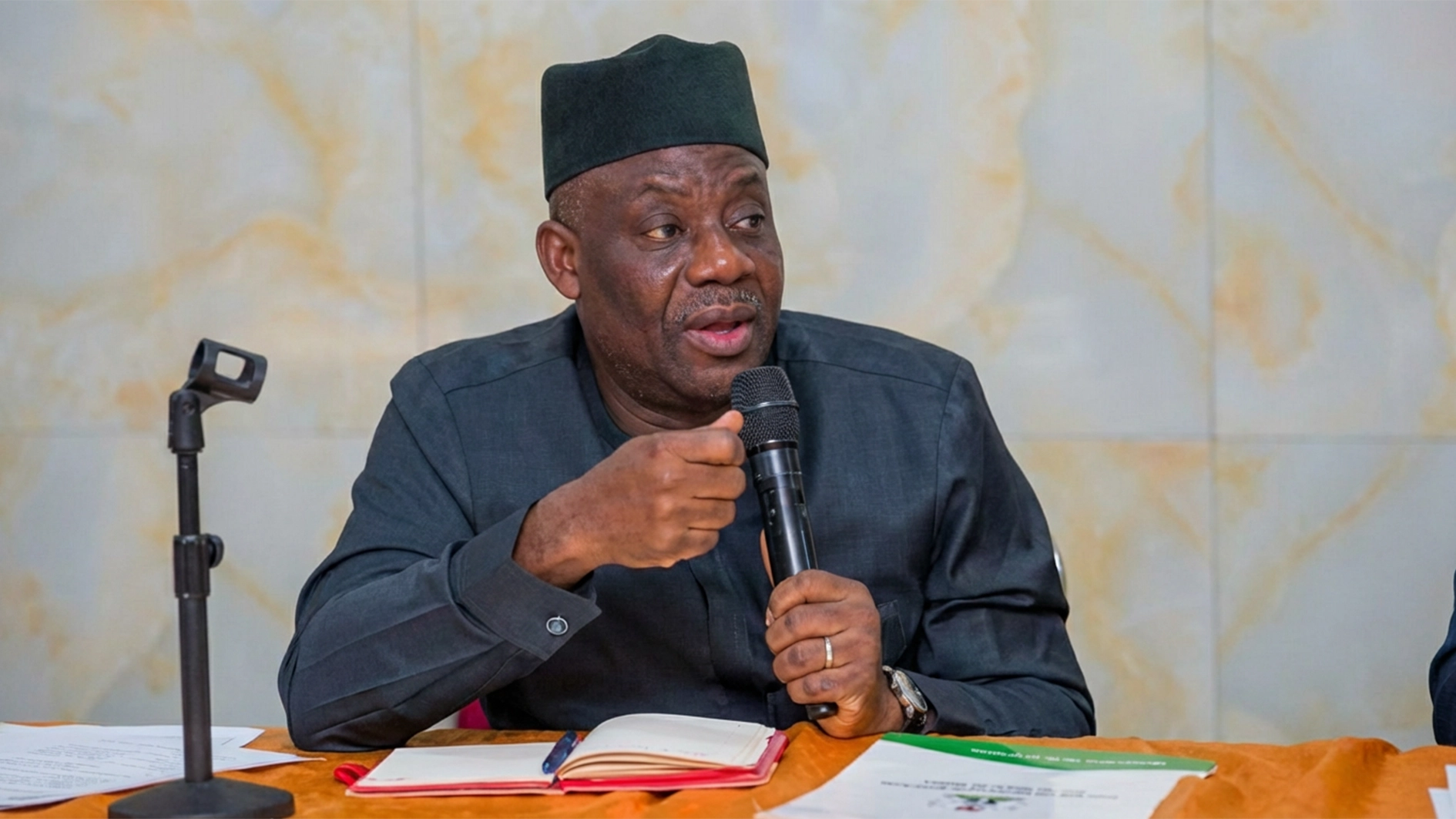
The Federal Government’s decision to scrap the National Language Policy (NLP) has sparked widespread controversy. Stakeholders warned that prioritising English-only instruction could widen educational inequalities, weaken cultural identity, and undermine global best practices, OWEDE AGBAJILEKE reports.
The Federal Government’s decision to scrap the national policy mandating the use of indigenous languages as the medium of instruction in schools has sparked fierce debate across Nigeria’s education and cultural sectors.
Introduced by the former Minister of Education, Adamu Adamu, in 2022, the National Language Policy (NLP) was designed to promote mother-tongue instruction from Early Childhood Education (ECE) to primary six and sought to reposition indigenous languages as foundational tools for learning and cultural preservation.
It proposed that pupils would begin their education in the language of their immediate community, with English introduced as a subject rather than the primary medium of instruction.
While it was relatively successful in some parts of the north, particularly the north-west region, the same could not be said of other parts of the country, as it was hampered by inadequate teacher preparation and deployment for multilingual pedagogy.
Announcing the cancellation at the 2025 Language in Education International Conference, hosted by the British Council, Minister of Education, Dr Tunji Alausa, said the cancellation was approved at the 69th meeting of the National Council on Education in Akure.

He lamented that children have been performing below par in public examinations because they are taught in their mother tongue.
Justifying the decision, Alausa said extensive data analysis and evidence showed that the use of the mother tongue as the primary medium of instruction had negatively impacted learning outcomes in several parts of the country.
He insisted that using the mother tongue language in Nigeria for the past 15 years has literally destroyed education in certain regions.
“We have seen a mass failure rate in the West African Senior School Certificate Examination (WASSCE), Senior School Certificate examination (SSCE) and the Unified Tertiary Matriculation Examination (JAMB) in certain geo-political zones of the country, and those are the ones that adopted this mother tongue in an over-subscribed manner,” he said.
“This is about evidence-based governance. English now stands as the medium of instruction from the pre-primary, primary, junior secondary, senior secondary and tertiary education level.”
The decision might not have been universally accepted by all stakeholders, as revealed at the 2025 extraordinary National Council on Education meeting early this year, when the Minister of State for Education, Prof. Suwaiba Sa’idu Ahmad from Jigawa State, strongly supported the policy.
With this development, Nigeria joins the league of countries where English is the main language of schooling, including Ghana, Kenya, Uganda, Botswana, Zambia, Zimbabwe, Sierra Leone, Liberia, Malawi, Jamaica, Barbados, Trinidad & Tobago, the United States, the United Kingdom, Canada, Australia, and New Zealand, among others.
Experts have called on the Nigerian government to adopt multilingual education policies to address the disadvantages faced by the northern region.
According to education specialists, multilingual instruction not only strengthens foundational learning but also boosts pupils’ confidence, enhances comprehension, and reduces dropout rates.
Research from the United Nations Educational, Scientific and Cultural Organisation (UNESCO) showed that children learn faster and perform better academically when taught in languages they understand.
In the northern states where linguistic diversity is high, and many communities rely on indigenous languages like Hausa, Kanuri, Fulfulde, or minority tongues, they posited that adopting such a system could close long-standing learning gaps.
They also expressed concern that prioritising English as the dominant language of instruction fails to accommodate millions of children whose first language is neither English nor the major language.
To them, by introducing structured multilingual approaches in which learners begin in their mother tongues before gradually transitioning to national and international languages, literacy rates in the North could significantly improve.
Stakeholders also emphasised that multilingual education could help bridge socio-economic disparities by making schooling more inclusive, especially for rural learners and out-of-school children.
With the North currently accounting for a large chunk of the 18 million out-of-school children in the country, experts noted that language-sensitive policies would play a crucial role in re-engaging learners and supporting long-term national development.
They insisted that if Nigeria truly seeks equitable, quality education for all, embracing multilingualism in its classrooms is not just desirable but essential.
With Nigeria already grappling with a staggering 24 million school dropouts, observers warned that this might further entrench poverty, limit economic productivity, and weaken the country’s long-term human capital development.
Reacting, the Founder and Chief Executive Officer of Prakis Educational Services, Prof. Aderemi Obilana, has called on the Education Minister to immediately reinstate the 2022 National Language Policy.
Obilana, who also serves as a visiting professor at the University Institute of Applied and Human Sciences in the Republic of Chad, urged the federal government to emulate countries such as China, Singapore, South Africa, and Finland, where indigenous languages are effectively integrated into the education system.
In a statement personally signed by him and made available to The Guardian, Obilana faulted the suspension of mother tongue as a medium of instruction in schools as premature, unfounded, and harmful to Nigeria’s cultural and educational development.
He faulted the Minister’s reference to poor student performance in WAEC, NECO, and UTME examinations as a basis for the cancellation, insisting that the decision was not only misleading, but also failed to reflect global research and best practices in education
He noted that, contrary to the minister’s position, substantial evidence shows that children taught in their mother tongue during foundational schooling develop stronger reading comprehension skills.
Mother Language Day reaffirms that instruction in indigenous languages enhances learning outcomes and cognitive development.
Speaking further with The Guardian, he said several educational studies have shown that pupils who begin learning in their indigenous language perform better in literacy and numeracy than peers taught solely in a foreign language.
“The minister should bear in mind that abolishing the National Language Policy could affect the loss of our cultural identity. UNESCO observed that encouraging children to learn in their indigenous language leads to higher levels of self-esteem and pride in their cultural heritage. It is important to preserve and promote our indigenous language; otherwise, it will erode our culture and identity. We should take inspiration from nations like China, Singapore, Finland, and South Africa. In South Africa, there are various educational materials available in the country to promote the teaching of indigenous languages.
“As Africans, we need to decolonise our mindsets. Even though the English language is the most accepted worldwide, it does not mean that we should promote colonialism. Several countries around the world use their indigenous languages as mediums of instruction, and they excel in education, science, technology, finance, and other fields.”
He appealed to the minister to reverse his decision and make resources available for the implementation of the National Language Policy.
“The government should empower the teachers through various continuous professional development programmes, while the education ministry should adopt a student-centred approach for schools, not a teacher-centred approach.”
The Initiator, Creative Change Centre, Omole Ibukun, described the reversal as a ‘national mishap’ that could derail long-term learning outcomes for Nigerian children.
According to him, the poor student performance cited as justification for scrapping the mother-tongue-based policy does not reflect the failure of indigenous-language instruction, but rather the failure to implement the policy effectively.
“There was no teacher retraining, no curriculum redesign, no learning materials in indigenous languages, and no monitoring of schools,” Ibukun noted. “A policy cannot succeed when it is abandoned even before implementation.”
He argued that global evidence in psycholinguistics and educational psychology overwhelmingly supports early learning in a child’s first language, stressing that reversing the policy prematurely “threatens developmental outcomes more than it solves them.”
He also pointed to international examples like Kenya, Tanzania, Ethiopia, Rwanda, Tunisia and South Korea, where countries have strengthened national competitiveness by grounding education in local languages before transitioning to global languages.
“Nations do not become competitive by speaking English earlier,” he said. “They become competitive by thinking deeply in languages that carry their conceptual frameworks, then translate that knowledge outward.”
He maintained that a more effective approach for Nigeria would have been to fund teacher training for mother-tongue instruction and invest in indigenous-language textbooks and digital learning tools. A blended model, he suggested, could use mother tongues for early foundational learning and English for advanced academic development. He, therefore, urged the government to rescind the decision, warning that policy inconsistency in the education sector carries long-term consequences for national development.
Also speaking with The Guardian, a biotech executive from the United States, Dr Adeboye Adewoye, accused the government of yielding to colonial influence and ignoring structural failures within the education system.
He faulted the minister’s claim that the policy “destroyed education in certain regions,” describing it as “depressing, ironic and historically inaccurate.” He posited that the failure of the policy was due to the government’s refusal to implement it properly, rather than any inadequacy of indigenous languages.
He recalled that Nigeria’s colonial history involved the systematic suppression of indigenous languages, adding that echoes of that mindset persist today. “The idea that only English is fit for a nation of over 200 million Black people remains intact,” he stated, arguing that the minister had “internalised and repeated colonial myths.”
Adewoye linked the policy reversal to a broader trend, referencing the 2024 decision by the National Assembly to replace the national anthem written by a Nigerian with the colonial-era anthem authored in Britain. He described these actions as signs of a “Nigeria Last” approach to policy-making.
Adewoye further urged policymakers to revisit the work of the late Professor Babatunde Fafunwa, an eminent Nigerian educationist who championed the use of Nigerian languages as the cornerstone of early childhood education.
He stressed that scholars like Fafunwa demonstrated the pedagogical benefits of indigenous language instruction but were consistently undermined by proponents of English dominance.
“With no teacher retraining, no curriculum redesign, no learning materials in indigenous languages, and no monitoring of implementation, the mother-tongue policy was abandoned before it even began,” he said.
As debates intensify, education experts are calling for a transparent review of data, proper piloting of language-based instruction, and a national strategy that balances global competitiveness with cultural preservation. Critics warn that ignoring Nigeria’s linguistic heritage could have long-term consequences for identity, learning outcomes and national cohesion.

