 Follow Us on Google News
 Follow Us on Google Discover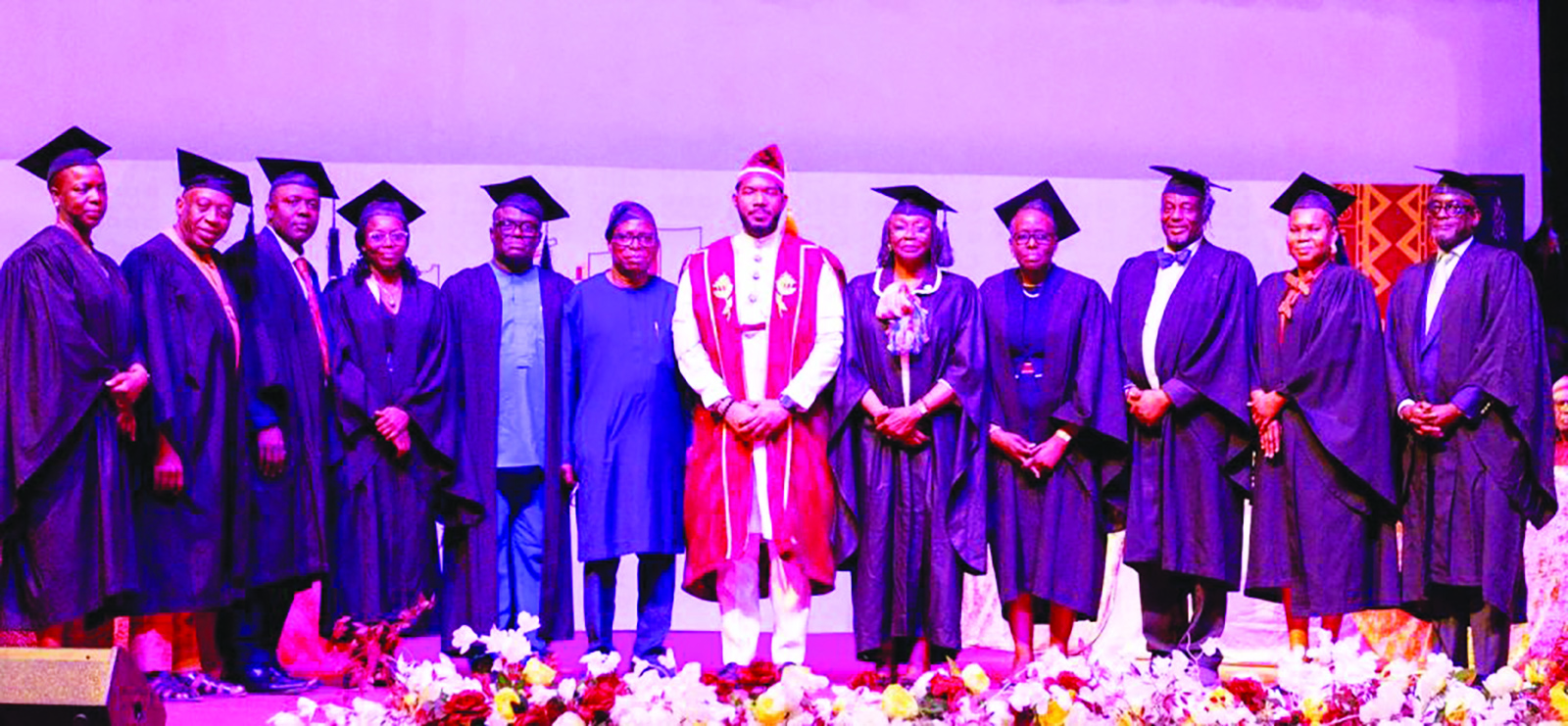
Founder of Slum2school Africa, Orondaam Otto, has emphasised the need for urgent education reforms to ensure that the country’s youngsters are empowered with quality learning to thrive and compete globally.
Otto, who made the call in his Convocation Lecture at the University of Lagos (UNILAG), stressed that a Nigeria where the working-age population is larger than its dependent population can only happen when people are educated, healthy, and productively employed.
In the lecture titled: ‘Maximising Nigeria’s demographic dividend through urgent education reform for global competitiveness in the 21st century,’ noted that demographic dividend, a period where a country’s working age population is larger than its dependent population, is not a guarantee, but rather a possibility that can be achieved through deliberate education reforms.
He noted that being globally competitive in the 21st century means that Nigeria is no longer educating its children to survive locally, but to compete globally.”
“This means that we’re in a world where every child we educate in Lagos would compete with a child in Boston, Massachusetts, and this is no longer about titles, but competence,” he noted.
Otto reiterated that Nigeria’s population could become either its greatest asset or a cause of instability, depending on how the education system is designed.

For Nigeria to turn its youthful population into its greatest source of prosperity, he proposed a national education vision, protected by law, that would institute 15 years of compulsory education, transform schools into centres of excellence, reposition teaching as Nigeria’s most elite profession, and standardise the national curriculum, among others.
According to him, “Nigeria’s greatest weakness in education is not lack of effort or policy documents, but lack of continuity, coordination, and legally protected national direction. We plan education on four- to eight-year political cycles, while education itself unfolds over generations. That contradiction quietly sabotages every reform attempt.”
He added that such a vision cannot be written in Abuja alone, but must be born of national consensus by traditional councils, religious leaders, educators, labour unions, the private sector, and political leaders across party lines.
Otto decried changing Nigeria’s education system from 6-3-3-4 to 9-3-4 formula. This, he noted, includes nine years of basic education, consisting of six years of primary education, and three years of junior secondary education, followed by three years of senior secondary education and four years of tertiary education.
However, he said that in law, only the first nine years are compulsory and enforceable.
“Senior secondary education remains optional, unevenly funded, and weakly regulated. That legal gap alone already fractures our demographic future,” he noted.
Otto stressed that the future of a nation does not first sit in parliament or boardrooms, but in a primary classroom, listening to the voice that stands in front of it. He noted that who teaches a Nigerian child should matter to all stakeholders, as teachers shape a child’s future.
Comparing Nigeria’s teaching profession with other countries, he said, “In Finland, teaching is a highly selective profession, often requiring a master’s degree and admitting only the top 10 per cent of applicants. France mandates a teaching master’s and competitive national exams, while Portugal, Italy, and Spain all require postgraduate training and formal professional licensing,” he stressed.

