The recent change in ownership at Geregu Power Plc has reignited debate on the imperative of corporate restructuring to improve power supply for consumers. Hence, the exit of Femi Otedola through the divestment of his controlling interest and the emergence of MA’AM Energy Limited as the new ultimate owner is being closely watched, not in lieu of its novelty, but because of what it reveals about the place and limits of ownership changes in the power sector loop, KINGSLEY JEREMIAH reports.
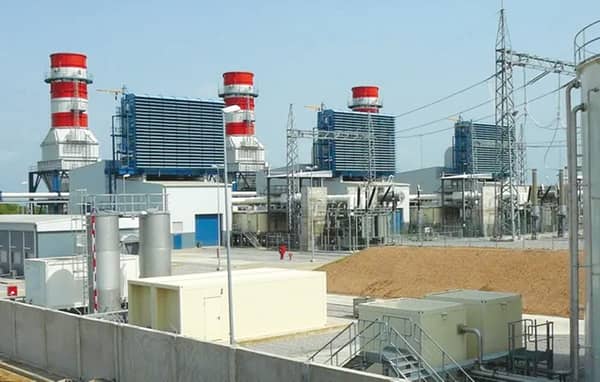
Geregu Power is not just another listed company. Valued at about N2.85 trillion and supplying roughly 10 per cent of electricity to the national grid, it is a systemically important generation asset.
A shift in its control, therefore, raises questions that extend beyond shareholders to encompass regulation, political exposure, market liquidity, and ultimately, whether Nigeria’s electricity crisis can be resolved through transactions at the top of the value chain.
The questions are especially pressing given the grim state of power generation nationwide. According to the Nigerian Electricity Regulatory Commission (NERC), more than 62 per cent of Nigeria’s grid-installed generation capacity was unavailable in 2024. Out of a total installed capacity of 13,625 megawatts (MW), only an average of 4,853.69 MW was available daily, translating to a plant availability factor of just 37.43 per cent.
The chronic underperformance is not a temporary setback but a structural issue. The national grid collapsed nine times in 2024 alone, bringing the total number of collapses between 2020 and 2024 to 26. These failures point to systemic fragility rather than isolated operational errors.
NERC attributes declining generation availability to ageing infrastructure, persistent liquidity constraints and unreliable gas supply.
As of December 31, 2024, the average power plant in the Nigerian Electricity Supply Industry (NESI) was 22 years old. Many units suffer frequent unscheduled outages due to obsolete equipment and inadequate maintenance. Yet the underlying cause of these maintenance failures is financial rather than technical.
Generation companies (GenCos) are unable to recover their costs because distribution companies (DisCos) consistently underpay for electricity supplied, while government subsidy reimbursements are delayed or incomplete. Without predictable cash flows, GenCos struggle to conduct routine maintenance or rehabilitate units that were already in poor condition at the point of privatisation.
Against this backdrop, the takeover of Geregu Power raises a central question: can a change in ownership overcome constraints rooted in market design?
According to filings with the Nigerian Exchange, the transaction was executed through the sale of Otedola’s 95 per cent stake in Amperion Power Distribution Company Limited to MA’AM Energy. Amperion is the majority shareholder in Geregu Power, meaning the deal transferred indirect control of about 77 per cent of Geregu’s issued share capital. Completed on 29 December 2025 and reportedly valued at about $750 million, the deal did not involve a direct transfer of Geregu shares on the exchange but resulted in a complete change in beneficial ownership.
From a capital markets perspective, the deal confers a valuation signal. It confirms Geregu’s status as one of the most valuable power generation assets in Nigeria and serves as a reference point for investors in assessing the company’s intrinsic worth. However, valuation validation should not be mistaken for operational improvement.
A high transaction price does not resolve gas shortages, grid instability or payment arrears.
Geregu’s installed capacity stands at 435 MW, but like other GenCos, its ability to generate and monetise power is constrained by factors beyond its control. Grid limitations, dispatch restrictions and liquidity shortfalls in the electricity value chain mean that demand alone does not guarantee revenue. In this context, expectations that the takeover will automatically translate into higher generation or improved national supply are misplaced. However, the changes matter and have the potential to significantly alter the dynamics.
MA’AM Energy is an indigenous integrated energy company with interests spanning generation, trading and electricity supply. In theory, such vertical integration could reduce exposure to some operational risks, particularly gas supply disruptions and market volatility. An owner with broader interests across the value chain may be better positioned to manage contractual relationships and optimise dispatch.
However, integration does not insulate a GenCo from the structural failures of the Nigerian Electricity Supply Industry. Payment indiscipline, regulatory lag in tariff adjustments and foreign exchange exposure remain systemic problems. No ownership structure can compel distribution companies to pay fully, nor can it stabilise a grid that collapses repeatedly due to weak transmission infrastructure.
The appointment of former Zamfara State Governor, Abdulaziz Yari, as chairman of Geregu’s board introduces a layer of political exposure that investors cannot ignore. While political connections are often defended as useful for navigating regulatory environments, they also raise governance and perception questions in a sector already burdened by policy uncertainty.
For minority shareholders, the issue is not political affiliation per se, but whether board independence and fiduciary discipline will be strengthened or diluted. Nigeria’s power sector has a long history of blurred lines between politics and commercial decision-making.
The acquisition was financed by a consortium of Nigerian banks led by Zenith Bank, reflecting continued domestic banking interest in the power sector. While this indicates lender confidence in Geregu’s cash-generating capacity, it also highlights the concentration of financial risk in the banking system.
Although the transaction occurred at the holding-company level and does not automatically increase Geregu’s leverage, the long-term implications depend on how the new owners structure debt, dividends and capital expenditure. Investors will be alert to any attempt to upstream cash from Geregu to service acquisition-related obligations or to fund expansion elsewhere in the group.
In a sector where many GenCos already operate under tight liquidity conditions, any additional financial pressure could undermine maintenance spending and operational reliability.
Geregu Power has historically been one of the Nigerian Exchange’s more consistent dividend-paying stocks, distributing an average of about N20 billion yearly. This has made it attractive to income-focused investors in a market with limited defensive assets.
However, dividend continuity may not be guaranteed under new ownership. The Nigerian power sector requires significant reinvestment to address ageing infrastructure and improve reliability. Retaining earnings for capital expenditure may be economically rational, even if it disappoints shareholders in the short term.
A reduction or restructuring of dividends would not necessarily signal weakness, but it would test investor confidence, and raise questions about the balance between shareholder returns and long-term asset sustainability.
The broader question remains unresolved: Can transactions like Geregu’s takeover significantly improve Nigeria’s electricity supply? The evidence suggests that ownership change alone is insufficient. Without deep reforms in tariff setting, payment discipline, transmission infrastructure and gas supply security, even the best-run generation companies will remain constrained.
The Geregu transaction underscores the increasing importance of domestic capital in Nigeria’s infrastructure sector, particularly at a time when foreign investment remains cautious. While this reduces reliance on external funding, it also concentrates risk locally and places greater responsibility on regulators to enforce discipline across the value chain.