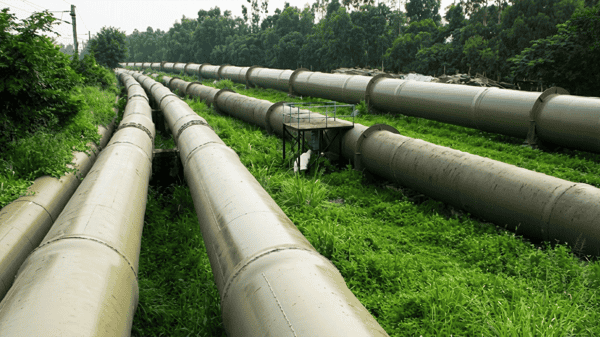
Despite delivering the highest volume in its 30-year history, the West African Gas Pipeline Company (WAPCo) said the region’s cross-border gas network still operates at less than half of its 470 million standard cubic feet per day (mmscf/d) capacity.
The development shows West Africa’s deep energy deficit and reliance on Nigeria’s gas to sustain electricity supply from Lagos to Lomé and Accra.
WAPCo’s Managing Director, Abiodun Abodunrin, during a media parley, said the bi-directional pipeline, which now allows gas flows from both Nigeria and Ghana, is the backbone of electricity generation in Benin, Togo and Ghana.
He added that any disruption to operations could trigger immediate power shortages across the three countries, highlighting the fragility of regional energy security.
As of November 2025, the company delivered an average of 217 mmscf/d, and it expects to close the year at 218 to 220 mmscf/d, the highest throughput since operations began.
Yet, with more than 250 mmscf/d of unused capacity daily, WAPCo noted that West Africa continues to experience avoidable electricity shortages.
“On our best days, we are only utilising around 40 per cent of the pipeline’s capacity; meanwhile, populations across the region are growing faster than the energy available to them.”
Abodunrin highlighted the need for a harmonised fiscal and regulatory framework across the four countries to attract private investment for growth.
He revealed that Benin has passed its amendment to the fiscal and regulatory framework, while Nigeria has submitted an executive bill to the National Assembly. Togo and Ghana are still in the parliamentary stages.
“This framework underpins regional gas trade. Without clarity on regulations and fiscal terms, investors will not commit to expansion, and West Africa’s energy growth will remain constrained,” he said.
While Nigeria remains the dominant supplier, Abodurin noted that the company has increasingly become bi-directional, allowing gas from Ghana’s Takoradi fields to flow into the network. WAPCo’s near-term focus is to grow supply and better utilise the pipeline infrastructure, particularly for power generation companies across Nigeria, Benin, Togo and Ghana.
“We now have the flexibility to take gas from anywhere in the region and deliver to anywhere in the region.
That’s something that has happened. So, we will see that our initial display, right, we want to be an international company that transports natural gas across these four countries in a safe, responsible, and reliable manner to create value for our diverse stakeholders. That includes our shareholders and stakeholders in the four countries where we operate. And I’m sure you all know that energy is fundamental to life,” he said.
He stressed that it’s not growth for the sake of growth, as it must deliver value to shareholders and ensure reliable energy to the region. He explained that maximising pipeline use will be critical to meeting West Africa’s expanding energy needs.
WAPCo also warned against the risks posed by illegal sand mining along Nigeria’s pipeline right-of-way. The MD emphasised that these high-pressure gas lines are far more vulnerable than oil pipelines and that a rupture could have catastrophic consequences.
The January 2025 offshore pipeline inspection, involving full cleaning and diagnostics across four countries, was completed on time and within budget. Preliminary results confirmed that the line remains in good condition, despite some sections approaching 30 years of service.
Safety remains the company’s top priority. WAPCo reported over 13 million man-hours and 11 years without a lost-time incident, and this year alone, achieved nearly one million man-hours without any safety accidents.
WAPCo’s board, including the General Manager, Abubakar Bello Gwadabe, has set targets to surpass 2025 volumes in 2026 and begin positioning the pipeline toward full utilisation of its 470 mmscf/d capacity. Long-term plans include potential expansion to accommodate growing gas availability in Nigeria and Ghana and rising electricity demand across the region.