
• Scholars’ hail move as ASUU, ASUP fault FG
• Students seek review of process of accessing facility
Stakeholders were yesterday divided over the students’ loan bill signed by President Bola Tinubu. While some lauded the move and described it as a step in the right direction, others, including university and polytechnic lecturers, kicked against it.
Eminent scholars and students, under the aegis of National Association of Nigerian Students (NANS) as well as National Association of Polytechnic Students (NAPS) commended Tinubu for the gesture.
They, however, expressed reservations over the repayment terms, considering the high unemployment rate in the country.
But the Academic Staff Union of Universities (ASUU) and Academic Staff Union of Polytechnics (ASUP) faulted the move, describing it as discriminatory between the children of the rich and the poor.
The bill, sponsored by immediate past Speaker of the House of Representatives, Femi Gbajabiamila, was passed by the National Assembly in November 2022.
The bill allows Nigerian students in tertiary institutions to access interest-free loans from the Nigerian education loan fund.
The legislation provides for the establishment of the Nigerian education bank, which will have the power to administer, supervise, coordinate and monitor the management of student loans in the country.
Based on the provisions of the legislation, the bank is expected to receive applications for student loans through higher institutions on behalf of the applicants and screen them.
Former Head of state, Yakubu Gowon, introduced federal student loans in the 1970s with a payment period of 20 years. The decree gave students funds for their tuition, dues, and other expenses approved by their schools. Few years later, the government began to push for “cost-reflective tuition,” which culminated in the Ali Must Go protest of 1978 over increased tuition.
According to the Act, the loans cover only tuition and are paid directly to the universities. It does not cover accommodation and living expenses. Besides, Nigerians who take student loans are expected to start paying two years after completing the National Youth Service Corps (NYSC).
Former Vice Chancellor, Bells University of Technology, Ota, Prof. Adebayo Adeyemi, described the bill as the best that has ever happened to the country’s education sector.
Adeyemi said the move would enable indigent students to access education with a hope for a better future.
He said: “A couple of months ago, shortly before the last Unified Tertiary Matriculation Examination (UTME), I went to address a group of prospective undergraduates and I was deeply moved by a question from one of the participants, a tiny but brilliant girl who asked what’s the hope for someone like her from a poor home desirous of university education to probably study medicine? I felt for the poor girl, as her parental economic status was feasible. The only response I could give was to counsel her and those in her shoes to work hard, be prayerful and hopeful.
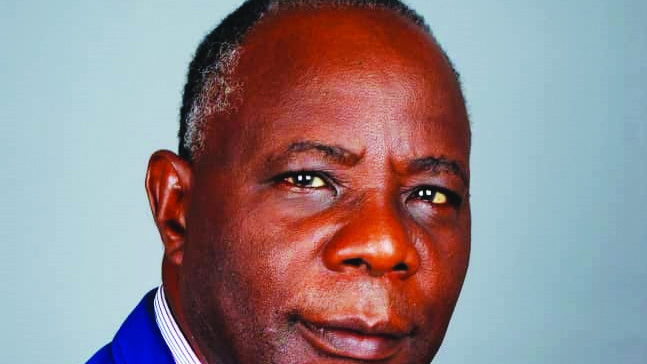
Adeyemi
“I learnt a couple of days ago that the girl has gained admission to the university. It is my belief that the recently signed bill is an answer to prayers.”
On the stance by ASUU that the Act may take education beyond the reach of indigent students, Adeyemi reminded that education is not free and must be paid for to ensure excellent service delivery and productivity.
The Professor of Food Science and fellow of the Nigerian Academy of Science, pointed out that in some developed countries, student loan facilities have been sustained over the years and have contributed to quality education, as well as been a source of attraction for Nigerians.
The former vice chancellor noted that the scheme would give institutions enough funds for proper planning, execution of projects and availability of facilities that would enhance quality education.
He added that the facilities would discourage students from fomenting trouble; as they would be determined to complete their studies in good time and get into the labour market to enable them to offset their loans.
However, he appealed to the government to ensure that checks and balances are built into the system by the body that would administer the loan.
Adeyemi cautioned that the peculiarities of the Nigerian environment must be evaluated in respect of loan disbursement and recovery, and sustainability on recovery so that the scheme does not end up like the “People’s Bank.”
A former Deputy Vice-Chancellor (DVC) at the Bayero University, Kano (BUK), Prof. Abdul Usman, said the scheme would boost the nation’s educational system and assist indigent students to access tertiary education.
Usman, however, noted that the ultimatum for repayment is not feasible, considering the unemployment statistics. As we all know that there is no work anywhere and most graduates don’t get work immediately, how will they pay back? How will it work when most of our graduates do not get jobs? Is there any plan or opportunity for those that have no work two years after the National Youth Service Corps (NYSC)?.
Similarly, NANS described the loan scheme as a solution to the age-long problems affecting the country’s education system.
The Coordinator, NANS, Zone D, Adejuwon Emmanuel, however, faulted the repayment terms and called for a review.
Polytechnic students also lauded Tinubu for the feat, describing it as a significant stride towards ensuring equal access to quality education for all citizens.
The group, led by Anidi Samuel, used the opportunity to appeal to the president to assent to the Bsc/HND dichotomy bill, to abolish the long-standing discrimination between polytechnic and university graduates.
Samuel said: “The scheme will create unprecedented opportunities for talented and deserving indigent students, enabling them to fulfill their aspirations without the burden of financial constraints.”
By providing interest-free loans, the government has paved the way for the marginalised to access quality education, empowering them to contribute meaningfully to the development of Nigeria.
Some students across federal and state universities and polytechnics have expressed divergent views about the bill. While some commended the President for coming to the rescue of the less-privileged who couldn’t afford higher education, others insisted that before it could be generally accepted as a true blessing for Nigerian students, some sections must be reviewed.
Commenting, a 200-level student of Mass Communication at the University of Ilorin (UNILORIN), Faramade Victor, said he found the student loan pleasing, as it would help accessing tertiary education.
He, however, expressed concerns for students who may want to access the loan, but couldn’t meet the requirements as spelt out in the Act.
Similarly, Omolola Dorcas of the same institution, expressed concern over the repayment process despite the unavailability of jobs graduates from higher institutions face yearly.
She noted that many students might face difficulties in repaying the loan within the stipulated time, if they are unable to get jobs.
Olorunfemi Babatunde, a 300-level Political Science student at the Obafemi Awolowo University (OAU), Ile-Ife, urged the government to ensure that all the promises made regarding the policy are achieved.
He hailed the government for its decision and commitment to give students loans without adding interest.
Babatunde said to sustain the programme; the government needs to provide jobs so that many do not default, while repayments are done within the stipulated time.
He said: “The student loan Act is a very good initiative and I see it as what university autonomy will bring. With this, school fees in public universities would no longer be subsidised.
A student of Moshood Abiola Polytechnic (MAPOLY), Abeokuta, Salimon Quadri, expressed excitement over the development, saying indigent students who have dropped out of school because of financial challenges would no longer have reasons not to go to school.