Twelve months into the Lagos State Electricity Law, households and businesses are still grappling with unreliable supply, rising energy costs, and heavy dependence on self-generation. Despite structural reforms and the establishment of state-level regulatory mechanisms, the lived experience of many Lagosians suggests that meaningful relief remains a mirage.
One year after the Lagos State Electricity Law came into force, the promise of a decentralised, efficient, and consumer-responsive power market remains only partially fulfilled. While the law created an ambitious blueprint for generation, distribution, and regulatory autonomy, the pace of implementation has been uneven, revealing deep gaps between legislative intent and operational reality.
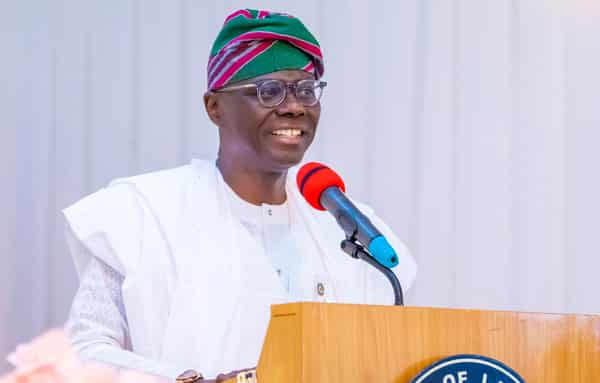
However, there has been some developments based on the law. Weeks after Governor Babajide Sanwo-Olu promulgated the law, the Lagos State Electricity Regulatory Commission (LASERC) was fully constituted, with commissioners and oversight officials appointed to lead the new regulatory framework. Early this year, the state government moved quickly to mobilise private-sector participation, advancing plans for off-grid and embedded generation projects as part of its broader strategy to expand capacity and diversify supply sources.
This momentum culminated in June 2025, when LASERC issued Order No. LASERC ORDER/001/2025, activating the regulatory framework and formalizing the transition of oversight responsibilities from the Nigerian Electricity Regulatory Commission (NERC). By July 2025, the shift was complete with Lagos assuming full control of its electricity market, and distribution companies operating within the state were instructed to restructure by establishing Lagos-specific subsidiaries capable of functioning under the new LASERC-supervised market environment. It was, however, learnt that the board of the Lagos State Electricity Regulatory Commission was recently dissolved.
Speaking on the law, experts expressed optimism about the likely impact of the bill, but raised concerns that the bill does not adequately address the state’s reliance on outdated national infrastructure, as the state will still depend on obsolete systems for electricity distribution. They also noted that the bill lacks provisions for crucial alternative energy sources, such as waste-to-energy programmes and solar thermal systems as well as its commercial framework lacking clarity. They also maintained that to achieve the desired goals, the implementation requires massive investments in infrastructure and technology.
A review of the bill by the National Institute for Legislative and Democratic Studies sighted by The Guardian, observed that the proposed commercial framework under the bill is unclear.
The institute said: “The bill envisions a competitive Lagos electricity market. However, for a market to be truly competitive, the retail tariff must be reflective of a return on investment. Determining a reflective tariff requires consideration of all factors contributing to electricity supply costs. This raises questions about the affordability of cost-reflective tariffs for Lagos residents, given Nigeria’s prevailing economic situation. Furthermore, implementing the bill, once enacted, will incur significant costs due to the need for massive investments in infrastructure, technology, human resources, and the establishment of structures at the state level.
“The bill also contemplates the creation of a Lagos electricity market, which may encroach on the licences of existing distribution companies. Notably, Eko and Ikeja DisCos operate within clearly defined boundaries based on their subsisting licences.”
Nevertheless, the institute acknowledged that the Lagos State Electricity Bill is a timely proposal aimed at deepening economic development and enhancing energy sustainability in the state.
“The bill faces challenges regarding potential conflicts within the regulatory framework of the Lagos electricity market, practical implementation and enforcement of its provisions, as well as the required capacity and infrastructure.”
The institute, therefore, recommended that Lagos State conduct a comprehensive appraisal of its electricity market and network infrastructure, along with detailed technical and commercial feasibility studies, to prepare for the full implementation of the bill once it is enacted into law.
Commenting on the bill, Peter Oluseyi, Professor of Electrical Engineering at the University of Lagos, described the bill as commendable, showcasing Lagos State’s reputation as a progressive and forward-thinking entity. He expressed optimism that the bill would herald an era of sustainable electricity supply in the state. “If the same energy that has been invested in previous policies is applied to the implementation of this bill, then better days are ahead for electricity users in Lagos,” he said.
Similarly, Chief Sunday Oduntan, CEO of the Association of Nigerian Electricity Distributors (ANED), praised the bill as a step in the right direction. He noted that it would enable Lagos to regulate electricity generation, transmission, supply, and distribution, thereby increasing power availability. However, he cautioned that legislation alone would not resolve the sector’s challenges, emphasising the need for significant investment.
Prof Adeola Adenikinju, Director of the Centre for Petroleum, Energy Economics and Law at the University of Ibadan, echoed similar sentiment. He described the bill as crucial to alleviate energy and economic poverty in Lagos, where businesses and residents are eager for a stable power supply.
In its current form, the bill provides for establishing several new institutions and policies around the state’s energy sector. These include the Lagos State Electrification Fund, Lagos State Electricity Regulatory Commission, Host Communities Development Trust Fund, Lagos State Electrification Agency, Lagos Independent System Operator (Lagos ISO), Off-Grid Electrification Strategy and Action Plan, and the Lagos Integrated Electricity Policy and Strategic Implementation Plan, among others.
Among its provisions, the bill stipulates that within six months of its enactment, the state, through the Ministry of Energy in consultation with the Lagos State Electricity Regulatory Commission and other relevant stakeholders, must develop and publish the first edition of the Lagos Integrated Electricity Policy and Strategic Implementation Plan to guide the overall development of the Lagos Electricity Market.
Additionally, the bill mandates that any entity involved in regulated activities or operations in Lagos State before the bill’s commencement must apply for a licence from the commission within three months of its enactment. It also requires the commission to develop a transfer scheme within 18 months for separating and transferring the assets of the existing distribution company to a subsidiary company, which will inherit all existing agreements where the distribution company is a beneficiary.
“At the end of the transitional period, no licensee shall engage in the generation, trading, supply, transmission, or distribution of electricity. It shall be an offence to supply electricity without a meter,” the bill states.
Provisions for renewable energy are also included, with the bill requiring the state to develop a Renewable Energy, Energy Efficiency, and Demand Side Management (DSM) Strategy and Action Plan within 18 months of its enactment or an extended period approved by the governor. It further mandates that electricity-generating plants in the state using distillates as fuel must transition to gas or renewable energy sources within a transition period of no less than six months and no more than 24 months from the regulation’s effective date.
Moreover, the bill stipulates that power-generating companies licensed by the commission must allocate two per cent of their yearly operating expenditure from the preceding financial year to developing their respective host communities.
It also provides that any licences, permits, or other authorisations held by pre-existing licensees for electricity-related activities or installations before the bill’s commencement will remain valid for their existing duration. These will be deemed to have been issued under the relevant provisions of the bill, with necessary modifications to align with the state’s electricity policy objectives.
On whether the law can stimulate the necessary investment for the state electricity market, Oduntan expressed confidence in Lagos State’s ability to succeed in this area. “To attract investors, particularly foreign direct investment, we must create an enabling environment, which I believe Lagos State has. However, investors must also be assured they can recoup their investments. This means preparing people’s minds for the realities of pricing. The cost of producing electricity is not cheap, and end users must be ready to pay for it.”
When asked about potential gaps in the law, Oduntan argued that no law is perfect and highlighted the possibility of amendments. “For a start, what they have is sufficient to begin the journey. This bill represents the start of a journey toward achieving constant electricity supply in Lagos. The key is ensuring that the implementation is sound and that the environment is conducive for investors to thrive, as this will attract more investment.”
Oluseyi, however, identified a gap concerning electricity provision for rural communities. “Of great concern is that Lagos State has yet to build or initiate the construction of state-owned power facilities such as generation units and distribution lines/feeders. This suggests that the state electricity market will still rely on the existing national infrastructure, which is obsolete and grossly inadequate in capacity.
“For instance, many customers today are still served estimated electricity bills rather than metered bills. No electricity company can survive on such a financial framework.”
Oluseyi also pointed out that the bill does not adequately address waste-to-energy programmes. “The waste-to-energy programme is a viable source of energy. While it may not contribute a large quantum of energy, its small contribution can still make an impact. Similarly, solar thermal systems should be entrenched in the bill to provide alternative means of heating for water heaters, boilers, and similar applications. This technology is not yet available in Nigeria, but smaller African countries such as Ghana, Uganda, and Namibia use it to reduce dependence on electricity for heating. As you know, heating processes consume significant amounts of electricity.”
Attempts to get the state government to speak on the developments and challenges implementing the law one year after including why Lagos State Electricity Regulatory Commission board was dissolved were not successful.
While other state government officers contacted declined comments, the Commissioner for Energy and Mineral Resources, Biodun Ogunleye, asked that questions be sent to him but he was yet to send a response as at press time.